Yorktel Acquires Kinly, Builds International Telecom Footprint
‘There’s never a bad time to make a combination of companies that provide greater capabilities for your customer set. This opportunity came about, and we leaned into it. We knew this could be a transformational combination for us, and the value to our customers would be transformative,’ says Yorktel CEO Ken Scaturro.
When Yorktel in mid-August moved to acquire fellow MSP Kinly, it gave the two a chance to build a global audio-visual and unified communications and collaboration powerhouse.
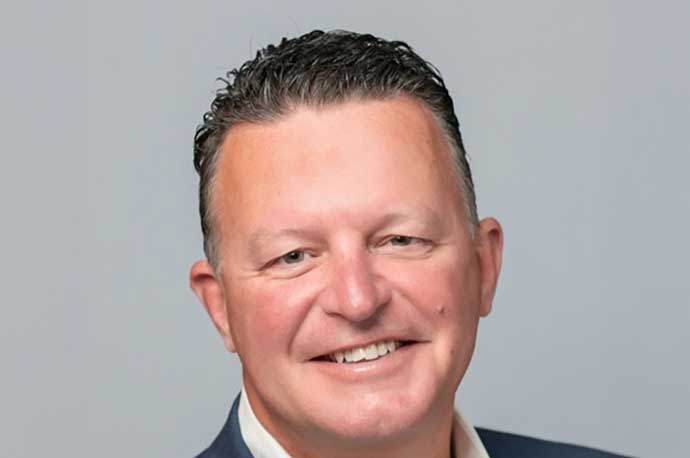
Ken Scaturro (pictured), CEO of Wall, N.J.-based Yorktel, told CRN that the combination of the two will make Yorktel a trusted digital workplace transformation partner.
“We will be able to bring agentic transformation to our combined customer sets with the ability of an additional managed service,” Scaturro said. “Yorktel has a very long history of providing managed services to our customers. We have continued to build that out. We built an AIOps engine within our managed services infrastructure. We’re using AI to help deliver services and do data analytics and trend analysis and proactive resolution of incidents and trouble tickets.”
[Related: It’s A Lot More Than EBITDA When It Comes To MSP Valuations: Exec]
Netherlands-based Kinly, which was formed via the 2018 merger of Viju and VisionsConnected, provides consulting, design, integration and support and management related to digital transformation backed up with support services for the AV industry.
For Yorktel, ranked No. 179 on CRN’s 2025 Solution Provider 500, the acquisition of Kinly represents an opportunity to further elevate its position as a global MSP, Scaturro said.
“Kinly has a strong footprint in Europe, where our presence has been comparatively modest,” he said. “Conversely, their presence in the U.S. is narrowly focused, while Yorktel maintains a significant and well-established presence across North America. In AsiaPac, Kinly has built a very strong position, whereas our presence in the region is still emerging.”
No information on when Yorktel’s acquisition of Kinly will close or its valuation was provided.
Here is more of CRN’s conversation with Scaturro.

Define Yorktel.
We’re a global managed services provider and next-generation IT systems integrator. We have a deep pedigree in the collaboration space. Our mission is to provide world-class customer service and ensure that our customers are having the best possible user experience as it relates to their collaboration toolsets.
How long has Yorktel been around?
It’s been 40 years. We consider ourselves a 6 percent anomaly. Only 6 percent of companies are around 40 years or more, and we’re one of them. Quite honestly, we attribute that to our ability to innovate and pivot the company to where the market’s going. Not toward the bleeding-edge part of the market, but the leading-edge part of the market. We continually provide value to our customers by doing that. And I think we’ve proven that over our 40 years of success.
Who owns Yorktel?
In October of last year, we were 100 percent acquired by a private equity firm, One Equity Partners. One Equity Partners is the owner of Yorktel today.
Tell us about Yorktel’s acquisition of Kinly.
We’ve acquired Kinley. From a transactional perspective, Yorktel has acquired Kinly, but our approach is a merger of two great companies. When we look at it, we’re going to look at the best processes, the best people and the best technology, and we’re going to put them together to make a ‘one plus one equals five’ type of company.
Is there a lot of overlap in terms of technology between two companies?
No. At this point, we’ve signed the deal. We haven’t closed the deal. When we close the deal, we’ll have a better ability to assess that. We’ve done a tremendous amount of due diligence, as you can imagine, as we put together this transaction and signed this deal, but we’re in the planning stage of all of that now. But when I look at overlaps from a company perspective, there’s minimal overlap in geographies, which is one of the reasons this made a lot of sense to us. There is minimal overlap in customer set for us. Where there is overlap, which we think is great, is in skill sets. We have a tremendous amount of overlapping of skill sets. When you look at the industry certifications we have, we’ve just bolstered that exponentially by the eventual combination of the two companies.
So this acquisition is primarily a geographical expansion?
It’s a combination of factors. Geographical expansion was certainly a key driver. Kinly has a fantastic footprint in Europe, where our presence has been comparatively modest. In the U.S., their presence is more narrowly focused, while Yorktel has a significant and well-established footprint across North America. In AsiaPac, Kinly has built a very strong position, whereas our presence there is still emerging. Together, this combination strengthens our standing as a global MSP with a powerful presence across North America, Europe, and Asia.

How important is it for Yorktel to have a big footprint in Europe? What are the synergies, given the different telecommunications needs between the two areas?
A very large part of our customer base is U.S.-based multinationals. When you have U.S.-based multinationals, by definition, they’re global. And we need to ensure we’re giving them the same quality of service and consistency of delivery regardless of their geographic location. The same on the Kinly side. They have very large multinational organizations that are based in Europe, and they need to provide that same scale and consistency across the Americas.
With the differences in terms of data privacy and regulatory considerations between Europe and North America, how much easier is it to work as a single company across the two areas?
We’ve already been doing that. We understand GDPR. We understand data sovereignty. And we’ve had a presence in Europe for 15 years. So we understand the concern relating to GDPR and other related laws. This is not new to us. We make sure that we’ve adhered to it from day one of entering Europe. Kinly has a strong reputation there, and they understand it as well. When our CISO and their CISO got together and had discussions on this, those were easy discussions.
How did the merger come about? Who approached who, and how did you know about Kinly?
We’re owned by One Equity Partners. They’re owned by private equity. They put themselves out on the market, and we became aware of it. We knew right away that this was a great opportunity. There’s never a bad time to make a combination of companies that provide greater capabilities for your customer set. This opportunity came about, and we leaned into it. We knew this could be a transformational combination for us, and the value to our customers would be transformative. So we leaned in heavily from the beginning, and fortunately we came out as the winner in the end.
Why was Kinly looking to be acquired?
I don’t know exactly why they decided to go out on the market. The key point for us is that they were on the market. They’re owned by a private equity firm. I don’t know the rationale for that private equity firm to put it up for sale, but what I do know is what they put up for sale was a great company with great capabilities. We’re fortunate to have it.
How much was One Equity Partners involved in terms of helping you find and set up the acquisition?
One hundred percent. We were really fortunate. When we moved to private equity last year, we had options. The choice of us to go with [One Equity Partners] and [One Equity Partners] to go with us turned out to be the right choice and a great choice. They’re not operators, but they’re partners in growing the business, and they were step by step with us, and we were step by step with them the entire way.

Is this the first acquisition that Yorktel made since becoming part of One Equity Partners?
It is. It’ll close almost a year to the day on which we were acquired, so it’s pretty aggressive from a time frame perspective. But we were out there looking for opportunities to transform our company and provide better services to our customers. And this one came up and couldn’t have been a better match for what we were looking for.
Will there be more acquisitions for Yorktel going forward?
There will. As we look at geographic territories in which we want to continue to move into or expand upon, we will continue to pursue the ability to get additional capabilities within the company. As the collaboration market expands and we move into additional markets, we’ll look to acquire to move into those markets. And quite honestly, if we need additional people in a certain region, we’ll acquire them as well.
What about Yorktel and Kinly enhancing each other’s capabilities?
Clearly, we both are very good at doing systems integration work, and we did it very well in different geographies, and that’s some of the overlap we talked about. We will be able to bring agentic transformation to our combined customer sets with the ability of an additional managed service. Yorktel has a very long history of providing managed services to our customers. We have continued to build that out. We built an AIOps engine within our managed services infrastructure. We’re using AI to help deliver services and do data analytics and trend analysis and proactive resolution of incidents and trouble tickets. So we’re really excited about the combination of the customers and our ability to provide these enhanced, next generation managed services across the customer base.
What are you doing with agentic AI? How far is Yorktel into this technology?
I should say we’re well into it. We have a solution that we’re delivering to our customers today. And you really have to be careful in the environment. People call a lot of things ‘AI,’ but there’s a separation. There is automation, which is not AI, but if you have a toolset that identifies an issue, and you build an automated capability to resolve that issue, that’s not AI, but people would put it in the AI bucket. We do that type of solution every day. We automate if we see common challenges out there, and we can automate a resolution so that our remote monitoring system can identify and resolve an incident without human interaction and without a customer noticing it, but instead just reporting to the customer that we found it and fixed it. That’s a good thing.
But the other AI component is, ‘Hey, we don’t have an automated solution for it, but we have a knowledge base. Here’s the incident. Use AI to go into our knowledge base, pull up the incidents or the resolutions for those incidents, and put them in front of our tech so when he looks at it, he’s got the top four resolutions for this problem, and he can go down the list and resolve them in an order of priority and minimize the meantime to resolution.’ That’s pretty significant. The other thing we’re doing today is we have the trending data with our customers. We understand from the resolutions of those incidents and those tickets and what caused them. We can use AI to look at the causes of those problems and do predictive analysis to say these are the rooms that we think are going to have a problem based on the historical problems that we’ve seen and all that’s in operation today. We’re pretty excited about the increased user experience that we’ve delivered based on that capability.