ScanSource Looks To Build MSP Business, Partner Communities: CEO Mike Baur
‘What’s changed is this idea that [partners] no longer can only do devices but have to do cloud and have to do infrastructure and have to do Software as a Service. They haven’t had to do that in the past. This channel has been much more focused on maybe one or two technologies, not six or eight. The marketplace has changed, and our partners are asking for help,’ says ScanSource Chair and CEO Mike Baur.
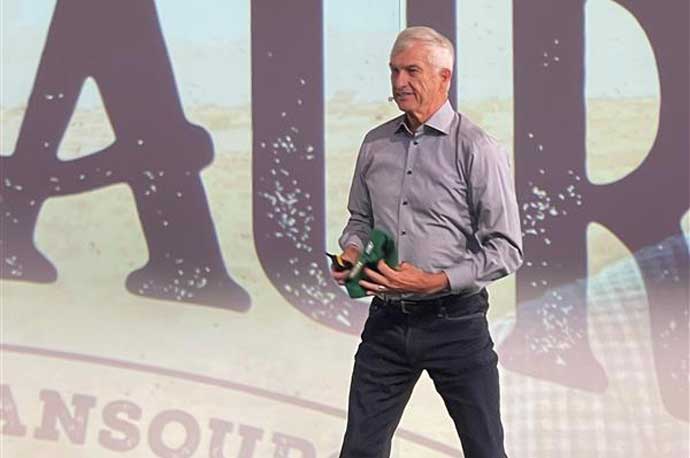
ScanSource wants to change the way it works with its channel partners. The Greenville, S.C.-based distributor made that obvious when it said it wants to move partners from a focus on hardware and limited services to become full solution providers.
To do so, ScanSource unveiled what it called “convergence.” Rather than the traditional convergence of voice, data and video, ScanSource is now talking about helping partners converge hardware and professional and managed services.
ScanSource Chair and CEO Mike Baur acknowledged that this is an area where his company has work to do.
[Related: ScanSource Exec: ‘The Age Of Convergence Is Truly Upon Us’]
Baur told CRN in an exclusive conversation that the distributor is unique in its ability to bring partners leading-edge hardware for IT, communications, video and so on with services from its Intelisys business. However, he said, it hasn’t done enough in the past to do so.
ScanSource is now looking to build partner communities to get out the convergence message, something that its competitors have done for some time, Baur said.
“It may be that our partners were so self-sufficient,” he said. “They just really didn’t believe they could do it with somebody else. Most of our partners historically want to own it all. I think that’s changing with these new capabilities. Convergence is now requiring them to do more than they ever thought they could. What’s changed is this idea that they no longer can only do devices but have to do cloud and have to do infrastructure and have to do Software as a Service. They haven’t had to do that in the past.”
At the same time, ScanSource is moving quickly to develop or acquire the managed services capabilities it needs to help its partners become full-fledged MSPs, Baur said.
“Last year, we came out with the Channel Exchange platform to attract MSPs so we can help them transact business,” he said. “Many of our partners have some managed services, but they don’t call themselves MSPs. Many of them still call themselves resellers or VARs that also do managed services. So I think it’s been kind of an ‘and’ attitude thing. But we believe we should be able to attract more MSPs into our channel. A target for us for this year is to attract MSPs to become part of the ScanSource ecosystem.”
To learn more about the distributor’s plans to expand its offerings to help its partners grow their business, read CRN’s full conversation with Baur.
You said in your Partner First keynote that ScanSource has 25,000 channel partners, out of which the company wants to really focus on 500. What do you mean by that? What are you planning?
I met with partners [at Partner First] and asked them the same question: ‘What do you need?’ Some of these partners need access to either services that we offer or services that other partners offer, but they don’t know each other and they’re looking for someone like us, maybe, to be the facilitator. Some of the capabilities we want to offer, we may acquire them or offer them from another partner. But we can’t work with everybody on that. So we need a smaller group of partners that have made a commitment to being part of this group, let's call it a ‘club’ for a minute, of select partners who might even be competitors in a friendly way. They all have a very successful business, and they all have a similar need to grow, but they can’t afford to make some big investments that maybe we can, or maybe they can rent some capabilities from us or another partner. So this is about connecting partners. We actually came out with a program years ago called ScanSource SUMO. We created a database and told partners to put their capabilities in that database so you can find each other. Well, they all lied about their capabilities. These guys later told me they all lied because they didn't want to say, ‘I don’t do that.’ So they all said they do everything, and that’s no good. They like the idea that we can curate the capabilities of this group. Ingram Micro and other distributors over the years have had programs like that.
Ingram Micro, TD Synnex and D&H have what they call ‘communities.’
Exactly. We’ve never done that. This is something new for us. We’ve had enough requests from partners saying they would work with this partner if [they] could because they trust us. We’ve got the trust, and that’s why they believe this will work. This is the germ of the idea.
Why did it take so long for ScanSource to do that?
I don’t know. It may be that our partners were so self-sufficient. They just really didn’t believe they could do it with somebody else. Most of our partners historically want to own it all. I think that’s changing with these new capabilities. Convergence is now requiring them to do more than they ever thought they could. What’s changed is this idea that they no longer can only do devices but have to do cloud and have to do infrastructure and have to do Software as a Service. They haven’t had to do that in the past. This channel has been much more focused on maybe one or two technologies, not six or eight. The marketplace has changed, and our partners are asking for help. How can we do that?
What are some of the first steps ScanSource is taking?
Part of it is identifying and doing an inventory of what capabilities our partners have today that they might want to share. This is why some of these early meetings are, ‘Hey, would you want to be part of this community?’ And we want to get those partners into small groups, small enough to where we can get them to start sharing, and then we can create the start of the organization. And then what we hope will happen from that is there’ll be some capabilities commonly needed that none of them really have as a core competency, and we’ll go acquire that capability. We might buy a company or buy a service, and then we’ll share it with this group first. And then we’ll decide, do we share it more broadly? But this will give us some targets for our acquisition strategy.

Well, given those kinds of changes, and the focus on convergence of different technologies for your partners, have you ever thought about changing the company name? ‘ScanSource’ sounds like a very specific technology focus.
It’s so funny you say that. In 1997, we got into our second technology. We went from barcode scanning to what we then called computer telephony when we signed Avaya to become a Lucent-Avaya phone distributor. It was, ‘What does scanning have to do with phones?’ We said, ‘Nothing.’ ‘OK, then why are you still going to call yourself ScanSource?’ Well, we went public early with the stock symbol SCSC. So we decided to call the phone business ‘Catalyst Telecom.’ Catalyst. We love that word. That’s a good action-oriented word. We want to catalyze these markets, catalyze the channel. So we thought about using Catalyst Telecom, Catalyst Scanning, Catalyst Security, Catalyst X, Y, and Z. But we chickened out because we already had SCSC, and we were a young public company.
I’ve actually talked to the executive team about making our ISG [Integrated Solutions Group] name much more prominent. That may be a brand you start seeing that doesn’t require ScanSource next to it. We’ve also talked about Launch Point [for helping new-to-ScanSource vendors reach our partners]. We want to create this solutions hub, the solutions thing.
You have also talked about doubling ScanSource revenue within five years. What does it take to actually do that?
It’s not that hard. Fifteen percent growth a year, and you’re there. This would be doubling our profitability. You wouldn’t necessarily double the revenue because some of our revenue is now on the recurring side, but we believe it's possible. It would require acquisitions to also grow 15 percent a year for five years. But we’ve analyzed this market opportunity, and it’s gotten so much bigger now than it was 10 years ago. We’re now in a position to do things that we couldn’t do 10 years ago. Now’s the right time. And so I want this as a longer-range goal for our company so that our employees think, ‘Wow, we could be a very different company in two, three, four or five years. I want to be part of that company. I want to stay at ScanSource and not leave.’ So for me, it’s a recruiting and a retention strategy too. It’s letting employees know we have a longer-term strategy than maybe they knew about. I thought we could do that, but I wanted to share it more openly.

OK, but to be honest, the last fiscal year makes it seem like a little tougher target than you say it is.
I wanted to kick it off last year, and then we got through the first and second quarter and ... the market slowed down right before the election, and we had the whole tariff thing. I wanted to start signaling that last year, so I’m a year behind. I wish I was in year two of the five-year plan.
Now that you’re in year one, at least you don’t have as big a base year as you would have had.
Yes, an opportunity to grow that is easier, right? It’s just math, right? So we didn’t tell Wall Street we were going to grow 15 percent, just for the record. We did give them growth targets for the year, as you heard from our last earnings call, and it’s single-digit growth. But what we’re trying to say is, we’re going to invest this year to get us on that path by the end of this fiscal year.
Speaking about investment, one thing you’ve talked about was investing $8 million in people. Are you talking about new hires or upskilling or what?
Mostly it would be new hires because of the things we want to do. And acquisitions, just so we’re clear. We made two acquisitions last year in August. We believe we’ll make a couple in this fiscal year. Last year’s acquisitions of Advantix and Resourcive [brought us] roughly 140 people.

What types of companies would ScanSource be looking to acquire?
We’re going to first do an inventory of capabilities that the channel has and what they want. For example, they may need a managed service offering or partners say they wish we had a way to manage their Zebra mobile devices with the Advantix multi-carrier SIM. We have one, but they may need one for retail or fleet management. We would want to see what kind of capabilities partners are going to need to be successful selling those solutions. And I think it’s going to be managed services tools.
That leads to the next question. A lot of distribution is now focused on professional services and managed services. And if you look at today’s hottest acquisitions, it's companies buying MSPs for the recurring revenue. Why did ScanSource take so long to start talking about these types of services, and what are you going to do to make them available to your partners?
I think what happened is in 2016, when we bought Intelisys, we decided to get into the agency world instead of MSPs. It was a big bet, and we couldn’t do both at the same time. With Intelisys, we’ve gotten more aware of how to make that business successful. It’s more mature. The missing piece was, we need more MSPs. Last year, we came out with the Channel Exchange platform to attract MSPs so we can help them transact business. Many of our partners have some managed services, but they don’t call themselves MSPs. Many of them still call themselves resellers or VARs that also do managed services. So I think it’s been kind of an ‘and’ attitude thing. But we believe we should be able to attract more MSPs into our channel. A target for us for this year is to attract MSPs to become part of the ScanSource ecosystem.
And how will you do that?
Part of it is showing them the opportunity we showed at the Partner First conference. There were probably very few traditional MSPs in that audience. The first thing we are doing is saying, ‘All right, what do we need to attract them?’ One was get Channel Exchange up and running. That’s still fairly new. Now we have to start recruiting MSPs. You know Microsoft is making some big changes in their distribution and reseller channels, and we’re still in. There were some people wondering if ScanSource would make the cut. We have made the cut, and we need the Microsoft relationship to provide MSPs related tools, and we’re going to add more products. We said on our latest earnings call we’re working with Sophos and Trustify. Those are examples of how we’re starting to build that line card which will attract MSPs.

It's a long journey. It's taken Ingram Micro and TD Synnex several years to do that. And then there are companies like Pax8 …
And Pax8 did it primarily, especially in the early days, on the back of Microsoft. They became Microsoft’s lead distribution partner, for sure.
The last time we talked, you said tariffs were not a big deal for ScanSource. But Tony Sorrentino, [president of the Specialty Technologies business], told CRN and said on stage that this last fiscal year was a challenging one in part because of tariffs. So what exactly is the impact of tariffs on ScanSource?
I think what Tony and others have been saying, and what I’ve said, is that the tariffs impacted end-user demand because prices went up. It didn’t affect our profitability, per se, but we saw less demand, and so for us it doesn’t mean we make less money. If you sell less, you make less money. That’s the point. The tariffs reduced demand and created uncertainty and predictability, and so end users delayed or deferred purchases. In our last earnings call, we said we had some pull-ins from this quarter into the June quarter because of the uncertainty around whether tariffs are changing or not. I think end-user demand right now is harder to predict because of tariffs. That’s really the subtle difference. That makes it challenging.
The environment is uncertain, yet ScanSource, as a distributor, still has to present certainty to your partners. What can ScanSource do to bring predictability in this challenging time?
What we can do is limited because if the tariff rates change again, up or down, it creates uncertainty. … We were unusual as a country in having almost no import taxes. We didn’t have VAT [value-add tax]. And so I like the idea that we’re going to permanently have some kind of import tax, which makes everything more expensive one time, and that resets what you can afford to spend. I think what will happen is end users will spend the same amount of money. They just won’t buy as much as they need. It’s just going to stretch out demand. That’s all. And it will become predictable if they don’t change it again.