The 10 Biggest Tech M&A Deals Of 2025 (So Far)
Major IT companies and solution providers looking to expand their technology portfolios—with AI frequently a driving factor—account for many of the biggest acquisitions this year. Here’s a look at the biggest tech industry mergers and acquisitions that have been announced, completed or are still in the works in 2025 (so far).

Wheelin’ And Dealin’
The AI wave continues to transform the IT industry and in 2025 it has certainly been a major driver for many of the big-ticket merger and acquisition deals that have either been announced or completed so far in 2025.
This year has seen a number of significant acquisition deals involving both IT vendors and solution providers. Most notable have been Google’s plan to buy cloud security superstar Wiz for a mind-boggling $32 billion and the completion of Hewlett Packard Enterprise’s $13.4 billion acquisition of Juniper Networks.
Established IT companies have been snapping up startups with leading-edge AI technology as they look to quickly bolster their product portfolios with AI capabilities. Examples include HP Inc.’s purchase of the software and intellectual property assets from Humane, Datadog’s acquisition of Metaplane and Alation’s deal to buy Numbers Station.
The cybersecurity space, which some observers have said is ripe for consolidation, has seen a great deal of merger and acquisition activity. In addition to the mega-billions deals listed in this slideshow, other IT security industry acquisitions include Proofpoint’s $1 billion deal to buy Microsoft 365 security specialist Hornetsecurity, Sophos’ completion of its $859 million acquisition of XDR specialist Secureworks, Arctic Wolf’s $160 million purchase of endpoint security provider Cylance, and Zscaler’s recently completed Red Canary acquisition.
While dollar value is certainly a factor in the following ranking, some mergers and acquisitions have a greater impact on the IT industry in general—and the channel in particular—and that figures into the rankings. In many cases, including one that makes this list, the value of the acquisition is not disclosed.
Some 10-figure acquisition deals that just missed making this list but were nevertheless significant include the aforementioned Proofpoint deal to buy Hornetsecurity and Databricks’ $1 billion purchase of database startup Neon in May.
Even mergers and acquisitions that don’t happen can be big news in the IT industry. Reports have been circulating all year that semiconductor provider Intel could be an acquisition target.
Here’s a look at the IT industry’s biggest acquisition deals in 2025 (so far), starting with No. 10 and working up to No. 1. Some deals were announced last year and were completed this year. Others have been announced but are still working their way through regulatory and/or shareholder approvals before they wrap up.
No. 10: Lenovo To Acquire Infinidat In Huge AI Storage Play
IT powerhouse Lenovo announced on Jan. 16 that it had signed a definitive agreement to buy Israel-based Infinidat, a privately held developer of high-performance storage technology for data-heavy workloads, particularly around artificial intelligence.
Terms of the acquisition were not disclosed. Infinidat, with U.S. headquarters in Waltham, Mass., had raised $370 million in total funding and some industry analysts pegged the value of the acquisition at more than $500 million.
The companies expect to complete the acquisition later this year.
In late 2024 Infinidat debuted a new retrieval-augmented generation (RAG) workflow deployment architecture aimed at helping owners of its InfiniBox and InfiniBox SSA enterprise storage systems use them to optimize data output to AI models.
Lenovo, best known for its PCs and server products, has been growing its sales of storage, software and services in recent years. Approximately 80 percent of Lenovo’s commercial sales deals are closed by its channel partners.
Infinidat, meanwhile, is a major player in the storage technology channel with several hundred channel partners and a 100 percent channel-led model, according to the company’s CRN Partner Program Guide profile.
No. 9: WWT Buys Softchoice In Channel Blockbuster For $1.3B
Channel behemoth World Wide Technology acquired fellow channel superstar Softchoice for approximately $1.3 billion in a move to boost WWT’s ambitions in artificial intelligence and expand its SMB customer base across North America.
The acquisition, announced on Jan. 2, was completed March 17.
St. Louis-based WWT, No. 9 on the 2025 CRN Solution Provider 500, said the acquisition of Toronto-based Softchoice (No. 35 on the 2024 SP 500) would enhance its capabilities to support clients through their AI and digital transformation journeys.
“The deal aims to expand WWT’s portfolio by integrating Softchoice’s offerings, which focus on software, cloud, cybersecurity and AI solutions, thereby broadening its reach within North America,” WWT said in a statement announcing the acquisition’s completion.
“With this acquisition, WWT’s clients will gain access to an expanded suite of services, including enhanced consultant-led offerings across infrastructure and hardware,” WWT said. “Softchoice’s integration will enable WWT to provide tailored solutions to a wider range of clients, including those in the commercial, small and medium-sized business markets, as well as in Canada.”
No. 8: Qualcomm Counting On $2.4B Alphawave Semi Buy For Data Center Push
Just one month after confirming a plan to resume designing and selling server CPUs, Qualcomm on June 9 announced a $2.4 billion deal to buy London-based chip designer Alphawave Semi.
Qualcomm said the move would accelerate its expansion into the data center market, particularly for AI inferencing tasks. While Qualcomm has been selling its Cloud AI 100 processors for AI inference workloads in data centers for years, the company confirmed in May that it had wider ambitions in the market with a plan to sell server CPUs.
San Diego-based Qualcomm said that Alphawave Semi’s high-speed wired connectivity and compute technologies would complement its next-generation Oryon CPU and Hexagon NPU processors.
The acquisition is expected to close in the first quarter of 2026, subject to regulatory approvals, approval by Alphawave Semi’s shareholders and other conditions.
No. 7: Capgemini’s Planned $3.3B Buy Of WNS Targets Agentic AI Expansion
On July 7 global business and technology services provider Capgemini announced a $3.3 billion deal to buy India-based WNS in a significant play to build scale with the business process services needed to provide agentic AI.
Paris-based Capgemini, ranked No. 4 on CRN’s 2025 Solution Provider 500, is a $23 billion global business and technology transformation company with a focus on AI, GenAI, cloud and data. WNS, headquartered in New York, London and Mumbai, is a $1.3 billion global provider of business process management services.
In an analyst conference call after news of the acquisition plan was released, Capgemini CEO Aiman Ezzat said the deal targets the growing need for AI capabilities.
“This transaction positions the group as a leader in the emerging market of intelligent operation, which is the most significant opportunity for our clients to create value in the era of GenAI and agentic AI,” Ezzat said. “The strategic value of this transaction lies in the complementarity of capabilities and expertise between Capgemini and WNS to provide intelligent operations at scale.”
The $3.3 billion acquisition, unanimously approved by the boards of both companies, is expected to close by the end of 2025.
No. 6: AMD Completes $4.9B ZT Systems Acquisition, Gains ‘Rack-Level Expertise’ For AI Solutions
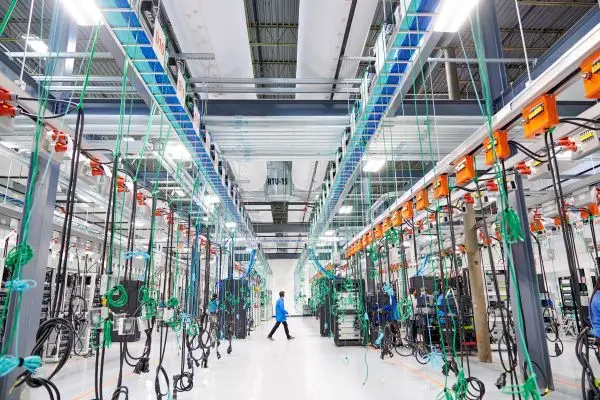
Taking its competition against Nvidia to a new level, AMD completed its acquisition of ZT Systems on March 31, a move AMD said would allow it to combine ZT Systems’ “industry-leading systems” and “rack-level expertise” with its own portfolio of processors and networking silicon to offer a “new class of end-to-end AI solitions.”
The acquisition, initially announced in August 2024, had a $4.9 billion price tag. The move is seen as a way for AMD to better compete with Nvidia in data centers, particularly among hyperscalers and enterprise customers.
In May AMD said it would sell ZT Systems’ server manufacturing unit to Sanmina for $3 billion. Sanmina will become a preferred new product introduction manufacturing partner for Nvidia’s cloud rack and cluster-scale AI solutions. AMD retained ZT Systems’ rack-scale AI solutions design and customer enablement teams,
AMD has sought to challenge Nvidia’s AI dominance with a number of acquisitions this year. On May 28 AMD announced the acquisition of silicon photonics startup Enosemi whose technology provides the faster, more efficient data movement needed by AI models. And on June 4 AMD said it had acquired Brium, a startup that specializes in AI software optimization.
No. 5: IBM Closes $6.4B HashiCorp Deal After Extra Scrutiny Overseas
In February IBM completed its $6.4 billion acquisition of HashiCorp, a San Francisco-based provider of software and tools used to provision, manage and secure cloud infrastructure.
IBM is leveraging HashiCorp’s technology, including its Terraform and Vault products, to expand its offerings in cloud infrastructure and security life-cycle management automation, infrastructure provisioning, multi-cloud management, consulting and artificial intelligence, among other areas.
HashiCorp’s products are now available through IBM’s automation software portfolio. IBM is also combining Vault with its Red Hat subsidiary’s OpenShift to boost that product’s secrets management and security capabilities.
IBM initially announced the deal to buy HashiCorp in April 2024 and said it expected to complete the acquisition by the end of the year. But in December the U.K.’s Competition and Markets Authority watchdog agency launched a merger inquiry into whether the acquisition would hurt competition.
IBM has been active on the acquisition front this year. In January the company struck a deal to acquire Applications Software Technology, a consulting firm in the Oracle cloud applications space. In February IBM announced a deal to buy AI and data management platform provider DataStax (the acquisition closed May 28). And in April its bought Hakkoda, a global data and AI consultancy.
No. 4: Salesforce Looks To Boost Its Data Management Capabilities For AI With $8B Informatica Purchase
Cloud application giant Salesforce is going big on agentic AI and the company knows that requires a foundation of trusted data. That’s the motivation behind the company’s $8 billion deal to buy Informatica, a leading developer of data integration, data catalog, master data management, and data quality and governance software.
The acquisition agreement, announced May 27, is expected to be completed early in Salesforce’s fiscal 2027, which begins Feb. 1, 2026. Under the terms of the agreement, holders of Informatica’s Class A and Class B-1 common stock will receive $25 in cash per share.
“Together, Salesforce and Informatica will create the most complete, agent-ready data platform in the industry,” Salesforce CEO Marc Benioff said in a statement at the time of the announcement.
“By uniting the power of [Salesforce’s] Data Cloud, MuleSoft and Tableau with Informatica’s industry-leading, advanced data management capabilities, we will enable autonomous agents to deliver smarter, safer, and more scalable outcomes for every company, and significantly strengthen our position in the $150 billion-plus enterprise data market,” Benioff said. (Mulesoft and Tableau were earlier Salesforce acquisitions.)
Reports had circulated in 2024 that the two companies were in discussions about a possible acquisition.
Salesforce has remained active on the acquisition front while it works to complete the Informatica deal. On Aug. 7 it signed an agreement to buy Waii, which develops a natural language-to-SQL platform, and on Aug. 13 it bought Bluebrids, a provider of AI-powered sales prospecting software.
No. 3: Palo Alto Networks To Buy CyberArk In $25 Billion Deal
On July 30 cybersecurity giant Palo Alto Networks announced an agreement to acquire identity security powerhouse CyberArk for approximately $25 billion. If completed, it would be the biggest acquisition in Palo Alto Network’s history and one of the largest M&A deals in the security industry to date.
The acquisition aims to provide a crucial missing piece within Palo Alto Network’s broad cybersecurity platform, according to industry analysts, and would mark the company’s formal entry into the identity security space.
Palo Alto Networks CEO Nikesh Arora called CyberArk the “definitive leader” in the fast-growing identity security space. During an earnings call following the acquisition announcement Arora said that with CyberArk he saw a massive opportunity to meet both the identity security needs of today as well as security requirements for the coming wave of agentic AI.
The deal is expected to close during the second half of Palo Alto Networks’ fiscal 2026, which ends July 31, 2026.
In February, before the Palo Alto Networks-CyberArk deal was struck, CyberArk itself acquired identity governance startup Zilla for up to $175 million.
(On July 22 Palo Alto Networks said it had completed its acquisition of Protect AI, a startup developer of technology to secure AI applications and models. That deal, first announced April 28, is expected to strengthen Palo Alto Networks’ position in AI security posture management.)
No. 2: Google Looks To Buy Cloud Security Startup Wiz For $32B
On March 18 Google parent Alphabet announced that it had inked a definitive agreement to acquire Wiz, a high-flying startup in the cloud security space, for a whopping $32 billion in an all-cash deal.
If the acquisition—the largest in Google’s history—is completed, Wiz will become part of Google Cloud, Google’s $48 billion cloud business. Google said the acquisition would accelerate two significant and growing trends in the AI era that Google Cloud is driving: improved cloud security and the ability to implement and use multi-cloud architectures.
“Wiz and Google Cloud share a vision to improve security by making it easier and faster for organizations of all types and sizes to protect themselves, end-to-end, across all major clouds,” Google Cloud CEO Thomas Kurian said in a blog post announcing the acquisition deal.
But the acquisition already faces potential hurdles from regulators: On June 16 published reports said the U.S. Department of Justice was reviewing whether the acquisition would limit competition in the cloud security space.
Alphabet and Wiz were first reported to be in acquisition talks in 2024 with a reported price tag of $23 billion. But those discussions broke off without a deal—reportedly because Wiz wanted to remain independent.
No. 1: Hewlett Packard Enterprise Completes $13.4B Acquisition of Juniper Networks
On July 2 Hewlett Packard Enterprise ended its long road to complete its $13.4 billion acquisition of networking products provider Juniper Networks. HPE CEO Antonio Neri declared that day the start of a “new era” for HPE as Juniper became a wholly owned subsidiary of the company.
HPE announced the deal to buy Sunnyvale, Calif.-based Juniper on Jan. 9, 2024, setting up a competitive battle with Cisco Systems for dominance in the AI networking arena. Juniper was especially strong with its service provider and campus networking businesses as well as its acclaimed Juniper Mist AI portfolio.
But the acquisition plan ran into problems in January of this year when the U.S. Department of Justice sued to halt the deal, claiming the acquisition would “reduce competition and weaken innovation.”
HPE and Juniper called the lawsuit “fundamentally flawed,” setting off about five months of legal wrangling between the companies and the DOJ. All the while CEO Neri expressed confidence that the acquisition would get done.
On June 27 the DOJ agreed to settle the case under an agreement that requires the combined HPE-Juniper to license the source code for Juniper’s Mist AIOps software used in Juniper’s WLAN products and to divest HPE’s Instant On wireless networking business.
“Our agreement with the DOJ paves the way to close HPE’s acquisition of Juniper Networks and preserves the intended benefits of this deal for our customers and shareholders, while creating greater competition in the global networking market,” Neri said in a prepared statement announcing the settlement. “For the first time, customers will now have a modern network architecture alternative that can best support the demands of AI workloads. The combination of HPE Aruba Networking and Juniper Networks will provide customers with a comprehensive portfolio of secure, AI-native networking solutions and accelerate HPE’s ability to grow in the AI data center, service provider and cloud segments.”