Trace3’s New CEO On New Investor, New Strategic Priorities
‘As you think about how the Fed wants to spend money and save money, IT is going to take a front-seat position as they leverage tools and technology to provide more productivity. And AI adoption is going to be a big lever when trying to perform roles and functions within the federal government, similar to the commercial and enterprise space trying to do more with less. So I think there’s a huge opportunity for us,’ says Joe Quaglia, Trace3’s new CEO.
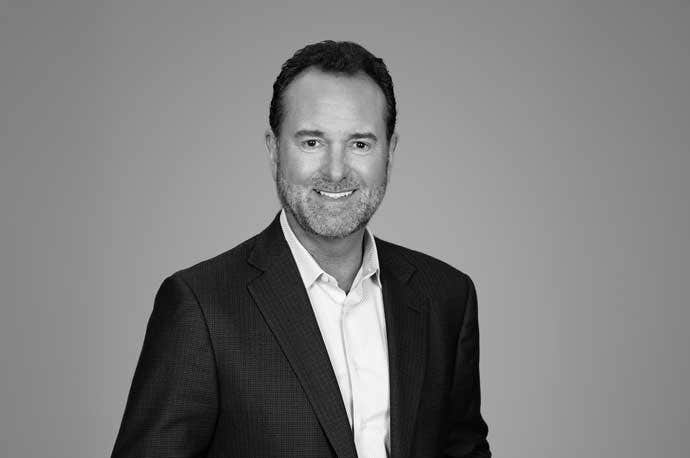
As of this week, IT solution provider Trace3 has both a new CEO and a new private equity backer.
Irvine, Calif.-based Trace3, ranked No. 34 in CRN’s 2025 Solution Provider 500, appointed Joe Quaglia as its new CEO, a position held since 2019 by Rich Fennessy. Quaglia is a long-time tech veteran, including over 14 years at IT distribution firm Tech Data, which he left in August of 2020 as president of the Americas.
Quaglia’s ties to Trace3 go back to early 2021 when he started as a senior advisor to private equity firm American Securities. Late that year, American Securities acquired Trace3 from its former owner, H.I.G. Capital.
[Related: Panelists Offer Tips For MSPs Eyeing A Sale Of Their Business]
Shortly after, Quaglia joined Trace3 in early 2022 as its president where he focused on expanding its partnerships and deepening its technical expertise. That led to another private equity firm, Apollo Funds, to disclose plans a few months ago to acquire Trace3, and as of this week the acquisition is closed. The terms of the acquisition were not released.
Quaglia, in an exclusive meeting with CRN, discussed his strategic vision for Trace3 going forward, the company’s technology capabilities—especially around AI—and the impact of starting a federal government business unit just prior to the massive changes in government spending, including the current shutdown.
There’s a lot going on at Trace3. For details, read CRN’s full conversation with Quaglia, which has been lightly edited for clarity.
There’s two bits of news here. Number one was the acquisition of Trace3 by Apollo Funds that closed on November 3, and your promotion the same day from president to CEO of Trace3.
First and foremost, we’ve enjoyed a four-year partnership with American Securities. I joined Trace3 four years ago, right as American Securities came in as our new [private equity] partner, and we just enjoyed a wonderful relationship with them. They’re actually still a minority owner with Apollo. It’s great to continue to have them as part of Trace3. And as we transition now to Apollo, I can’t say enough about Apollo and their experience, their history, their size, their scale. Trace3 has been incredibly successful in the market, and now we have a new partner with some new ideas, some new capital, some new investments. And I couldn’t be more thrilled to take over and lead Trace3 into the next phase of success and growth.
How do you describe Trace3? What’s your definition of Trace3?
In a nutshell, Trace3 is an IT service and solutions provider. At the end of the day, Trace3 just delivers business transformation for our clients. We consult, we integrate, we operate, and we bring convergent solutions together across data security and cloud while helping our clients embrace emerging technology and at the end of the day to drive measurable outcomes and value for our clients.
How big is Trace3?
We’ll finish this year at about $3 billion in revenue. We have about 1,500 teammates. And we serve about 4,500 clients. That should give you some sort of perspective. The other thing I would say is, as we think about how Trace3 differentiates in the market,
one aspect of that is our three brand pillars, which are emerging technology, elite engineering, and client intimacy.
On the engineering piece, of our 1,500 teammates, half of them are engineers, consultants, and architects, and we believe that in this world of very complex IT problems, we need the best of the best when it comes to engineering talent and skills to bring to our clients and help them solve some of their complexity and simplifying it.
When it comes to emerging technology, I believe Trace3 is one of the few, if not the only, company that has and nurtures about 65 global venture capital firms getting early access to some of the next-generation disruptive technologies out there. We filter, we assess, and we bring some of that technology to our clients who otherwise would never have access to it, certainly at an early stage. And today, that represents about 25 percent of our business. So our ability to create innovation and bring that innovation to our clients is a unique differentiator.
And then client intimacy, as you know, we’re just in the people business and in the relationship business, and we try to stack the deck close to our clients with all the skills and relationships required as we think about engaging with our clients on a daily basis. We try to bring those resources close to our clients. And that client intimacy, which has probably been in existence from day one, is going to be even more important as we think about all the transformations that are going to be required by our clients in the next era, call that an AI-centric era.
So where is Trace3 in terms of adopting AI for your own processes and the types of AI technologies that you bring to customers?
From an internal perspective, we have multiple opportunities to adopt AI tool sets, processes, and we’ve done, I think, a pretty good job so far of looking at unique opportunities or unique situations or unique AI use cases that help us in processes that can be repeated over and over again. We’re establishing a governance and risk posture inside the company as more tools enter the enterprise and I think that’s a big part of what our clients are working with us on.
And so we’re going to continue to use AI where applicable. One example is, we’re using a toolset that helps us with enterprise search. Think about a tool that gets access to all of our databases across all of our applications. If you’re in the field and working with a client and you need immediate access to information or work streams or SOWs [statements of work] or referenceability to other projects, an engineer or a sales rep now has access to all that data, and through a very simple ChatGPT-type of prompt, and can now gain access to an ocean of information that otherwise may not have existed before.
For our clients, Trace3 is enabling and empowering what we call an AI-driven enterprise. We have a proven history of bringing emerging trends to our clients, like I just said, but we also are helping our clients unlock the value of using their existing tech investments while modernizing for the future. What I mean by that is, our clients
aren’t going to throw away millions and millions of dollars of investment in technology. What they want is help to transform and move and adopt an AI-centric business leveraging the investments they’ve already made.
How is Trace3 doing that?
There are four buckets of opportunities that our clients are engaging Trace3 in. The first bucket is, ‘Hey, Trace3, we have all these use cases. Help us filter through these use cases and help us build an AI strategy, and identify those two, three, or four really big AI opportunities out of hundreds of opportunities we could go spend time on.’ So that’s a consulting opportunity.
In the second bucket, since security is about 40 percent of our overall business, we have a lot of technical capability, a lot of knowledge, and a lot of skill to help our clients with security strategies, security assessments, and the like. Our clients are asking us to help them build-in AI readiness as well as governance and risk policy so that as they adopt AI use cases, they have a security platform they feel confident with.
The third bucket is taking these use cases and building those out from a solution standpoint. And the fourth is installing and adopting an appropriate operating model, infrastructure, security, all the tool sets, all the software required to run your AI applications, in a new infrastructure world.
And so those are the four areas that we’ve seen our clients work with us on, and where we see the biggest need, and Trace3 is in a great position to support our clients from that perspective.
Does Trace3 have a big U.S. federal government business?
Yes. Almost a year ago, in mid-December, we acquired a company called Zivaro. About 75 percent of their business was in the public sector space, call that mostly fed. That was the beginning of what we now call T3G or Trace3 Government. That is a vertical that we run inside the business dedicated to the public sector space, both federal and state, local, and education.
How is that federal business doing now with the current federal government shutdown going on and the big policy changes of the last year?
I would point to the beginning of the year when there was a delay in the continued resolution, which I think got approved in March, which slowed down some spending. And then there was all that noise around DOGE and the government shutting down departments and things like that. We’ve been able to navigate through all of that.
The good news is, in our business about 65 percent of our federal business is under contract, and 30 percent of our business in the federal space is services. So we feel we’ve got some protection there, especially in a shutdown situation like we are in today. We still feel confident that we’re going to emerge even more successful as we come out of that. As you think about how the Fed wants to spend money and save money, IT is going to take a front-seat position as they leverage tools and technology to provide more productivity. And AI adoption is going to be a big lever when trying to perform roles and functions within the federal government, similar to the commercial and enterprise space of trying to do more with less. So I think there’s a huge opportunity for us. We’re thrilled about that acquisition. It’s fully integrated and it now runs as T3G.
As you look forward to 2026 what are some of your strategic priorities?
First and foremost, we want to complete a very successful 2025. That’s priority number one. And as we think about 2026, there are a couple of priorities that I think are going to be really important for Trace3.
Number one is to continue to invest in our people and our talent and our culture. This is an amazing culture. I’m very blessed to take over and lead this organization at a time when we’ve got just an amazing culture and some incredibly talented people. So we want to continue to foster a very, very good culture. I’m going to be spending time with the management team working on our next-level vision strategy and direction for Trace3.
As we turn the corner to 2026, we know AI is already sort of taking center stage as we look at opportunities with our clients. Whether that be in security, in data, in cloud, in contact center and collaboration, we’re seeing lots of opportunities to work with our clients and help them navigate to become more AI-centric businesses. That’s going to take center stage.
By the way, this year we celebrated our 23rd year in business. And as we continue to mature our platforms, our IT systems, our processes, we’re going to start to look externally and to be just as maniacally focused on our clients and our OEM partners. It’s not to say that we weren’t in the past, but I do believe that with the opportunity that’s in front of us, our clients are going to need us even more than they have in the past, and helping them navigate some of these transformations and challenges, especially with the adoption of AI, is going to be paramount.
And so we’re going to focus our attention a lot more externally, a lot more on the client, a lot more on our top OEMs. And that’s going to be a big, big push for Trace3. The opportunity for the next three to five years, especially with our new [private equity] partner Apollo, we’re going to want to see market share leading growth in all the key areas that help our clients make these transformations.
Any plans for more acquisitions going forward?
M&A has always been a strategic pillar for us. We’ll continue to look at opportunities in the market. When we look for opportunities, we look for areas where we don’t have the kind of coverage that we would like geographically. We’ll also look at opportunities where maybe there’s a capability that we need to better serve our clients with that we don’t have today, or we don’t have as much today. So we’ll look at capability expansion and geographical expansion. We’ll also look at client expansion and teammate expansion. We’re always in the market. We always have a pipeline.
Trace3 has done six acquisitions. Our latest was Ivoxy Consulting in the Pacific Northwest. That was a great coverage model opportunity for us as we weren’t as strong in the Pacific Northwest. Now we have real boots on the ground and quality talent there, up in the Pacific Northwest, to provide coverage for our clients up there. All six acquisitions have been fully integrated. And so as we think about the balance of the year and going into 2026 you can expect there’ll be more opportunities for Trace3.
Where did Rich Fennessy, the prior CEO of Trace3, go? What’s his plan?
We’re super thrilled that Rich is gonna stick around. Rich is now our executive chairman. Rich started at Trace3, a little over six years ago. He did a marvelous job leading the organization, and he’s still going to stick around. I’m very thankful for that, because Rich is a brilliant mind. He has an incredible amount of experience. It’s another brain for me to pick when we’ve got new opportunities. Rich is going to be a great mentor, a great advisor. He’s going to sit on the board as well, and he’ll act as our executive chairman.