Zones’ New CEO Yehia Omar On How The Company Has Restructured For The Future
‘Digital workplace was always a strength we had. We’ve built networking and security practices. We have built cloud and data center practices. And we expanded on our cloud and software practices as well. So essentially, we’ve built a company that is a solutions and services provider versus years ago when it was mostly a VAR,’ says Zones’ new CEO, Yehia Omar.
Zones this year celebrated its 40th anniversary, having been founded in 1986 in Auburn, Wa. as a direct marketing reseller of computer hardware and software.
However, thanks to a multi-year restructuring, the company looks not at all like it did even just a few years ago. Zones, ranked No. 38 on CRN’s 2025 Solution Provider 500, is now a global solution provider serving 15,000 customers in over 100 countries with solutions and services for cloud, data center, security, digital workplace, and IT lifecycle.
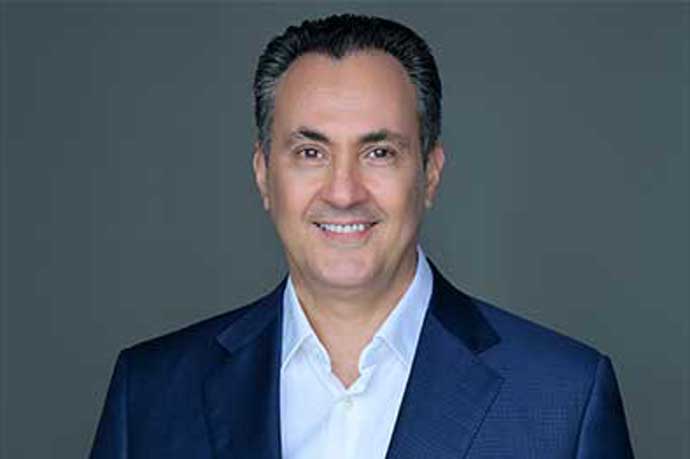
Zones’ executive team has also had a restructuring starting at the top with the appointment in September of Yehia Omar as its new CEO, with prior CEO and Co-founder Firoz Lalji moving to the chairman roll.
[Related: Zones Eyes $3B Revenue Milestone As Demand For AI, Cybersecurity Soars]
Omar, in an exclusive meeting with CRN, said he is sort of an outsider, having served with Zones’ board of directors for over three years, and as such helped oversee the company’s restructuring to focus on services.
“The transformation itself was a multi-phase road map with multiple milestones,” he said. “From a board perspective, we approved that about four years ago, and then at every board meeting we reviewed progress and provided guidance and strategic direction to the executive team to drive the transformation in the right direction.”
Zones’ strategic priorities are to expand on the cloud, AI, and managed services at scale, and has invested in the go-to-market and sales coverage to make that happen, Omar said.
“We have a state-of-the-art innovation center in Chicago which provides proofs of concept and demonstration of our solutions to our customers in collaboration with our key partners and OEMs,” he said. “With that in mind, we’re looking to focus on advanced technology products and services, expanding on cloud and expanding on managed services at scale with large global projects and deployments. In addition, we want to continue to build on the AI that we use internally and leverage externally.”
There’s a lot going on at Zones. For the inside look, read CRN’s conversation with Omar, which has been lightly edited for clarity.
Congratulations becoming CEO of Zones. How did that come about?
They consider me as a kind of an outsider-insider type. I have been serving on the board of directors of Zones since April 2022, so three years and few months. And I have been involved in Zones’ transformation over the past three years. So when the board offered me the opportunity, we thought it could be a natural fit given my background and given the fact that I am already involved with and have been involved within the transformation. I know the executive team. I know the board members and chairman. So I think it’s a good fit both for Zones and for me.
How do you define Zones?
I describe the company as a global IT services and solutions provider with significant U.S. presence and global footprint. We provide IT products and services around the world. We operate in more than 100 countries around the world. We have good presence in EMEA and India and Singapore and, of course, the United States. This gives us a good opportunity to have very strong coverage. We can serve our clients around the world with different types of services from very basic to very advanced.

You just mentioned transformation at Zones. Which transformation did Zones do?
I think the market would consider Zones five, six years ago mostly as an IT value-added reseller with a lot of product-centric offerings. Over the past three years, we have heavily invested in transforming the company to become more of an IT services provider beyond the product. We have built a global service delivery organization. We have invested in a pre-sales and solution organization to drive value-added solutions beyond the product and to look at what services can be attached so we can offer more value to our clients, whether in the United States or around the world. We have established new core business practices. Digital workplace was always a strength we had. We’ve built networking and security practices. We have built cloud and data center practices. And we expanded on our cloud and software practices as well. So essentially, we’ve built a company that is a solutions and services provider versus years ago when it was mostly a VAR.
When I talk about service delivery, I’m talking about managed services at service desks, network operations centers, and security operation centers. We look into all IT lifecycle services in the broader scale, rather than just products or very basic services. This expansion was mostly aimed at going beyond the first one or three years of a relationship. We have also been serving very large clients. Internally, we have invested significantly on modernizing our IT infrastructure at Zones. We have completed our Microsoft Dynamics 365 ERP. It’s the largest ERP implementation in the company’s history. We are done in the United States, Europe, and India. We just recently finished Canada. So the entire company now is running on a global platform which helps us a lot to perform and run the business and fulfill customer requirements on a global scale.
Were you involved in the transformation as a member of the board?
Strategically and with oversight from a board perspective. The transformation itself was a multi-phase road map with multiple milestones. From a board perspective, we approved that about four years ago, and then at every board meeting we reviewed progress and provided guidance and strategic direction to the executive team to drive the transformation in the right direction. So yes, I was involved, but in a non-executive board role.
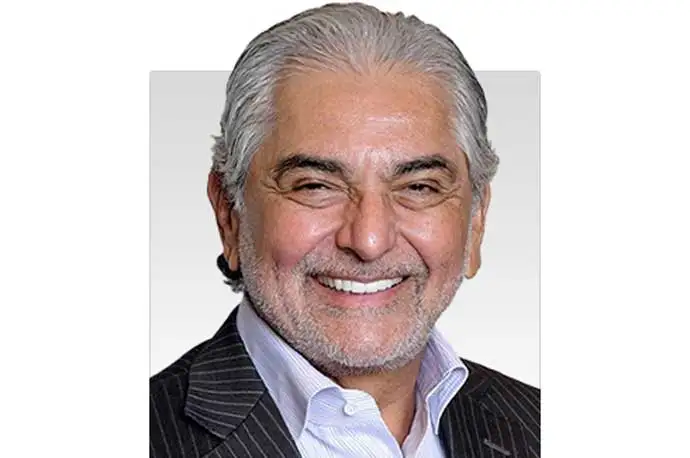
You took over as CEO from Firoz Lalji (pictured). Why did Lalji step down?
Basically, it was his plan that he would be stepping down from the CEO role and be more involved with the chairman of the board-type responsibilities, mainly around the company vision, the company strategy, and long-term strategic direction. He did really very well in leading the company towards the transformation, and by the time that the company are almost there, from a transformation point of view, he decided to step down and have another CEO lead the company into the next phase, which is basically capture and leverage this transformation into business outcomes and business results for the company and for its customers.
You’ve only been in the CEO spot for a couple months. What are some of the strategic plans that you have going forward? What are your strategic priorities?
Our strategic priorities are to expand on the cloud, AI, and managed services at scale. From a strategic point of view, we invested in our go-to-market and coverage in sales, pre-sales, and solution architects and solution engineering. We have a state-of-the-art innovation center in Chicago which provides proofs of concept and demonstration of our solutions to our customers in collaboration with our key partners and OEMs. With that in mind, we’re looking to focus on advanced technology products and services, expanding on cloud and expanding on managed services at scale with large global projects and deployments. In addition, we want to continue to build on the AI that we use internally and leverage externally as well because this has been an area where we think the growth engine will come from.
From a market perspective, Zones is very strong in enterprise and large customers. And we have invested in substantial coverage, call it sales coverage, into our mid-market and SMB business, and we’re expanding on that as well to make sure that we as a company will be focusing on mid-market and SMB going forward. For vertical market segments, we have added more focus on our retail services, meaning serving our retail clients with a lot of offerings and solutions that serve the retail industry, and we now have a dedicated retail vertical. At the same time, we are also doubling down on our healthcare vertical.

What types of AI offerings and services does Zones offer to its customers?
We recently held a partner summit and sales summit, and the questions that always came up were around AI. We currently approach AI in two ways. The first is using it internally for own efficiency and productivity, using tools and products that are AI-enabled or AI-powered to become more efficient, to serve our customers better, and to accelerate our internal processes. Externally, at this stage we’re mostly focused on Microsoft Copilot, with some Adobe and some of every product with services attached to them. Most of the recent technology refreshments are AI-enabled, so AI on the edge and products that are AI-enabled. We are working, like I think everybody in our industry and I think even with some of the OEMs, to define specific offerings and how customers can leverage AI.
Does Zones do much in terms of acquisitions?
We don’t make a lot of acquisitions, but we’re always up for it. If something comes up that we think is a strategic or technical fit for us, we look at it. But most of the growth we’ve had for the past couple of years is organic growth. We have not made many acquisitions, at least in the last three or four years. Actually, the Zones team should be very proud of the organic growth. This year, for example, for the first nine months we’ve been growing, I think, faster than the market as a whole has grown on both the product side of the cloud and software and on the services side as well. And I’m talking double-digit growth.
Zones is a private company, so we don’t share much of that information. But what I can tell you is two key things. One, we have double-digit growth. Two, it’s faster than the market.

Does Zones do its development primarily in the U.S., or do you do a lot of offshoring?
Both. It depends about what kind of development. For solutions, 100 percent happens in United States with very talented resources we have outside of the United States as well. So the answer would be both, but it’s not like 50-50 split. It depends on which lines and what kind of offerings. We look at the world from more of a location-neutral kind of thing. It’s where the best talent is and who can do the best for us and for the customers. This is where the development happens.
Anything else you think we need to know about Zones or about you?
The company is in a very exciting point in its history. If you’re in this industry and you’re following a lot of companies and brands, you realize that not every company can do the transformation that a company like Zones has done over the past few years. In my own opinion, based on my years in this industry, I didn’t see a company without M&A that would be able to transform itself from VAR to an IT services and solutions provider. The company should be very proud, and the executive team and the chairman, they should be very proud of what we have done over the past few years. I think that’s a very key thing that the company has been transforming itself both externally and internally, to align what we do internally with what we are doing externally for our customers and with our partners as well. This great company has a great history of providing five-star service and service excellence to its customers, serving the top I would say Fortune 500 businesses. We have a lot of Fortune 50 and Fortune 100 clients that we work with. We’re a company based on service excellence, based on a customer-first and customer-centric mindset. We have a mix of people have been with the company for a long time and a group of professionals from the industry who have joined the company over the past two years. We have invested in creating a lot of leadership opportunities and other opportunities as well in different sides of Zones. So when you look at it from my perspective, I see this as a great opportunity. I’m very grateful for it, and I think it’s going to be exciting times going forward.