MSP Integris Rolls Out AIOps Platform Internally, Preps For Client Use
‘There’s definitely some investment. There are some tools and platforms you can employ. But the biggest investment is, frankly, a mind shift for the people that work within a business, because there’s a lot of fear around automation. The way we think about AI is not to replace people but to empower them, and we deploy them into places where they can do more meaningful work,’ says Kris Laskarzewski, Integris’ chief transformation officer.
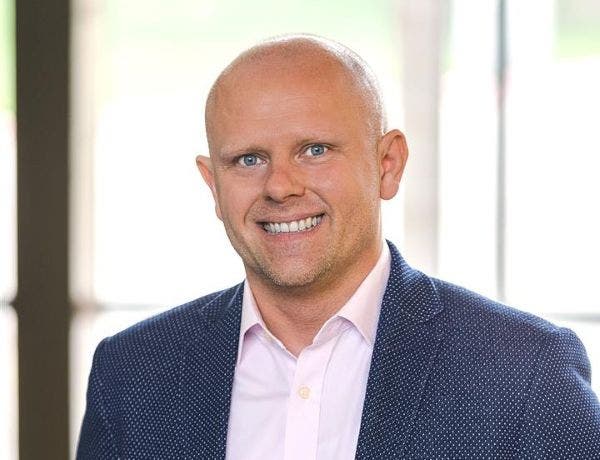
National managed service provider Integris has developed an internal AIOps framework and is now looking to roll its experience into an offering it can take to its clients.
Integris, which started in 1997 as Domain Computer Services and which now has about 750 employees serving over 3,000 clients, has been working on developing its AIOps framework a couple of years ago, said Kris Laskarzewski, chief transformation officer for the Cranbury, New Jersey-based MSP.
“It’s not a new concept, but within the last 12 to 18 months, there has been tremendous change in that technology that can help automate and deliver intelligence to the business, and we took advantage of that,” Laskarzewski (pictured above) told CRN. “And there’s definitely some investment. There are some tools and platforms you can employ. But the biggest investment is, frankly, a mind shift for the people that work within a business, because there’s a lot of fear around automation. The way we think about AI is not to replace people but to empower them, and we deploy them into places where they can do more meaningful work.”
[Related: MSP Integris Launches Empower Legal Practice Focused On Law Firms]
The internal AIOps framework of Integris, ranked No. 189 on CRN’s 2025 Solution Provider 500, has proved itself, Laskarzewski said. For instance, the time to resolution of issues for its clients are down 50 percent in many areas of the business, and since last March the company has already saved its clients 26,000 hours of manual labor, he said.
“But what I’m most excited about is, we’re a business, and our clients are businesses, too,” he said. “We have the ability to take what we have learned. being that ‘client zero,’ and start putting that in the front of our clients. That is the most exciting thing for me, because our clients would benefit from exactly the same thing.”
As a company focused on IT support, triaging and solving fairly manual but at the same time simple issues is an area ripe for automation for Integris, Laskarzewski said.
“Imagine an email comes in, or a call comes in,” he said. “Back in the day, we would have a human listening to that phone call or a voicemail or read that email and decide who should be working on that ticket. We now have technology that can read that email or listen to that phone call and can get a view across the whole business, across the whole service delivery organization, just hundreds of people, to determine who knows the client, who’s familiar with the client, who worked on that or similar issues in the past, who’s in the office today, and then can reroute that ticket and put it in front of the best resource. And that is a significant improvement in speed and quality.”
Laskarzewski admitted the chance for errors remains.
“Automation and AI are going to make a lot of errors,” he said. “It’s like humans. Humans are not perfect, but what’s important to us, and that was part of the design process as well, is to be able to get visibility into these errors and ultimately create a system in which we can evolve and that just keeps improving the logic we put in place. Nothing is perfect. We have teams that oversee these processes and pay attention to it, and it’s all about tweaking.”
The next step for Integris and its AIOps framework is to bring it to its clients, Laskarzewski said.
“I’m super excited about taking the lessons we learned and start putting them in front of our clients,” he said. “There’s a lot of companies trying to do something like that, and a lot of experiments in that space, as it should, because it’s a fairly new space. Doing what we are doing for our clients can only be done well if you have trust with your clients. In my view, now I can come to clients and say, ‘I want to try to come up with something to experiment with. We have done this in our business. We can take this to your business, too.”
Integris’ teams and advisors have seen the AIOps framework works, which gives them confidence in it, Laskarzewski said.
“And ultimately, confidence translates to our trust with our clients,” he said. “We’re growing the team that focuses on translating the internal AIOps into something we can start putting in front of our clients. We have just hired a very talented advisor who’s going to be helping us packaging and delivering that to our clients.”
Ultimately, Integris putting AI and automation to work generating outcomes that can be quantified and creating real returns on that investment, Laskarzewski said.
“I don’t want to be selfish,” he said. “I don’t want to keep this only for Integris. I want to start sharing it with the world, with our clients, and getting them excited about it, too. But the last thing I want to do is experiment. I want to deliver something that is tangible, and the proof is in the pudding. We are already doing it ourselves.”
While a part of Integris’ primary customer base of smaller businesses is ready for AIOps, another part is not, Laskarzewski said.
“A big part of what we’ve been through, the main question, is what areas of the business can be automated, can benefit from something like that,” he said. “That’s the million-dollar question, and ultimately helping them get ready is our job. Part of the journey with our clients is explaining what this is all about, what this thing can do, and then safely and responsibly start helping them think through how this would work in their business. It starts with education. We’re not going to be pushing automation for automation’s sake with our clients. We’re sitting down with them and saying, ‘Let’s walk through how your finance works, how your HR works, and once we identify your chores, what can we do about them? Is there technology that will help?’ And most of the time, the answer is yes.”
A big issue with smaller businesses’ adoption of AIOps is around security, Laskarzewski said.
“There’s no governance,” he said. “SMBs are often quick adopters. They don’t necessarily have compliance officers and lawyers that are thinking through those things, but they are quick adopters which can have some consequences. What has become abundantly clear is that security has to be at the center of this. Everything we build is built on a platform built with a security-first mindset. There’s a lot of governance and compliance that we put in around those things. There are policies we help our clients with educating their staff about what’s right, what’s wrong.”
Integris continues to look for new areas to apply its AIOps platform, Laskarzewski said.
“The beauty of my role is, I’m involved in the entire business across all the departments, and we’re looking for chores that we can try to automate,” he said. “There’s so much work that can be done within our finance team, our accounting team, our HR team, and not just service delivery. Service delivery is definitely the biggest team at Integris, and is the biggest opportunity, which is why we started with that. There’s definitely other low-hanging fruits. Every department, every area of the business can benefit and will benefit eventually from what we have done in the service delivery space.”