GDT CEO Shawn O’Grady On Softcat’s Blockbuster Acquisition Of GDT: ‘Scale Matters. The Bar Continues To Be Raised.’
“This is a formidable new global competitor that we are all going to have to deal with,” said a U.S.-based SP 500 CEO, who did not want to be identified. “Hats off to Softcat for getting ahead of what is sure to be a new era of global competition as customers look for global scale and support for AI adoption and implementation.”
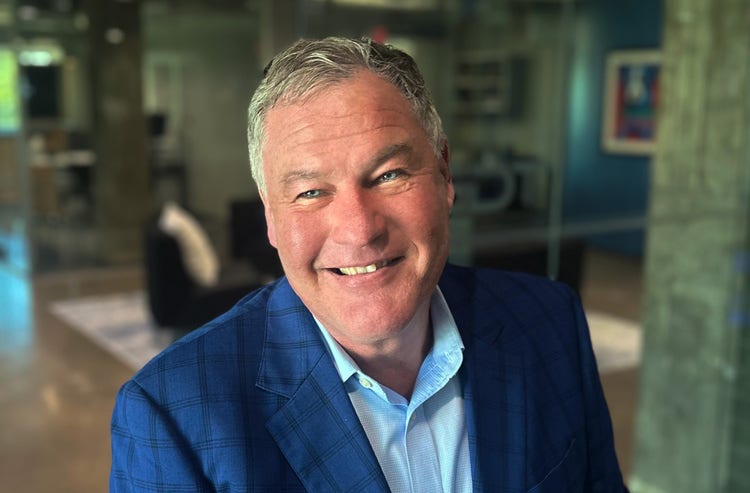
GDT CEO Shawn O’Grady said the blockbuster $1.05 billion “enterprise value” transatlantic deal, under which No. 1 solution provider Softcat acquired GDT, underscores the importance of “scale” in the AI era.
“Scale matters,” said O’Grady, who has now helped complete four successful solution provider exits over the course of his 41-year channel career. “The bar continues to be raised. If you don’t have the scale it’s hard to have the resources that you need in order to be considered a viable player. That is where scale really comes in. Scale gives you credibility.”
The combined Softcat, the U.K.’s number one solution provider for the last three years, and GDT, No. 56 on the 2026 CRN SP 500, creates a formidable new $4 billion-plus global channel powerhouse with approximately 4,000 employees and broad vendor reach with Cisco, Nvidia, HPE, Dell Technologies, Microsoft and Amazon Web Services.
H.I.G. Capital, the majority owner of GDT, said the deal has an enterprise value of $1.05 billion. Enterprise value represents the total value of the business being acquired, including debt and excluding cash.
GDT will retain its name, leadership team and workforce, operating as a wholly owned Softcat subsidiary.
O’Grady said he expects GDT to grow “much faster” under Softcat’s ownership. “Part of that is because they are managing to a different outcome than private equity would manage to,” he said. “They are taking the long-term view.”
O’Grady said the “cultural match” was the key to completing the deal with Softcat. “Both GDT and Softcat firmly believe that it all starts with the employees,” he said. “Because if you start with the employees then the customer gets taken care of. If the customer is taken care of, the investor gets taken care of.”
O’Grady said he stayed with each of the acquiring companies for four or five years during his prior solution provider sales and expects to do the same with Softcat.
Both O’Grady and Softcat Executive Director and CEO Graham Charlton both addressed employees in respective videos in the U.S. and U.K. after the deal was completed at 11:15 a.m. CST.
In Charlton’s video, the message was that he was “extremely excited” about the GDT acquisition. He informed employees that the company was looking for years to make the right acquisition.
“His message was they had been looking at this for years and decided GDT was the right company,” said O’Grady. “He wanted to send a message to the U.S. This is the company we wanted. We got them. We don’t want to change you. We bought you for who you are!”
As for O’Grady’s message to the United Kingdom employees: “We also have an employee-first culture! You’re going like our people! I told them we are proud of what we have accomplished but we are in a $1 trillion market in North America! We have $1.5 billion of a $1 trillion market. The future is unlimited. We are hungry to get more than our fair share. We are really confident working together with Softcat we are going to get it!”
O’Grady said that he expects to see continued consolidation in the market. “It’s because of the complexity and the level of expertise that you need to have to compete,” he said of the increased M&A activity. “You’ve got to have scale in order to really be able to compete for high-quality deals.”
Below is an excerpt from the conversation with O’Grady.

How important is the scale that the combination of Softcat and GDT brings to employees, customers and vendors?
While the opportunity in the market is good, the capabilities that somebody like us has to have to be able to really compete for that opportunity is bigger than it has ever been. We have about 1,000 employees and Softcat has about 3,000 employees. We are very much in the mix but our competitors are trying to grow bigger too.
Scale matters. The bar continues to be raised. If you don’t have the scale it’s hard to have the resources that you need in order to be considered a viable player. That is where scale really comes in. Scale gives you credibility.

How big a leap forward does this deal bring you in terms of the global scale?
We are both big in the Cisco ecosystem. We cover all the certifications there for Cisco 360 (global partner program). We have made a ton of investment there. We literally have hundreds and hundreds of certifications. We have great Nvidia certifications and such. Softcat is way stronger than we are in Dell and HPE. They are very big with Microsoft and AWS.
What’s most beneficial to our customers is access to talent and capabilities that go way beyond what GDT had before the acquisition.
It’s a nice combination in terms of the portfolio. There is a little bit of overlap in the portfolio, but not a lot. It’s mostly synergistic. And there is no overlap in customers. Our customer base is completely different than their customer base.
So Softcat customers can begin to take advantage of the GDT capabilities and the GDT customers can take advantage of the Softcat capabilities. It is all upside.
What was the critical factor in the acquisition of GDT in your mind?
I think the employee-first cultural match was the biggest factor than anything else.
Both GDT and Softcat firmly believe that it all starts with the employees. Because if you start with the employees then the customer gets taken care of. If the customer is taken care of, the investor gets taken care of.
You have to make sure your employees are getting what they need.
A lot of companies say they are employee-first but there are very few that actually walk that talk. Softcat does and we do! They saw that.
They just found it to be a very, very solid fit. That was more important than anything else.
It’s a good alignment of the companies. We are both successful. We have complementary portfolios and capabilities.
We have 250 people in India. They haven’t built that out yet.
How big a differentiator is that GDT Global Operations Center in Bangalore?
It goes back about four-and-a-half years. When I got here four years ago we had about 25 people there. It is 250 people now. It is really important for us.
It has not been our intention that India be a substitute for U.S. labor. We have not taken a course of action in general to eliminate jobs in the US and move them to India. This is about having access to exceptional talent. Every one of our engineers (in India) has a bachelor’s degree in engineering. Most people can’t say that about their U.S. workforce.
More and more we are doing the hard to source jobs in India because their labor pool is so much better. Not only is the population significantly bigger but they are graduating STEM graduates at a much higher rate than anywhere else. So when you are looking for skills that are hard to fill like AI and cybersecurity skills we have found it to be way easier to source that labor in India than the U.S.
How does it feel to be part of Softcat?
First of all, I really admire Softcat. They have a great business. They have a great culture. If you go to their office in London it is jam packed. People are excited and engaged! There is a lot of activity and buzz and the company is doing great!
They are proving that employee-first produces results that are spectacular for the investor.
I really like Graham Charlton (Softcat Executive Director and CEO) and the leadership team. I think they are excited about GDT because of the people we have here.
I think very highly of Graham. He’s a really smart guy, a great CEO, a great leader and a straight shooter. I really appreciate that.
How do the companies compare in terms of the capabilities and customers you each bring to the table?
There is practically zero overlap between the two companies. They do U.S. business but they do it predominantly to support their U.K. and Ireland customers. There is no desire they have to come in and change the GDT operation. It is like the best of both worlds!
People were really excited today. I knew they would be. I was excited to tell them.
What does it mean that GDT retains its name, leadership team and workforce, operating as a wholly owned Softcat subsidiary?
I am delighted that they are already demonstrating they mean it when they say they are empowering us to serve our market and serve our customers. They are walking the talk.
That comes with a lot of pressure. I told my team today that I feel a tremendous amount of pressure to deliver for Softcat. I really do!
How important is the global reach you get with the deal?
The industry is very much going global. But it’s also true that with a lot of big companies with global footprints there is a certain amount of decentralization.
We are in a global economy but it is an economy that also has regional histories and cultures that is impossible to overcome. Global is important. It is going to be more important, but it is secondary to scale.

How do you see the global solution provider landscape changing in the next three years when you look at the scale needed to compete at the highest level?
Every industry, as it matures, consolidates. It just does. People forget because it was before our time, but the auto industry used to have dozens and dozens of players. The company General Motors came from a tremendous amount of acquisitions. Now we have a handful of car companies.
There will always be room for niches and some level of entrepreneurship in the technology space, but you have to believe that consolidation is inevitable.
If you are in it as an investor you realize there is an enormous amount of activity and interest toward consolidation. You just have to expect that is going to happen.
What is driving that consolidation?
It’s because of the complexity and the level of expertise that you need to have to compete. You’ve got to have scale in order to really be able to compete for high-quality deals.

How does this deal compare to the other successful solution provider exits you have had?
I really take pride in the fact that every exit I took part in was good for investors on both sides. It was good for the previous investors when we sold and over time also good for the purchasing company. That is really important to me.
How did the deal come together with you and Graham talking with one another?
We spent a lot of time together. It was important for us to align on what the combined entity would look like, how we were going to make it more valuable with one plus one equaling three.
We hosted them in Dallas twice. They hosted us in London once. We hosted them in India once. We spent a lot of time together. It really made us feel confident that we have something special here.
How excited are you about the future with Softcat?
We were going to continue to grow. I think we are going to grow much faster under Softcat’s ownership. Part of that is because they are managing to a different outcome than private equity would manage to. They are taking the long term view. They take a five year plus view.
I think Softcat will grow faster too, but it won’t be the same impact on them. They are already bigger than us and are doing extremely well.
We do bring capabilities that they are going to leverage that they don’t need to build on their own and now they don’t need to build them.
The real impact is going to be on us. We are going to grow significantly faster than we would have!
What are you most proud of as you look back on the five years under H.I.G. Capital?
H.I.G. bought a good company when they bought GDT (five years ago). In the last four years we made it a substantially better company in a lot of ways. We’ve doubled our sales force. We doubled our solutions architect team. We have grown our services considerably. We have built out India. We have higher certification in the AI infrastructure world.
We have built a more diversified, stable and professionally run business. It was a good business when H.I.G. bought it. It is a substantially better business today.