‘Leave The Ladder Down’: Black Channel Executives Share Lessons For Building Opportunity, Representation
‘As you climb the ladder, make sure to leave the ladder down, because we want others to also climb the ladder and we want to make that ladder wider so it’s easier for them to climb. I look for individuals that will ultimately look to do that for others, because as they become the future leaders, that’s what will raise the tide to make a good organization,’ Chris Bell, SVP, global channel, alliances and corporate development at Sophos, tells CRN.
For Georgette Fraser, mentors in her life and career have ranged from bosses at work, to her computer teacher from her youth, to her mother who immigrated from Jamaica to New York with a handful of dollars in her pocket and taught Fraser “that anything is possible.”
For Chris Bell, a mentor at Advanced Micro Devices exemplified how to be a successful Black executive at a large technology company while a top female executive at SecureWorks took a chance on Bell, giving him the time and opportunities that put him on the path to become SecureWorks’ chief strategy officer and now a senior vice president and channel chief at Sophos.
And Corey Kirkendoll — who wished he saw more people of color in leadership positions at the companies where he worked earlier in his career — has sought to translate his decades of IT experience into mentorship for the young professionals he advises.
To honor Black History Month, these three executives shared their stories of breaking into the channel and resources they view as helping bring more underrepresented populations into the business of technology.
The technology industry continues to show continued efforts in diversity and inclusion, with 182 software companies creating products to help tech firms identify and hire talented candidates from underrepresented groups to grow a constrained talent pool, according to a report last year from Harvard Business School’s Institute for Business in Global Society.
From 2007 to 2024, tech software and services jobs grew 75 percent, more than four times the growth rate for total U.S. jobs, according to the report. Tech employment over the next 10 years should grow about twice the rate of overall employment across the economy, and it offers a median annual salary of around $105,000, more than double the median pay for the rest of the U.S. labor force.
Black Americans are represented in about 7 percent of tech jobs even though they represent about 13 percent of the U.S. workforce. Women hold 27 percent of tech jobs despite representing more than half of the workforce. And in a study on job applicant names, employers typically called back applicants with names more closely associated with white people about nine percent more often than calling back applicants with names more closely associated with Black people.
While underrepresented communities have made strides over the years in tech and the channel, much work remains to create a more equitable IT community.
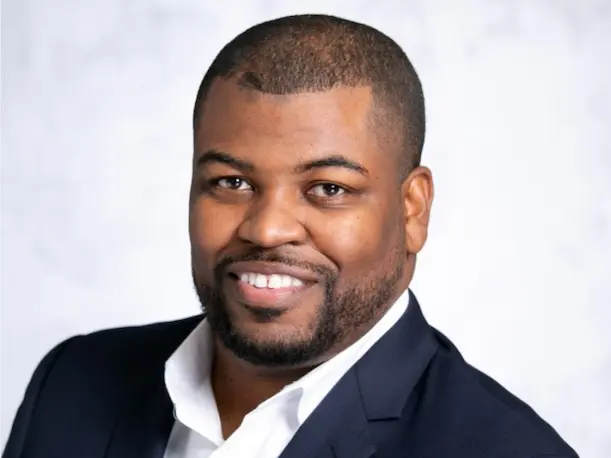
Keeping The Ladder Down
Chris Bell, senior vice president, global channel, alliances and corporate development at Sophos, has tried on many hats. He was an engineering student with a love for science, math, and finance, an intern for the Department of Defense and later Xerox before beginning his career at Dell Technologies.
“I was more focused on breadth of experiences early in my career because it was just as important for me to rule things in as ruling things out,” he said.
Now sitting in the channel chief seat at Sophos, Bell knows first-hand how important diversity is to career growth. His career path within the IT space has not been linear, and he has worked to marry his different interests and strengths together within his various job roles. It’s something that’s required plenty of context switching, Bell said.
“Every 30 minutes, you’re talking to an engineer, the CFO, and then next you’re talking to a partner,” he said.
People coming in with different backgrounds and experiences leads to diversity of thought, which is critical for any organization that wants to grow, Bell said.
“If you think about talking to a solution provider or MSP, that MSP is looking for diversity of thought and perspective to drive growth for them. That’s what I’ve always thought about when I’m hiring leaders in my own organization: Do we have the right diversity of thought? It’s always easy to hire people that think like you, look like you, but ultimately, that’s not what will make the best team.”
In addition to mentorship and sponsorship—two different but equally important dynamics—another way that companies can create a more inclusive and successful channel ecosystem is by harnessing AI “for the good,” Bell said.
“It’s all about the inputs that you put into the AI, so I think it can and should absolutely help, as long as you’re using AI for the good. It’s no different than cybersecurity where you can use AI for good, or there’s plenty of opportunities for bad,” he said. “Just based on the large language models and how quickly can get to information, I think that’s a positive as a path to normalize some of the challenges that happen with underrepresented groups.”
Employee resource groups (ERGs) and professional resource groups are another great way to learn how others are navigating their own careers, expanding their networks, and helping others, Bell said.
“That was a great opportunity for me to just see how many others were in similar seats to me and how we could rise each other up,” he said.
Diversity of thought and how minority groups are represented within the company is something that Bell considers every time he’s considered a career move. It’s something he wants others to recognize within his own organization, too.
“As you climb the ladder, make sure to leave the ladder down, because we want others to also climb the ladder and we want to make that ladder wider so it’s easier for them to climb,” he said. “I look for individuals that will ultimately look to do that for others, because as they become the future leaders, that’s what will raise the tide to make a good organization.”
However, Bell said he is still often the only African American person in the room.
“A core goal of mine is to make sure I’m not the only one in the future,” he said.
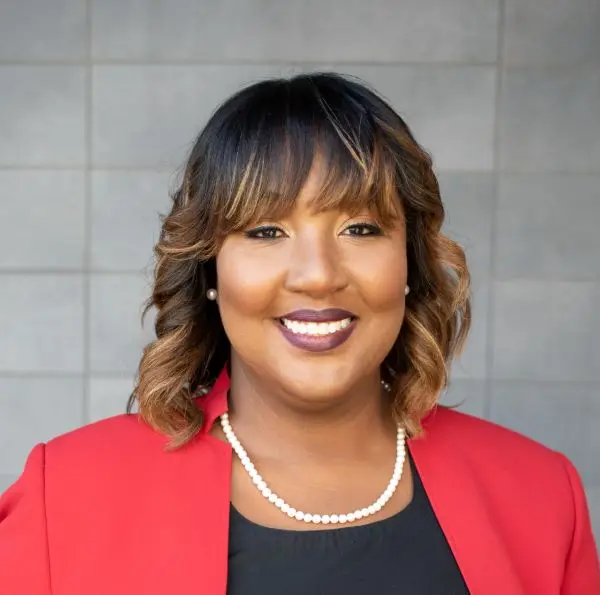
Flexibility And Adaptation
Georgette Fraser’s path to solution provider CEO had its starts when she pursued a love of coding as a child and studied at New York’s Computer School, an alternative middle school started in 1983. Fraser calls one of the school’s creators, Peter Rentof, an early mentor.
“It’s having those people in your life that actually not just believe in you and pour into you, but that you have really great relationships with,” she said.
She followed her mother into the banking field during college, becoming a supervisor before she was 20 and then an executive. Fraser calls her mother–an immigrant from Jamaica who came to the U.S. with a handful of dollars–another early mentor who taught Fraser a resilience she’s carried into her entrepreneurial career. Her mom continues to accompany her to galas and industry events.
“Being able to say, ‘If anybody can find that one answer that may not exist today, it’s going to be me because I’m not going to give up until I do, is really what I learned from my mom,’” Fraser said. “She didn’t know what she was doing, but she knew that she was going to get there.”
Eventually, Fraser decided to give up her banking job and take a leap of faith on an internship at financial technology vendor Fiserv. She and her interviewer, a company executive, gelled so well that the interview went beyond its 30-minute allotment and turned into a whiteboard session on how to build out an organization within the company.
“She’s still a very good friend of mine right now, years later,” Fraser said.
Fraser eventually entered fintech consulting and gained experience in product ownership, project management, building and designing data centers, executing large-scale technology implementations, upgrades and modernizations—along the way using her coding and technological know-how to earn the trust of programming teams.
“I just happen to be a person that can talk to people and understand the vision of the technology,” she said. “But I’m a geek and a coder and a developer at heart.”
The freelance work marked the start of her Tucker, Ga.-based solution provider Transformation Lead, which she has led for about 10 years.
She tells others her story to show that the path to the channel and the technology industry doesn’t have to follow a straight line. Fraser also serves as an adjunct professor at Georgia State University as a way to give to the next generation of IT professionals. Even students she advises can shape work experience from outside of tech–whether they worked as bartenders or bank tellers–into a resume that attracts employers in the industry.
“Everyone uses technology,” she said. “There is a job for just about every skill in our technology universe. And every skill can be valuable.”
Looking ahead, Fraser said that organizations that want to improve representation in the tech industry need actions that speak louder than words. She is still often the only Black female member of boards she serves on.
Employers should be more mindful of the issues that affect working parents, such as childcare, she said. And inclusion projects need mechanisms in place to make sure that they empower future participants, not just the pilot cohort. She held up IBM’s history of free technology courses as an example others should follow.
“Open the door for them, and not just one person, but for the masses,” she said. “What do you do beyond that actually actuates something–and not just light a spark and leave it there.”
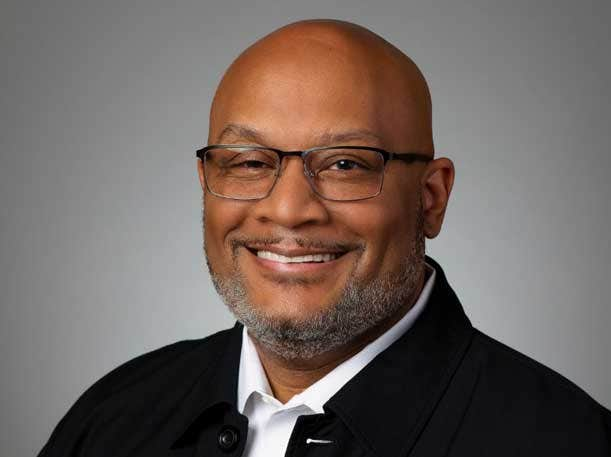
From the Classroom To The Channel
Corey Kirkendoll, president and CEO of 5K Technical Services, got his start at Saint Augustine’s University, a historically black college and university (HBCU) in Raleigh, N.C., where he majored in business administration and admittedly didn’t know much about the tech space at the time. He wound up working for the likes of IBM, Cisco and EMC for a number of years, but he noticed he wasn’t seeing racial and ethnic minority groups in leadership or mentorship positions when he was first starting out, so he didn’t have a good idea of where to go, Kirkendoll said.
“Now that I’m in the industry, I want to be that guy for everybody that I could possibly be that guy for—who can show them that there’s opportunities out there and they can do it as well. Sometimes they just need somebody they can emulate and someone who they can relate to, to know where to shoot to for their dreams,” he said.
It’s safe to say Kirkendoll has taken that charter to heart. Today, he’s involved with a number of organizations promoting diversity, including the National Society of Black Engineers, the Society of Women Engineers and the Society of Hispanic Professional Engineers, and he’s serving as the technology innovation chair for the National Black MBA Association. In his “free time,” he’s also an adjunct professor at Collin College, an HBCU in McKinney, Texas.
Corey stressed the importance of mentorship and starting diversity efforts at the high school level—way before college and before people are making career decisions. He also is a big advocator for lowering entry barriers for jobs for underrepresented groups.
“I think if you start at the college level, you’re almost too late. [Some] students that are graduating actually are qualified to be on entry level jobs and may not want to go to college,” he said, adding, “if you look at what’s happening in the channel, the older generation of buyers are changing. Those high school students, those college students, are now the CEOs and the CFOs that we’re talking to, so those are the [people] that we need to be in front of because they’ve grown up with this technology.”
While the channel remains white- and male-dominated, Kirkendoll and others are making efforts to bring in more women and people of color into the industry “to let them know it’s there,” he said.
“If we’re not at the high school level, they don’t see it and they don’t understand it. Then, they venture off into something else, and they could have had a very good career doing this, but they don’t know that it exists,” he said.
It still “shocks” Kirkendoll when he asks a young student about the jobs they are applying to and how little many people know about the channel, he said.
“They don’t even know what an MSP is. They want to go and work in the enterprise, which is fine, but there’s no better place to get your hands dirty and your feet wet than at an MSP,” he said. “You touch everything and it’s like: ‘I can really figure out what I want to do when I grow up.’”