M&A Maven Martin Wolf On Softcat-GDT Deal: ‘You Have To Be Global Or Go Home’
‘We’re in a consolidating market,’ says Martin Wolf, founder and chairman of martinwolf, a pre-eminent IT midmarket investment bank. ‘You are either a consolidator or a consolidatee. Softcat just said they are a consolidator.’
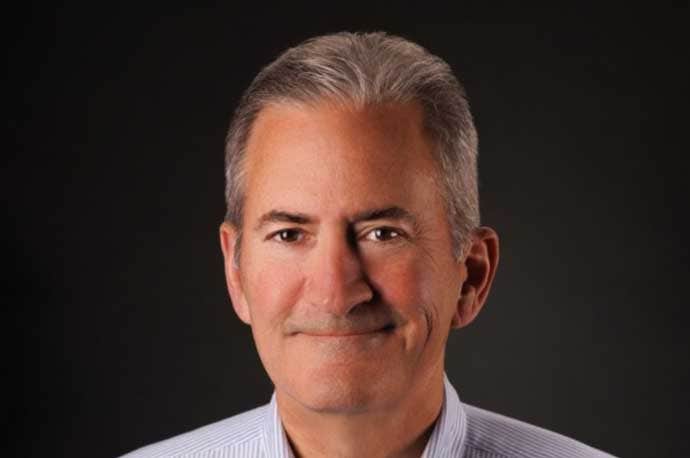
Martin Wolf, founder and chairman of martinwolf, a pre-eminent IT midmarket channel M&A advisor and investment banker, said the blockbuster Softcat acquisition of GDT highlights the importance of being a global provider in the AI era.
“You have to be global or go home,” said Wolf, whose firm has completed nearly 300 deals in the IT sector for a little less than $10 billion over the course of 29 years in the business. “What’s driving it are customers. They drive everything. They have global businesses. More of these technology services are being outsourced, and AI just accelerates it. We’re in a consolidating market. You are either a consolidator or a consolidatee. Softcat just said they are a consolidator. They just bought a large U.S. business.”
Softcat, the No. 1 U.K. solution provider on CRN’s top VAR list for the last three years, announced on Thursday that it had acquired U.S.-based GDT in a $1.05 billion “enterprise value” deal that creates a new global channel powerhouse.
The acquisition combines the U.K.-based publicly traded Softcat with $2.85 billion in revenue and 2,800 employees with GDT, No. 56 on the 2026 CRN Solution Provider 500, a Dallas-based solution provider with 900 employees and $1.4 billion in annual revenue.
The deal comes five years after H.I.G. Capital, a Miami-based provider of debt and equity capital to small and midsize companies, acquired an 80 percent stake in GDT.
Under H.I.G.’s ownership, GDT doubled its EBITDA (earnings before interest, taxes, depreciation and amortization) and increased its mix of recurring gross profit.
Aaron Tolson and Kevin Van Culin, managing directors at H.I.G, were credited for helping to close the deal.
H.I.G. Capital Managing Director Is A ‘Maestro’
Wolf called Van Culin a “maestro” for another outstanding deal creating value in the solution provider market. “He’s smart and he works hard,” said Wolf.
Van Culin was also the driving force behind the sale of Trace3, No. 36 on the 2026 CRN Solution Provider 500, to American Securities in 2021.
As for GDT CEO Shawn O’Grady, a seasoned 41-year channel veteran who has now been involved with four successful solution provider exits, Wolf called him a “very capable” top executive.
Wolf said he sees the global solution provider M&A market continuing to heat up. In fact, the international segment is the fastest-growing part of his business.
“We are as busy as we have ever been, and the deals tend to be larger,” he said. “We are in the process of selling one of the premier complex network integrators in Europe. This is real time. It is a private company and the buyers are international.”
Wolf said his company has deals that it is working on in 10 countries. “If you look at our existing book of business, it’s more of an international presence,” he said.
Key to the international deals is a favorable regulatory environment, said Wolf. “During the Biden administration you couldn’t get anything approved so there was a standstill with complex M&A—horizontal or vertical. As long as [the Trump administration] continues to allow them to happen you will see more rather than less, and they will be bigger rather than smaller.”
A Transformational Deal
Wolf called the Softcat-GDT deal a “transformational deal” that involves stock, debt and cash. “The key to transformational transactions is you really need to understand what you are buying,” he said. “To the extent they know what they are buying with the management they have, they should have a good outcome.”
According to a Softcat regulatory filing, the acquisition will be funded through a combination of cash on the balance sheet (£100 million), new debt facilities with Softcat’s relationship lenders (£550 million) comprising a £450 million revolving credit facility and £100 million term loan, and proceeds from an equity placing (£350 million), expected to represent less than 10 percent of issued share capital.
Wolf said the biggest change in the nearly three decades he has been doing deals is the rapidly changing technology landscape with AI, data centers and hybrid cloud.
“We started out selling resellers,” he said. “We sold and bought companies where the technology no longer exists. If you look at what’s happening now with AI, hybrid cloud and the new data centers, all of that didn’t exist when we started the business. That creates opportunity.”
Wolf said what remains the same is the solution provider CEOs and entrepreneurs running these businesses continue to be the “best” and “heartiest” businesspeople in the world. “The people running these businesses that sell product and wrap around services are the smartest operators there are because they work in a lower-margin environment and they figure out a way to serve customers and generate profitability,” he said.
Global Expansion With Ahead And Computacenter
The Softcat-GDT deals comes with global expansion happening on both sides of the Atlantic with Ahead, No. 24 on the 2026 CRN Solution Provider 500, announcing in May that it was opening a new liquid-cooled configuration center outside London and acquiring Prolimax, a Netherlands-based technology services company.
Stephen Ayoub, executive vice chairman of Ahead, the $4 billion-plus solution provider powerhouse, No. 24 on the 2026 CRN Solution Provider 500, told CRN in May at Dell Technologies World that over the next 20 months Ahead would like to see 20 percent of sales coming from EMEA. “That’s conservative,” he said. “I think it can be much more. The market will decide what our growth is. We are going to do the right things to serve our clients and align with Dell Technologies and key partners. We’re going to make sure we focus on customer satisfaction and quality of work. We believe with that is going to come scale.”
Computacenter, the No. 2 United Kingdom solution provider on CRN’s Top VAR list, has acquired five North America companies, starting with FusionStorm, San Francisco, in 2018; Pivot Technology Solutions, Toronto, in 2020; Business IT Source, a Buffalo Grove, Ill., solution provider, in 2022; AgreeYa Solutions, a Folsom, Calif., solution provider, in 2025; and federal government solution provider Government Acquisitions, Cincinnati, in May.
Computacenter North America President Justin Griffin told CRN at Dell Technologies World in May that the current market is a “golden era” for channel partners. “The explosion of AI is driving everything,” he said. “The business we do—technology infrastructure—historically has not been front-page news. If you open The Wall Street Journal every morning, the first articles you see are about AI data centers. … Everybody understands what we do because it is the dominant story in the economy. It is the engine driving the whole economy. The customers building out AI data centers are some of our best customers and then we have our brick-and-mortar enterprise customers in retail, financial services, state and local government, and they are investing too.”
Wolf, for his part, said products remain a critical part of driving value for customers in the current AI market, even with the rise of services. In fact, he praised Computacenter for providing big value for customers by “running to the products and killing it,” delivering high-value solutions for customers.
As to where the “puck is going,” Wolf said the current market trends favor Nvidia as the AI market leader and Dell as the AI infrastructure superpower.
“Nvidia is the 8,000-pound gorilla and then you have the poor man’s Nvidia, which is Dell,” said Wolf. “Dell is really in the right spot, and the poor man’s Dell is Computacenter. When you look at the share prices over the last 12 months and the value those two companies have created, it is unbelievable. I think [Dell founder, Chairman and CEO] Michael Dell and [Computacenter CEO] Michael Norris are computer all-stars and are two of the greatest wealth creators in the world. They understand that product is good—not bad.”