Tusker’s New CEO: Acquisitions To Drive Half The Company’s Growth, But People Come First
New Tusker CEO Matt Gaudio details the solution provider’s growth strategy, including acquisitions, MSP expansion, data center infrastructure, cybersecurity services, AI investments and a people-first culture supporting national reach and long-term organic growth.
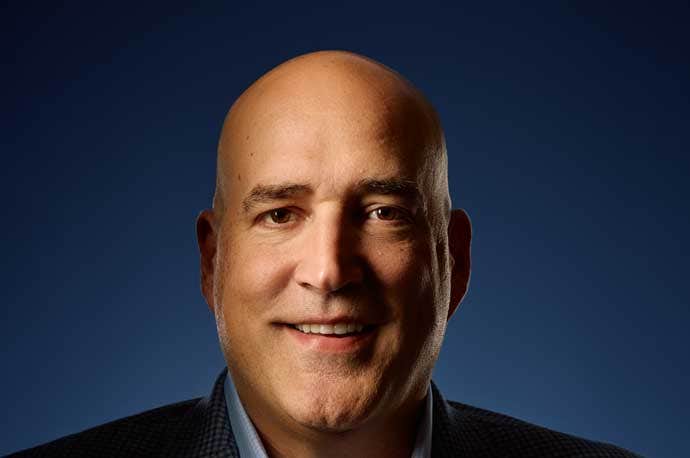
New Tusker CEO Matt Gaudio is looking to accelerate the national technology solution provider’s growth while retaining the local relationships and people-first culture that helped build its regional businesses.
Gaudio, previously Tusker’s chief solutions delivery officer, told CRN in an exclusive meeting that the Chicago-based company is now in execution mode after bringing together six acquired businesses, including ACP, Camera Corner Connecting Point and Fortress Security Risk Management. Acquisitions are expected to generate half of Tusker’s growth, but Gaudio said culture will remain central to the strategy.
“Even though we’re acquisition-minded and expect 50 percent of our growth to come from acquisitions, it’s still about the people and the culture, and that’s not just a tagline,” he said. “We’re trying to live that. Even though we’re bringing together these different cultures from these different organizations, we’re really trying to live our ‘people first’ tagline and taking care of the individuals as we drive forward.”
[Related: New Rules Of MSP M&A Valuation: The ‘Quality’ Of Revenue Is Key]
Organic growth also depends on people, Gaudio said. Tusker, ranked No. 151 on CRN’s 2026 Solution Provider 500, has roughly 240 technologists, a sales force spanning from Minnesota to Atlanta and the Boston area, and customers across the country. The company is open to expanding westward if the right opportunity emerges.
“The solutions we’re providing all come down to our people, and that’s where we’re investing,” he said.
Modern data center infrastructure is Tusker’s largest practice, while managed services, security and A/V are key elements of its broader growth plan, Gaudio said. Hardware remains a major part of the business, and Tusker is having its best year ever in 2026 despite supply chain constraints and rising prices.
“The gist is, we’re a national technology solutions company that’s not losing the relationships that made our regional businesses successful,” he said.
For the rest of 2026, Gaudio’s priorities include growing the MSP business, integrating Fortress and taking Tusker’s end-user data center, security and MSP platforms to market. He also has reallocated resources and hired an AI innovation team working on dozens of projects.
“We’re trying to be where the puck is going to be, not where the puck is today, and we’re spending all of our free cycles to stay ahead of the curve,” he said.
There’s a lot going on at Tusker. Here is more of CRN’s conversation with Gaudio.
Congratulations on your new role as CEO of Tusker. Prior to this, what did you do at the company?
For Tusker, I was the chief solutions delivery officer, and before that I was an advisor for 11 years as chief strategy officer and some other roles.
What is Tusker? How do you describe the company?
We’re first and foremost a solution provider. We’re a reseller that has a great services mix, based in the upper Midwest but with a national footprint. Tusker has purchased six different companies, and some of those companies have been around for 70 years.
So it was formed from the merger of multiple other solution providers?
That’s correct. The first company was ACP, Arlington Computer Products, which was based out of Chicago. It was started in the ’80s. And there was Camera Corner Connecting Point in Green Bay, Wisconsin, which has been around since 1953. There’s been four other businesses that have been acquired more recently, including Fortress Security Risk Management, based out of Cleveland. Our strategy had been acquiring these companies, and now we’re in execution mode of our growth strategy.
Did these acquisitions come because of a private equity investment?
It’s a family-owned fund that bought those companies and is now the owner of Tusker.
So would it be right to describe Tusker as a platform MSP?
Very much so.
Do you have more acquisitions lined up?
Not lined up, but we’re always looking. We have an investment thesis. We have a belief in how we can continue to grow. One of our taglines, our most important one, and I’m saying this for a reason because we’re talking acquisitions, is people first always. That certainly means our customers but also means our employees. So even though we’re acquisition-minded and expect 50 percent of our growth to come from acquisitions, it’s still about the people and the culture, and that’s not just a tagline. We’re trying to live that. Even though we’re bringing together these different cultures from these different organizations, we’re really trying to live our ‘people first’ tagline and take care of the individuals as we drive forward.
You just said that you’re driving 50 percent of your growth from acquisitions. How are you investing in terms of organic growth?
In this business, growth is through people. The number of people at Tusker has increased. We have roughly 240 technologists in the organization, including engineers or consultants or architects. The solutions we’re providing all come down to our people, and that’s where we're investing. I would also say our sales force is robust. It stretches from Minnesota to Atlanta and all the way up to the Boston area. So it’s a pretty big geo that we cover today, and we’re investing in people in those areas in addition to the acquisitions.
That geographic area you just mentioned sounds like the company hasn’t really done much business west of the Mississippi. Is that right?
It just has worked out that way. That was not the strategy. It just has happened.
Any plans to change that?
Short answer, yes. If the right opportunity comes available. And we’ve had those conversations. We do not feel like we’re locked into that geographic space. We have customers all over the country, quite honestly. But that’s just sort of where our six or seven offices are today.
What happened to Tusker’s previous CEO, Matt Zafirovski?
Matt took the president and COO role at Connection up in New Hampshire. He thought it was a great opportunity. He’s been in this space for six or seven years, meaning in the reseller system provider space. I have been with Tusker for about 16 months. I've known Tusker for about five years through my time at [Cleveland-based] Advizex Technologies. So hopefully the progression was natural.
Did you compete against Tusker when you were at Advizex?
Very, very little. It was more of a friendly relationship than it was a competitor relationship, but there were some accounts where we overlapped.
Do you have any strategic initiatives going on now aimed at boosting the company’s future fortunes?
Yes, but it’s no different from where the industry is. We’re all having challenges with supply chains, but the reality is AI and data centers are driving business. Our modern data center practice is our largest practice, and as I said, we have 240 technologists that are driving that type of business. There’s nothing incredibly different about what’s driving all of us to success in this space. But the gist is, we’re a national technology solutions company that’s not losing the relationships that made our regional businesses successful. There are tons of local MSPs, but with the Fortress acquisition we can service, particularly from a managed services or an MSP perspective, end users and data centers as well as offer a nice security footprint now. So our MSP business is a huge part of our growth strategy. And I’ll also add that Camera Corner had a very nice A/V business which was ranked in the top 25 or 28 in the country. So we have this A/V business that we do a great job with as well. Now that may not be where data center growth is happening, but it’s still a really nice business we have that continues to grow.
You said that data center is a big part of your business. Is hardware a big part of your business?
Yes, it is. We don’t shy away from it. We’re a reseller. It’s where the business has its roots going back dozens and dozens of years. We’re roughly the size that Advizex is. I mean, it’s a big business. We focus on the midmarket but have enterprise customers. Our solutions business, even though it’s incredibly important to us, is really just a quarter of our business.
Has Tusker suffered any impact from rising hardware prices?
Yes, we all have. Go back to COVID, when we had supply chain issues, [so] there’s an understanding of how this works because of what we went through those two years. Tusker’s having its best year ever in 2026, and that is because of the individuals at Tusker and the strategy that has been put into place. We’re now hitting our stride, and that doesn’t even include our Fortress acquisition. So to answer your question, we have a backlog just like everybody else that we’d love to be able to get products to our customers quicker, but the reality is Tusker is strong and in a good position.
By the way, where did the name ‘Tusker’ come from?
It was from when we did our rebrand in January. It’s the new name to bring our six orgs together, and it’s really from animals that use their tusks. Such animals are very smart and innovative, and they use their tusks in a lot of different ways. It’s a weapon, something to eat with, a tool, or whatnot, and the more we looked at that type of animal, the more we were like, ‘Gosh we want to be tough individuals. We want to be innovative. We want to use our tools in appropriate ways.’ So that’s where the brand came from.
What are your strategic priorities for the rest of 2026?
It’s continuing to grow our MSP business, get Fortress integrated, which is already happening, and continue to take our end-user data center, security platform and MSP platform to market. [And] what we’re doing with AI is interesting, just like everybody else. It’s a hot market to be in. We’ve reallocated and hired a whole group to be part of this innovation team with AI. We have dozens and dozens of true AI projects. They cover the hardware that folks are buying on top of it. It’s the push to be relevant and continue to be a part of where the industry is going. We’re trying to be where the puck is going to be, not where the puck is today, and we’re spending all of our free cycles to stay ahead of the curve.