Why AI Is The Top Priority For Major Tech Executives: CEO Outlook 2026
From infrastructure players to cybersecurity leaders, the world’s highest-ranking executives say AI is driving the biggest wave of innovation that the industry has seen in decades.

The one thing nearly every major tech CEO is putting at the top of their 2026 agenda? AI.
From infrastructure players to cybersecurity leaders, the world’s highest-ranking executives say AI is driving the biggest wave of innovation that the industry has seen in decades.
“Undoubtedly, the AI transition remains the most significant market for 2026 and beyond,” said Chuck Robbins, Cisco’s Chair and CEO.
Businesses are racing to turn AI’s potential into real outcomes. With that in mind, Judson Althoff, CEO of Microsoft’s commercial business, said that Microsoft and its partners are driving what he calls a “Frontier Transformation.”
This transformation is “a holistic reimagining of [customers’] business, deeply aligning AI with human ambition to achieve their highest aspirations and potential. ... The demand for AI-driven transformation spans every industry and region around the world, and partners are critical to delivering end-to-end outcomes,” he said.
The message is clear: Partners and customers that embrace AI now will be best positioned to capture the massive opportunities on the horizon.
“The biggest opportunity ahead is empowering our customers to realize the full value of AI. Dell and our partners are uniquely positioned at this pivotal moment, combining cutting-edge solutions with strategic collaboration across the ecosystem. … The technology we’re building today will power tomorrow’s breakthroughs. By driving innovation side by side with our partners, we’re creating lasting impact and building a foundation for decades of progress,” said Michael Dell, founder, chairman and CEO of Dell Technologies.
In written responses as part of CRN's 2026 CEO Outlook project, keep reading to see where CEOs are placing their bets and how they are relying on partners to help them tackle emerging technology opportunities this year.
What is the biggest market opportunity you and your channel partners will tackle together in 2026?

Jay Chaudhry
Zscaler
We see tremendous market opportunities for Zscaler and our partners in 2026. First, Zero Trust will continue to reduce cost and complexity, minimize cyber risk, and increase resilience by consolidating legacy network security into a unified Zero Trust platform that protects users, apps, and data everywhere—this translates to more opportunities for partners. Second, we want to help companies deploy safe and secure AI. That means safeguarding employee use of AI by blocking risky prompts and inadvertent sensitive data disclosures, and by performing AI Red Teaming for AI applications and models.

Antonio Neri
HPE
Our acquisition of Juniper Networks in 2025 accelerated our entire innovation strategy, strengthening our leadership in networking and expanding the capabilities we bring to customers in cloud and AI. Across our entire portfolio, we innovated at a relentless pace. The year ahead is about HPE and our channel partners capturing the immense opportunities in cloud and AI, leading our customers into a new era of business transformation and productivity. With AI rapidly shifting from assistant to actor, customers will need solutions that are more secure and scalable, while providing the visibility and automation to simplify management of their complex IT estates. From storage and servers to networking and software, HPE’s innovations create a clear path for channel partners to grow profitability by helping customers build future-ready agentic AI enterprises.

Kate Johnson
Lumen
The biggest opportunity in 2026 is helping customers build and run AI at scale, and on network infrastructure that can actually handle it. The demands for moving data in the era of AI are exponential, and most businesses are still trying to run it on yesterday’s internet architecture—best-effort connectivity with unpredictable latency and no guaranteed bandwidth. That’s the bottleneck. So, what Lumen will tackle with our channel and ecosystem partners is Cloud 2.0—a high-capacity, programmable connectivity fabric linking data centers, enterprise on-prem locations, and public cloud environments. This will remove friction so customers can deploy and scale AI without waiting on networking.

Jason Chen
Acer
The U.S. education [market] continues to be a significant opportunity for Acer and our channel partners in 2026. A large portion of this is the teacher refresh cycle and expected upgrades to Windows-based AI PCs and Chromebook Plus products. We are also seeing the re-emergence of esports programs in U.S. schools, which is an excellent opportunity for the channel to sell more premium, higher ASP gaming PCs. Beyond education, we see a big opportunity for Acer and our partners in the SMB space due to the Windows 11 refresh and increased demand for AI-capable PCs. Finally, in the enterprise space, we are partnering with the channel on major global rollouts of Chrome Enterprise products, and we are also seeing success with Acer monitors in corporate accounts.

Josh Dinneen
Blue Mantis
The biggest opportunity for Blue Mantis and its partners is to anticipate the needs of midmarket organizations [to] modernize their cybersecurity policies and adopt AI responsibly at scale. Customers must move faster in the year ahead to keep pace with the rapid advancements in emerging technologies, to address their rapidly rising tech debt and to overcome the IT and cybersecurity talent shortage. With our partners, we are tackling those opportunities head on by focusing on networking, security, AI, architecture and compliance projects delivered through both managed and professional services solutions.
What are the key technology investments you plan to make in 2026?
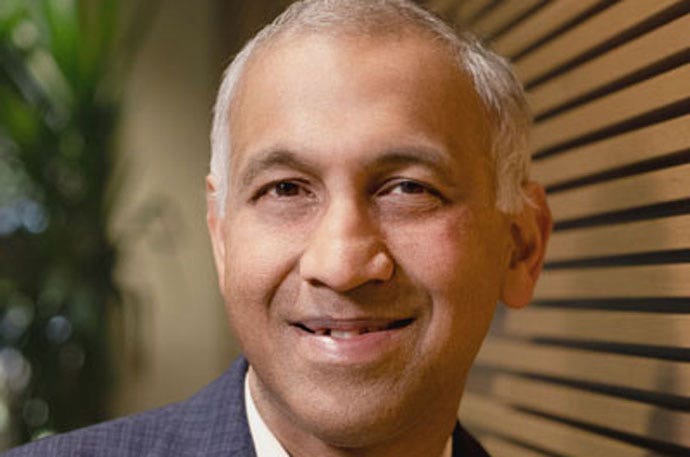
Rajiv Ramaswami
Nutanix
As AI adoption continues to rise in 2026, enterprises will look to find the most productive ways to process AI-related data locally. As a result, businesses will look to global management solutions with integrated security and resilient edge architectures to help keep this in check. We’re also investing in capabilities that make it easier for our service provider partners to offer scalable, managed versions of those services on behalf of customers.

Tomer Weingarten
SentinelOne
We are focused on strategically widening our platform’s aperture while redefining the standard for cybersecurity excellence. As we approach 2026, we will target our investments toward mission-critical technologies that accelerate our path to multibillion- dollar scale by fortifying our core pillars: Endpoint, Data, Cloud, and AI Security. We are committed to delivering superior customer outcomes and a unified platform experience.

Scott Chasin
Pax8
Pax8 will continue investing in the Pax8 Marketplace as a full-stack platform for agentic workloads. That includes multi-tenant orchestration, life-cycle management for AI agents, embedded assessment and telemetry, and monetization models that support usage- and outcome-based services. We’re also investing heavily in integration with hyperscaler ecosystems so partners can deploy, manage and govern intelligence across dozens or hundreds of customer environments with the same operational leverage they expect from cloud today.

Charles Giancarlo
Pure Storage
In a world where artificial intelligence, automation and analytics are redefining competitive advantage, enterprises can no longer afford to treat data as captive to specific applications. Data must be architected to stand on its own—self-describing, stateless, and managed globally by policy set in software. As the pace of our technology advancement accelerates with scale, we expect to continue investing in ways to reduce complexity for customers and partners alike. Our technology investments are centered on helping partners solve real customer problems at scale. Our ability to enable customers to create their own Enterprise Data Cloud provides a consistent way to manage, govern and protect data across environments, with fewer manual tasks, faster issue resolution and more predictable outcomes. For partners, this creates opportunities to deliver higher-value services around data architecture, compliance and life-cycle management.

Maryann Pagano
BlackHawk Data
One of our greatest strengths has always been designing and building innovative, scalable and resilient network infrastructures. As we look ahead to FY26, we’ ve continued to invest where it matters most. We have expanded our digital experience platform to help clients gain clear visibility into their technology assets from hardware and licensing to usage and lifecycle. This allows organizations to stay proactive, informed and ahead of change, rather than reacting to it. Strong infrastructure paired with insight is how we help our clients move forward with confidence.
What impact do you expect AI to have on the business you and your partners do together in 2026?

Judson Althoff
Microsoft
AI is redefining every aspect of partner engagement—from presales and delivery to customer success and support. Copilot and agentic AI will automate tasks that once took weeks, freeing partners to focus on higher-value services for our customers. AI-powered insights will accelerate co-sell motions, increase win rates and expand deal sizes. Partners who adopt AI internally will gain credibility and speed, enabling them to deliver transformative outcomes for customers grounded in experience. With unified platforms like Azure AI Foundry and Copilot Studio, partners can also build multi-agent solutions that drive measurable business impact. We believe Microsoft’s AI capabilities and innovation will continue serving as the foundation for partner-led business growth and Frontier Transformation in the year ahead.

Michelle Accardi
Liongard
AI will become the partner’s force multiplier. In 2026, AI shifts partners from managing information to guiding decisions —turning constant change into clear next steps. It reduces manual effort, accelerates on-boarding, and elevates conversations from technical details to business impact at every level of the organization. AI shouldn’t be replacing people—it should be replacing guesswork so MSPs can focus on growing their businesses and protecting their customers.

Chuck Robbins
Cisco Systems
AI’s impact is undeniable for Cisco and our partners, and we see the opportunity in three distinct but connected pillars: AI training infrastructure for hyperscalers, AI inference and enterprise clouds, and AI network connectivity. Cisco is already powering the world’s largest hyperscalers and we expect demand to ramp from neoclouds and sovereign cloud providers into 2026. We’re also simplifying and de-risking AI infrastructure deployments for enterprises through hardware and software innovation, along with our expanded partnership with Nvidia. Further, as customers prepare for the pervasive deployment of agents and apps, we will provide the critical connectivity to secure and automate network operations for agentic environments. Our partners will be essential in turning these technologies into real-world use cases, bringing the expertise and agility needed to design and support AI at scale.
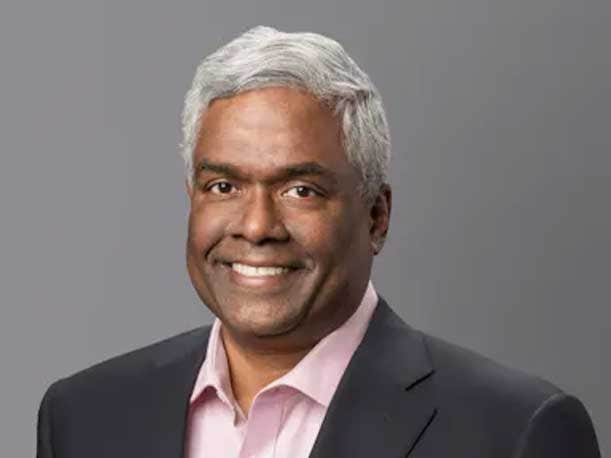
George Kurian
NetApp
While enterprise AI is currently a major priority for businesses, the core challenge of AI is one we have been working on for our three decades in business: analyzing large datasets and turning them into actionable insights. We remain committed to working alongside our partners to tackle these challenges head-on and expect to see a positive impact on our partner business by focusing on what matters most to our joint customers. By providing enterprise-grade solutions that streamline data analysis and enhance operational efficiency, we ensure our clients can turn their data into knowledge. This approach not only supports AI initiatives but empowers any customer to use their data to become more agile and competitive in their respective markets.

C.R. Howdyshell
Advizex
We all need to embrace AI and make it part of our daily lives at work. Customers need to see how we’re making it part of our journey. Additionally, we are investing in tools (workstations, laptops, etc.) that will give our field technical team what they need to assist customers in their AI efforts. Finally, we will be investing in our lab to further assist our customers.
What do you see as the toughest challenges facing customers in 2026?

Christina Kosmowski
LogicMonitor
Adopting AI without creating more chaos. Most customers are already underwater with hybrid sprawl, too many tools, and alert fatigue. They feel the urgency to move fast but lack trust in their data and signals. Without a clear observability foundation, AI just adds noise. Customers who win will be the ones who unify visibility first, and then use AI to scale expertise, simplify decision-making and reduce operational drag. Purposeful AI adoption is the difference between momentum and burnout.

Paul Bay
Ingram Micro
Customers will continue to face a challenging combination of cybersecurity risk, talent shortages and growing complexity in 2026. Threats will continue to increase as more business activity moves into digital and hybrid environments, raising expectations around resilience and protection. At the same time, gaps in cloud, AI and emerging technology skills will slow progress for many organizations. These pressures are compounded by complex IT environments, where integrating and managing multiple platforms can hinder both innovation and daily operations. For our part, we are supporting our customers with the right mix of solutions, resources, services, financing and technology to minimize risks and maximize how they can invest in their own success, differentiate their business and build more services-led revenues.

Francois Locoh-Donou
F5
One word: complexity. Technology leaders are navigating hybrid multi-cloud infrastructures, a sprawl of distributed and diverse applications, and an expanding set of security threats. AI is intensifying these challenges and adding new demands and risks across every environment. Together with our partners, we’re focused on helping customers tame this complexity—ensuring every app, every API, anywhere is fast, available and secure so they can deliver exceptional digital experiences and drive their business forward.

Ken Xie
Fortinet
The cybersecurity skills gap remains one of the industry’s most significant challenges. With more than 4.8 million unfilled cybersecurity roles globally, organizations continue to struggle to maintain effective security operations. Fortinet’s latest annual skills gap report reinforces this reality, showing that a majority of leaders believe the skills shortage materially increases organizational risk, while also pointing to AI skill sets as a critical part of closing the gap. To address this challenge, Fortinet is investing on two fronts: advancing AI-driven innovation that augments security teams and expanding industry-leading training and certification programs. Through FortiAI and automation embedded across the Security Fabric, we help teams reduce manual effort, simplify operations and respond faster, allowing limited staff to operate more effectively. In parallel, our global cybersecurity training initiative provides free, accessible education to individuals ranging from veterans to high-school students, helping build both foundational and AI-relevant security skills. Together, these efforts help close the cybersecurity skills gap by empowering people with in-demand expertise while enabling organizations to do more with fewer resources, driving stronger, more resilient security outcomes in an increasingly AI-driven threat landscape.

Luis Alvarez
Alvarez Technology Group
Economic uncertainty is still top of mind for many of our clients, so they are being very cautious about making investments beyond what is vital. Aside from that, we see 2026 as a big year of adoption for AI for our clients and we are preparing for that.
What is the key to success for your channel partners in 2026?

Susan Odle
StorMagic
Creativity. The old playbook is dead. The world has changed; channel partners must change with it. Help your customers find solutions to the new problems they are facing. Innovation doesn’t have to die with hardware availability.

Michael Dell
Dell Technologies
Embracing the AI opportunity will be key to partner success in 2026. Partners who champion modernization, accelerate AI adoption and foster customer confidence will set themselves apart. This means leveraging the AI opportunity to also modernize core data centers with modern storage and new generation servers. Our role is to equip partners with the AI solutions, tools and support to solve real-world customer problems and create new avenues for growth.

Jason Magee
Cynet
It starts with focus and efficiency. As the stack grows, MSPs can’t afford to manage dozens of vendor relationships and tools. Success will come from doing more with fewer, deeper partnerships. That means consolidating where it makes sense and leaning into platforms that deliver full coverage.

Eric Yuan
Zoom Communications
Success for our channel partners in 2026 will come from embracing innovation and expanding how they deliver value to customers. Partners who lead with AI monetization— helping customers unlock productivity and business outcomes through AI Companion—will see strong growth. Equally important is adopting a customer success mindset, driving adoption of existing solutions and identifying upsell opportunities across the full Zoom portfolio. Partners should also leverage the Zoom Platform story, connecting UCaaS and CCaaS to deliver unified, end-to-end experiences. Finally, building or reselling Zoom Services Practices will open new revenue streams and help partners differentiate through high-value implementation, integration and managed services. Together, these focus areas will empower partners to accelerate growth and deepen customer relationships.

Kara Sprague
HackerOne
Success in 2026 requires partners to be both trusted advisers and operational leaders. The strongest partners don’t just repackage tools—they help customers identify high-impact risk, validate what’s exploitable, and drive remediation to closure. That means translating technical findings into business impact and backing recommendations with evidence. Partners who lead will bring three things: the ability to translate security risk into business outcomes; fluency in CTEM and security for AI; and the credibility to challenge assumptions and prove results. We’ve redesigned our PartnerOne program to reward exactly that: influence across the customer life cycle, co-selling collaboration and delivery of measurable risk reduction. The goal isn’t more activity—it's better security outcomes that hold up under real-world pressure.
Fill in the blank: My top priority for 2026 is …
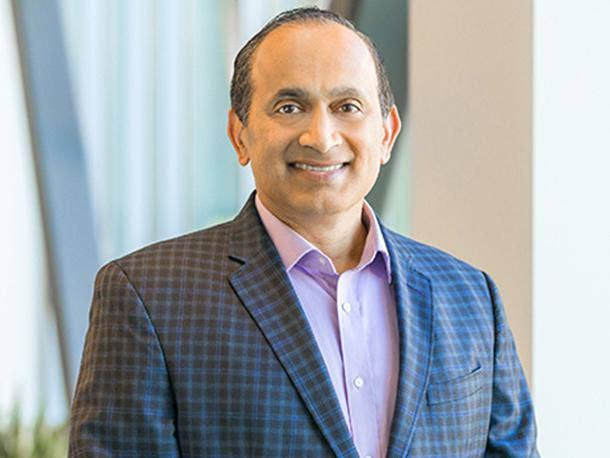
Sanjay Poonen
Cohesity
My top priority for 2026 is continuing to earn and deepen trust with our customers and our partners. Trust that their data is secure, that they can restore operations at scale when incidents occur, and that they can confidently use their data to drive innovation with AI.

Sheila Rohra
Hitachi Vantara
My priority for 2026 is to help build the bridge that fills the gap between innovation and responsibility, moving AI from experimentation to enterprise-scale impact. We will help our partners maximize the opportunity for AI for our mutual customers in practical, operational ways. We will help guide AI strategies in a way that is secure, governed and trusted, while continuing to drive energy-efficient data management through sustainable infrastructure and distributed architectures

Yuanqing Yang
Lenovo
Our top priority is to bring our Hybrid AI vision to life: unlocking the opportunity to augment, elevate and maximize human potential through Lenovo Qira we just launched; and unleashing the Lenovo Hybrid AI Advantage to help customers turn their data into valuable insights and create tangible business value.

Jill Popelka
Darktrace
Helping customers, in close partnership with our partner ecosystem, build real resilience across their full digital environments—spanning network, email, operational technology and cloud—so they can adopt AI and other productivity tools with confidence, securely leverage the cloud, and stay ahead of an increasingly dynamic threat landscape.

Mark Marron
ePlus
Generally, my priorities remain consistent year to year—and all of them are equally important in my eyes. One is to continue to build the arsenal of talent, tools and techniques that will be game-changing for our customers and their businesses. This means making smart and strategic investments that expand our capabilities, looking at opportunities for organic and inorganic growth and finding new ways to bring the highest- caliber experience and outcomes to our customers. The second is ensuring that our teams have what they need to feel empowered and supported so they can provide the service and expertise that keeps us valued by our customers. We prioritize diversity of all kinds and believe it makes us stronger so we will continue to focus there. Lastly, our corporate social conscience is something that is collectively important to us, adding depth, empathy and compassion into our daily lives. We give out an award each year to someone who prioritizes giving back and doing something meaningful for others. Technology is a people business, and bringing humanity to ePlus in every form is important to me.