5 Microsoft Partner Program Dates Solution Providers Need To Watch
Microsoft needs to ‘focus on the really good direct CSPs,’ B&R Business Solutions’ Christopher Regan said.

New Microsoft Cloud Solution Provider partner eligibility requirements. Windows 10 extended security updates going on sale. And blocking new purchases if partners and customers don’t follow Microsoft Customer Agreement rules.
Microsoft is keeping partners busy as the calendar heads to fall and the tech giant navigates the early days of its 2026 fiscal year. CRN has compiled five upcoming deadlines and dates Microsoft partners need to mind for business continuity.
Christopher Regan, managing partner at Spring Lake, N.J.-based direct Microsoft partner B&R Business Solutions, told CRN in an interview that Microsoft could do a better job of centralizing its announcements so that partners don’t have to go on the hunt for upcoming dates and changes.
But Regan does support the new partner eligibility requirements because fewer direct-bill partners will make attaining that status carry more weight and could free up resources for the remaining direct-bill partners.
“We welcome them,” he said. Microsoft needs to “focus on the really good direct CSPs.”
[RELATED: Microsoft Is ‘Investing More In VMware Migrations This Year,’ Dezen Says]
Microsoft Partner Program
Microsoft declined to comment on the upcoming program changes.
The tech giant has started the fiscal year with expanded partner funding and incentives across several key areas–including Copilot, Azure and Microsoft 365–for its new fiscal year.
Although it isn’t strictly a change within Microsoft’s partner program like the items on this list, Microsoft solution providers will also be busy this fall helping customers navigate the end of certain discounts that reward larger per-user commitments for online services such as its Microsoft 365 software package.
That change, starting Nov. 1, could push more enterprises to the CSP program many partners participate in for savings and support.
Here are five upcoming deadlines and dates Microsoft partners need to mark on their calendars.
October Eligibility Thresholds
Oct. 1 marks the start of new partner eligibility thresholds Microsoft has been telling partners about since at least May.
Partners will receive risk notifications 90 days out, 60 days out and then 30 days out if they aren’t meeting thresholds for their level of partnership, according to the vendor. This means that the first risk notifications going out Oct. 1 will be for partners with an onboarding anniversary date of Jan. 1, 2026, according to a Microsoft presentation to partners reviewed by CRN.
For distributors and resellers who are new to the Microsoft ecosystem, Microsoft will not evaluate revenue and security scores during the application process and initial onboarding. Instead, those will be assessed at the anniversary of the partner’s onboarding month, according to Microsoft. This gives new partners time to reach the new requirements in their first year.
Solution providers with a direct bill relationship with Microsoft will now have to show $1 million minimum 12 trailing months (TTM) revenue to qualify for this partner status, more than three times the $300,000 requirement of the prior fiscal year. They will also need to pass an annual assessment, have an active support plan (plans start at $16,500 a year), have at least one “solutions partner” designation and pass a security score.
To become an indirect reseller working with a distributor, Microsoft solution providers only need $1,000 in TTM revenue and a passing security score.
The requirements for Microsoft distributors also go up in October. Unlike last fiscal year, distributors now need $30 million of TTM revenue per authorized region, an active support plan and a passing security score.
A passing security score for all partner types includes multifactor authentication (MFA) enabled for all administrative users in the Cloud Solution Provider (CSP) tenant and listing a designated security contact in Partner Center. Unlike indirect resellers, direct-bill partners and distributors will need to also respond to security alerts within 24 hours to have a passing security score.
A single view of statuses is planned for Partner Center in the second half of the year, according to the presentation. The annual assessment should measure sales excellence, managed services expertise, billing and provisioning systems, support systems, service-level agreements (SLAs) for escalations and distributors’ reseller enablement.
Windows 10 ESUs
Microsoft will launch the extended security update (ESU) option for Windows 10 on Sept. 1 for solution providers and customers that still need security updates for machines running that operating system instead of the newest iteration, Windows 11. Windows 10 end of support starts Oct. 14.
Partners can purchase ESUs for up to three years, billed as an annual subscription. Users must have Windows 10 version 22H2. ESUs don’t include new features, customer-requested nonsecurity updates and design change requests.
Users can buy ESUs through the Microsoft volume licensing program at $61 per device for year one. The price doubles every consecutive year. Users can’t buy licenses for six months and other partial periods.
Multiple solution providers have told CRN that end of support for Windows 10 has been a way to talk to customers about purchasing new PCs–even artificial intelligence-powered Copilot+ PCs–when so many customers have COVID-19-era PCs aging out.
Partner Center MFA Enforcement
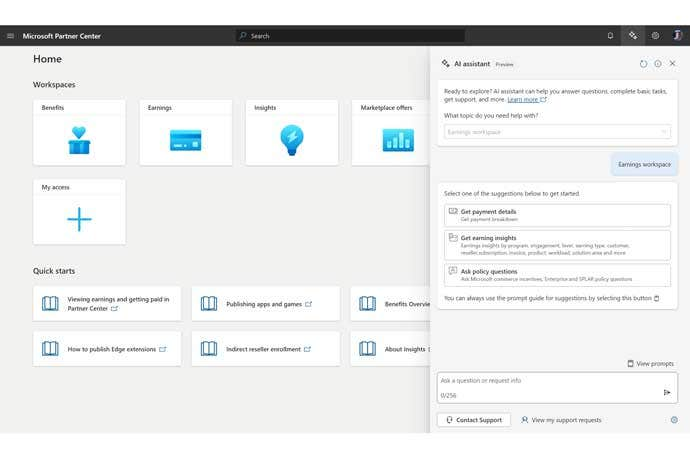
Microsoft will start enforcing multifactor authentication for all Partner Center portal pages on Aug. 30, according to the vendor.
Microsoft will make the application programming interface (API) code-ready for MFA on Sept. 30. And the vendor will make MFA mandatory for API access starting April 1.
Microsoft has been enforcing MFA for all users signing into Microsoft 365 administrator center portal since Feb. 3. Partners can see which users don’t have MFA enabled in the Entra portal.
MCA Partner Attestation
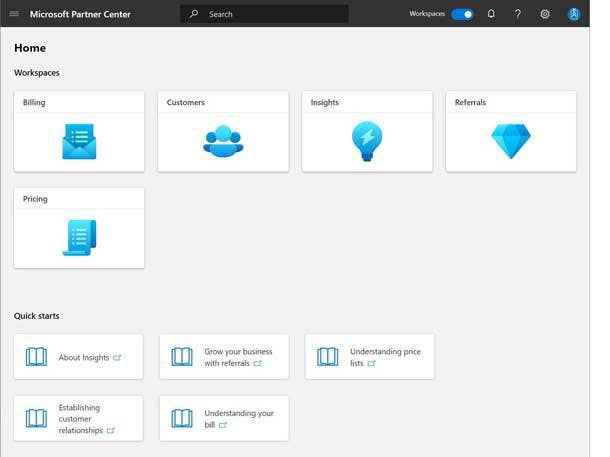
Jan. 5 marks the start of Microsoft blocking net-new purchases if the customer doesn’t accept the Microsoft Customer Agreement or the partner didn’t attest for the customer on the enhanced API. Microsoft is making the changes to enhance compliance and security.
MCA attestation becomes an API-only experience on Jan. 5. Partners will also no longer have the ability to use the existing attestation API or create or update attestations with Partner Center’s user interface (UI). The new API has been in production since July 10.
On Oct. 7, the bulk attestation tool will go into read-only. Microsoft will retire the tool Jan. 5.
CSP partners that haven’t attested for customers since April 1, 2023, will need to attest for the customer with the new API or have the customer directly accept the MCA. Blocking new purchases, quantity changes and other actions for those customers in Partner Center will also start Oct. 7.
POR Validation
Sept. 1 marks the start of Microsoft enforcing partner of record validation for new CSP orders.
Indirect Microsoft resellers must have valid CSP authorization, an active tenant and be in the same geographic region as its distributor, according to Microsoft. Resellers also must have a valid partner location account identity.
A real-time validation API allows distributors to check reseller eligibility before an order is placed. Distributors can confirm whether the PLA ID is valid and associated with an active CSP reseller tenant.