Stellar Cyber A ‘Gold Standard’ For MSSP Standardization: Channel Chief Homer
‘AI is not going to end-to-end drive your security operations,’ says Andrew Homer, Stellar Cyber’s channel chief and vice president of strategic alliances.
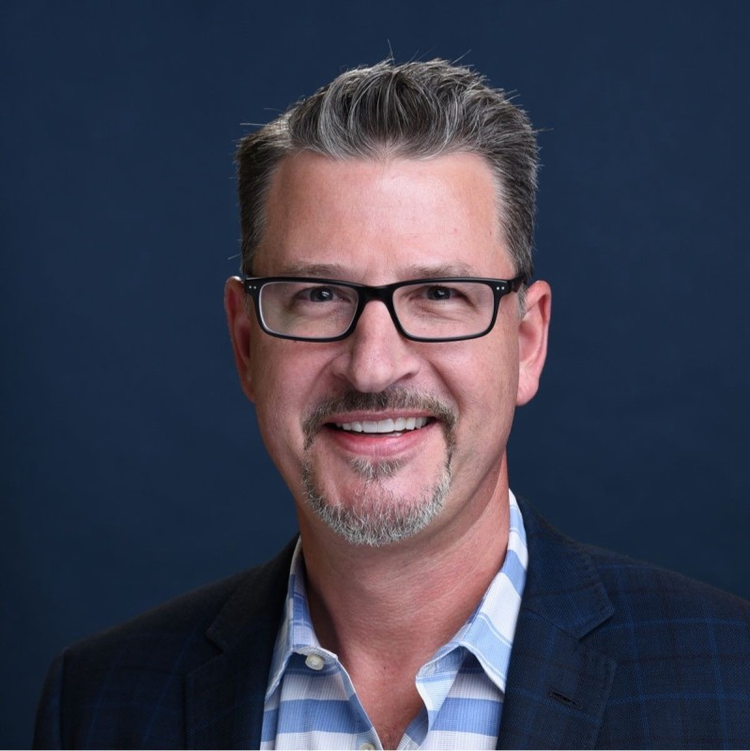
Andrew Homer, Stellar Cyber’s channel chief and vice president of strategic alliances, sees more enterprises seeking a services approach to securing their environments to either get away from big security operation centers or augment their internal capabilities.
This is creating more opportunities for managed security services providers, and he wants those partners to look to Stellar as a one-stop-shop for a variety of tools across identity, endpoint, firewall and other technologies in the market, Homer said in an interview with CRN.
“If you look across the entire cybersecurity landscape of those providing security operations, we are the top as the gold standard of what MSSPs are standardizing for driving their security operations downstream for their customers,” he said.
[RELATED: Centroid, Stellar Cyber Partnership Aims To Bring Greater Security To Oracle Users]
Stellar Cyber Partners
San Jose, Calif.-based Stellar has about 450 worldwide channel partners, according to CRN’s 2025 Channel Chiefs. In 2023, it launched its first partner program focused on resellers and distributors.
Scott Whitley, chief revenue officer of Troy, Mich.-based Centroid Systems, told CRN in an interview that part of the reason the solution provider has a new partnership with Stellar is to meet a gap in the market for a security operations platform integrated with Oracle Cloud Infrastructure (OCI), the Fusion enterprise applications suite and other Oracle products, which becomes more important as customers adopt new artificial intelligence tools and add to cyber threat considerations.
“We’re excited about the partnership,” Whitley said. “We’re excited to see what it drives.”
Homer said that he sees more enterprise customers running multi-cloud workloads, which is why Stellar’s partnerships across cloud vendors is a value-add. The vendor is responding with deeper technical partnerships with the likes of Microsoft and even entering the Amazon Web Services marketplace.
The vendor is also leaning into the artificial intelligence era to add more automation to cybersecurity while keeping humans in the loop.
“AI is not going to end-to-end drive your security operations,” he said. “It’s a human-augmented SOC. At the end of the day, the human needs to have the governance and the decision-making capabilities within security. So it’s a very interesting intersection that’s happening.”
Here’s more of what Homer had to say to CRN about the Centroid partnership and the security market.
What do you want customers to know about the Centroid partnership?
The big news here on why we’re talking is they’re now building a new managed security services practice built on Stellar Cyber, really signaling to the markets that OCI (Oracle Cloud Infrastructure) customers deserve enterprise-class SecOps (security operations) tailored specifically for them.
We’re joining hands, joining forces, where Centroid is taking our security operations platform, and then they’re providing a managed security service practice standardized on Stellar Cyber. It’s very highly tailored to Oracle customers.
Microsoft has what they call Microsoft Sentinel, which is their security operations platform for (cloud offer) Azure. Stellar Cyber is ostensibly the security operations platform for OCI. We’re strategically aligned where it’s not bolt-on security features. We are embedded within the fabric of the integrations that we drive across their security services, including (Oracle) Cloud Guard, Data Safe, identity firewall.
We’re very specialized in this and work very closely with the security teams at Oracle to build more of a turnkey, embedded offering.
Now we’re coming together where Centroid is now offering what they see as a very strategic capability to their customer base where they’re now providing 24-by-seven SOC (security operations center) services built on Stellar Cyber and leveraging all the innovation that we’ve developed.
We take a very similar (interoperability) approach as Oracle where we don’t just provide security operations for Oracle Cloud Infrastructure.
We do it for AWS (Amazon Web Services) and Azure and GCP (Google Cloud Platform). And you’ve probably seen the news that Oracle is really leaning into interoperability and supporting multiple clouds. And we’re doing the same. So if you’re an Oracle customer in one single pane of glass, you’re seeing full threat visibility across multiple clouds.

Is Stellar Cyber looking to add more partners to its ecosystem?
We have about a third of the world’s largest top 250 managed security services partners who are standardized on Stellar Cyber.
If you look across the entire cybersecurity landscape of those providing security operations, we are the top as the gold standard of what MSSPs are standardizing for driving their security operations downstream for their customers.
We’ve developed a proven playbook … over the last five years, helping MSSPs launch and scale their security services quickly. And now we’re bringing that same playbook to Centroid as they launch their own managed SOC service to protect Oracle customers.
They do it across supply chain management, health care, ERP (enterprise resource planning). And now they’re adding the security services on top of that.
We characterize MSSPs into different categories.
(Some) just have a managed SOC service. And then you might have others that might have an accounting firm or incident response firm or those that are specializing in a very unique practice like Oracle.
Oracle is constantly referring customers over to Stellar Cyber, and then we in turn link them up with one of our managed security services partners.
We are (now) linking them up with Centroid because they’re specialized for Oracle customers.
Do you see Stellar getting deeper with cloud vendors in the future?
We provide next-gen SIEM (security information and event management) as well as network detection response as a single, unified platform. And there isn’t a single SIEM or NDR provider that has deeper integrations than Stellar Cyber.
We’re not exclusively OCI. As customers go through their cloud transformation journey–let’s say it’s from on-prem or maybe it’s from another cloud services provider–they don’t just completely get rid of that. Much of Oracle’s OCI customer base is multicloud.
Oracle having a heterogeneous approach to their customer base and supporting multiple clouds–Stellar Cyber is also doing the same.
We work very closely and are part of the partner ecosystem for Microsoft (for example) because we have a lot of customers who are integrating their tools like E5 licenses across Entra (Microsoft’s identity and access management (IAM) products), Microsoft Defender for Endpoint.
It’s very important that we have a deep technical working relationship with Microsoft, and we have some partnership news coming up on that front.
Also, we are launching on marketplace with AWS.
Moving to the cloud is a challenge for customers. Going from on-prem to the cloud, you’re just opening up all sorts of east, west threat trajectories.
And it’s a different skill set, too. To secure those workloads, to have a special vendor or security operations platform like Stellar Cyber plugging into those environments seamlessly without having to learn a whole new skill set is an important attribute.
Now with Centroid providing the managed services on top of that, it is even more important.
Enterprise customers are adopting a more services-oriented approach to securing their environment. Before it was staff, a big security operation center.
That’s still the case, but they’re looking for more specialized co-managed specialization because security is hard. You have to integrate all these tools.
We integrate over 400 different security tools across identity, cloud, endpoint, firewall, etcetera. We’re doing the heavy lifting. By having a specialized services provider now co-managing those customers’ environments, it just further reduces the risk, helps them decrease the cost. At the end of the day, companies don’t want to be breached.
Most enterprise customers now in 2025 are running multiple cloud workloads. That’s either through federated state of business units or acquisitions that they’ve made. And it’s difficult to migrate full workloads over to one single provider.
We can confidently go to any of our customers and say, no matter which cloud that you use, which endpoint, which firewall, which identity access provider that you have, Stellar Cyber is partnered with all of the leaders across all of those vectors where we give them a sense of comfort and validation in trust that we’re going to support those integrations, regardless of their present or future state.
How is Stellar transforming in the AI era?
We leverage AI extensively. We were driving AI before AI became fashionable.
Old legacy SIEM technologies require manual triage. We are doing it in an automated way. We’re taking all the alerts, which may be thousands, and our AI-driven detections, correlating those alerts and grouping them together so that customers are just focused on what matters in their environment.
A big differentiator in us replacing the old legacy SIEM and NDR is because we do have that hyper-automated approach driven by our AI technology to automatically detect and correlate threats.
You can’t just throw bodies and security engineers within a security operations center to triage alerts all day. We needed a more automated, driven approach. We ostensibly do the work that a level one or a level two SOC analyst would do.
AI is not going to end-to-end drive your security operations. It’s a human-augmented SOC. At the end of the day, the human needs to have the governance and the decision-making capabilities within security. So it’s a very interesting intersection that’s happening.
My belief is that AI in enterprises will be owned by the governance, risk and compliance organization within companies.
Much like how the cloud was driven by a lot of shadow cloud type of things that went on and nefarious spinning up of workloads, a lot of the same is going on within AI.
You have AI sprawl within the organization. Now, that has consequences.
If we want to know whether AI is being manipulated, whether customers have unauthorized access, whether data leakage is occurring–because we’re a security operations platform, we’re helping customers protect themselves against those nefarious things.
Companies need to be careful about going too overboard. Putting trust in making decisions that could take down the company in a bot is very, very dangerous.
We call ourselves a human-augmented SOC, because we do the governance mechanisms.
We’re constantly expanding (our detection and correlation capabilities). One of the new areas that we’re seeing is within SASE. Secure access service edge.
That is protecting customers in a zero-trust model against unauthorized access to critical resources. That has the highest fidelity signal. We want to be able to take that signal in and then be able to also correlate that to other threat telemetry that we’re getting from other sources.
A lot of the SASE companies will end up buying these startups on the AI front for these tools. But also it just goes to show that security is constantly evolving. In 12 months, we’ll have whole different segments of security and new partners that we need to drive cohesive partnerships with.

How do you view the competitive landscape in security?
Sometimes it gets a little annoying going through (security conference) Black Hat because everyone’s trying to copy each other. Oftentimes, I think security vendors miss the mark, focusing too heavily on technology and coming up with the latest mouse trap.
We pride ourselves in figuring out solutions for our customers and are outcome driven.
We’re doing that not just with our MSSP partners, but we’re doing that in solving problems with our technology alliance partners. Oracle is a great example of that.
We go the distance with our technology partners, not just to write to an API (application programming interface) to drive an integration but really deeply understand the problems that we’re helping to solve for our joint customers.
No one single security vendor can do it all. If they say that they are bald-faced lying to you. This is why, in my role, partnerships are so strategically important.