10 Cloud Computing Startup Companies To Watch In 2026
CloudEagle, Echo and The San Francisco Compute Co. are just some of the cloud computing startups to watch in 2026.

A platform that can automatically track artificial intelligence applications within a Software-as-a-Service stack. The provider of thousands of AI-powered container base images free of common vulnerabilities and exposures. And a startup with a cloud experience for large-scale GPU clusters
CloudEagle, Echo and The San Francisco Compute Co., respectively, are among the startups in a prime position to continue redefining the market for cloud computing infrastructure, applications and security in 2026, 20 years after Amazon Web Services launched Elastic Compute Cloud and kicked off the virtual computer revolution.
Though much of the technology excitement in 2026 will center around AI, cloud computing looks to play a starring role as a way to deliver AI quickly, with less cost and simplified scaling.
[RELATED: 10 Leadership To-Dos In 2026]
Cloud Startups In 2026
For this list, CRN defines a startup as founded within five years of the list date, eliminating companies such as Lambda and CloudZero that have raised eye-popping amounts of capital in 2025.
In October, research firm Gartner forecast that worldwide IT spending is expected to total $6.08 trillion in 2026, an increase of 9.8 percent from 2025 and good news for solution providers leveraging cloud tools to deliver innovation for customers. IT services spending in 2026 is forecast to reach $1.9 billion, up 8.7 percent year on year and an acceleration over 2025’s 6.5 percent growth.
Be sure to check out CRN’s other 2026 “To Watch” lists including 10 Cybersecurity Startups To Watch In 2026 and 10 AI Startup Companies To Watch In 2026
Here is more information on 10 cloud computing startups to watch in 2026.
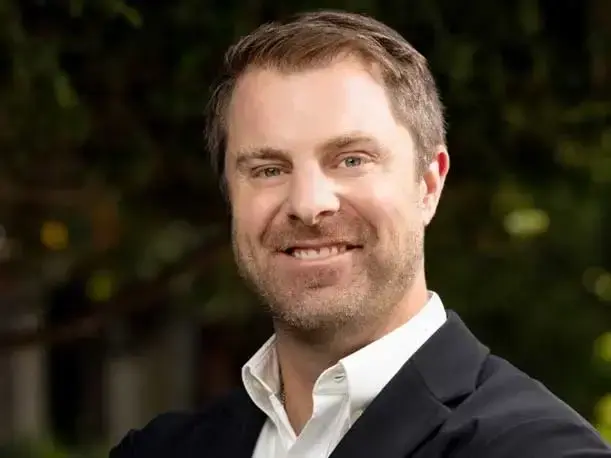
Armada
CEO: Dan Wright
Headquarters: San Francisco
Armada’s pitch to partners is a way to optimize cloud platforms, servers, storage and other parts of a computing environment through modular data centers.
In November, Armada introduced its Bridge software that combines bare-metal GPU performance with cloud-native flexibility through Armada’s orchestration stack. Bridge federates distributed GPU clusters while maintaining data residency, security and compliance so that governments, telecommunications companies and research institutions can develop and operate AI within their own borders without external cloud dependencies.
In 2025, the startup also unveiled new collaborations with OpenAI and Skydio. In July, Armada closed a $131 million strategic funding round that included participation by Microsoft's venture fund, M12. The startup also offers a partner program for solution providers, with Carahsoft—No. 18 on CRN’s 2025 Solution Provider 500—among its members.
Wright co-founded Armada in 2022, according to his LinkedIn account. He previously served as CEO of DataRobot for about a year before launching his startup. He also served as president and COO of the company a year prior.
He also worked at AppDynamics for about seven years, leaving in 2019 with the title of COO. Cisco bought AppDynamics in 2017.

Augmentt
CEO: Derik Belair
Headquarters: Kanata, Ontario
Augmentt promises MSPs a centralized security platform for managed Microsoft and cloud application services, with visibility across all end users for auditing and security threat detection.
The holidays came a little early for the startup with the November disclosure of a nearly $13 million (CAD $18 million) Series A financing round that will go toward product road map, go-to-market operations and deepening partnerships, according to a company statement.
Also in November, the vendor unveiled its Intune Autopilot, for standardizing and automating Microsoft Intune management across every customer environment.
Belair co-founded Augmentt in 2020. He previously served as vice president of marketing at SolarWinds, according to his LinkedIn account.
The startup’s top channel goals for 2025 included increasing the amount of net-new accounts coming through partners, according to CRN’s 2025 Channel Chiefs.

CloudEagle
CEO: Nidhi Jain
Headquarters: Palo Alto, Calif.
CloudEagle enters 2026 with a host of new and improved integrations expanding usage of its Software-as-a-Service management platform.
Netskope and SAP Concur are some of the vendors the startup has deepened integrations with for users looking to speed up employee on-boarding, automate workflows, decrease spend and prevent shadow IT, among other use cases.
CloudEagle has also been innovating its platform to automatically identify and track AI applications within a SaaS stack and even a new way to detect and report on application usage through browser plugins, according to the company.
Jain co-founded CloudEagle in 2021, according to her LinkedIn account. She previously worked at ServiceNow for about three years, leaving with the title of director of growth and strategic partnerships.
Her resume includes about three years with Box, leaving in 2019 as a director responsible for building and managing partner ecosystems to drive product differentiation and generate pipeline through key strategic partners like Amazon Web Services, Okta and Slack.
During her time at Box, she scaled its partner ecosystem to more than 2,000 members and increased partner-influenced deals and pipeline fivefold, among other accomplishments.
CloudEagle has a partner program for resellers, implementers and other partner business models, according to the company’s website.
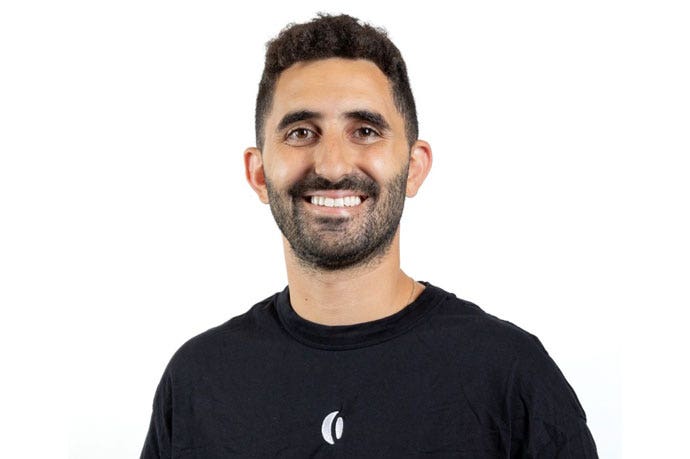
Echo
CEO: Eilon Elhadad
Headquarters: New York
Enabling secure-by-design cloud-native infrastructure is the stated mission of Echo, which offers users thousands of AI-powered container images free of common vulnerabilities and exposures.
The vendor has a value-based approach to pricing instead of charging users by the image, according to Echo. That way, users have access to the entire portfolio of Echo images, an essential building block for almost all modern cloud applications. Echo images integrate with Wiz, Orca and other major scanners and have a lower attack surface compared with open-source versions, according to the company.
Echo images include runtime frameworks and images for databases, storage, monitoring, networking apps, Kubernetes utilities and plugins plus operating system essentials and common language-specific packages.
The company’s capabilities helped it land a $35 million Series A funding round disclosed in December, with SentinelOne’s S Ventures among the investors, according to a statement.
Elhadad co-founded the company last year, according to his LinkedIn account.
He previously co-founded supply chain security company Argon in 2020 and sold it to Aqua Security for $100 million a year later. He stayed with Aqua for about three years, leaving in 2024 as vice president of software supply chain security.
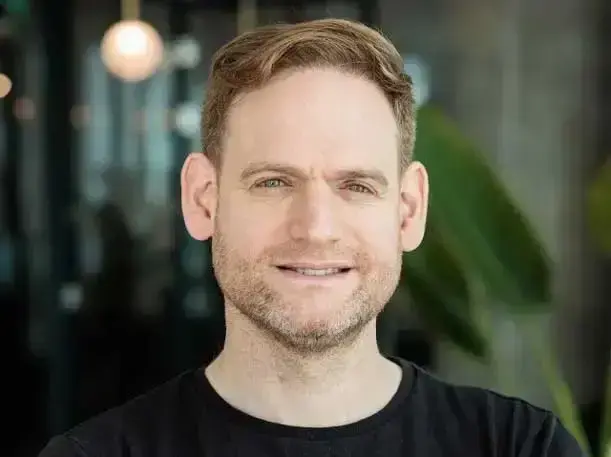
Eon.io
CEO: Ofir Ehrlich
Headquarters: New York
Eon.io closed out 2025 with a hefty war chest for its vision of unlocking cloud data backups for enterprise AI—a $300 million Series D round.
The startup will use the money for research and development, hiring and market expansion as it seeks to win over new users of its new cloud backup storage tier that keeps users compliant, speeds up recovery and reduces cloud costs, according to Eon.
Eon can contextually understand, classify and index cloud resources and applications and provide users with a unified search engine spanning multiple cloud services and providers for locating files and database records. Users also gain snapshots for instant access to database backups among other capabilities.
Ehrlich co-founded the company in 2024, according to his LinkedIn account. His resume includes about four years with Amazon Web Services, leaving the cloud giant in 2023 as head of engineering for Application Migration Service and Elastic Disaster Recovery Service.
He joined AWS with the 2019 acquisition of CloudEndure, which he co-founded in 2012 and where he held the title of vice president of R&D.
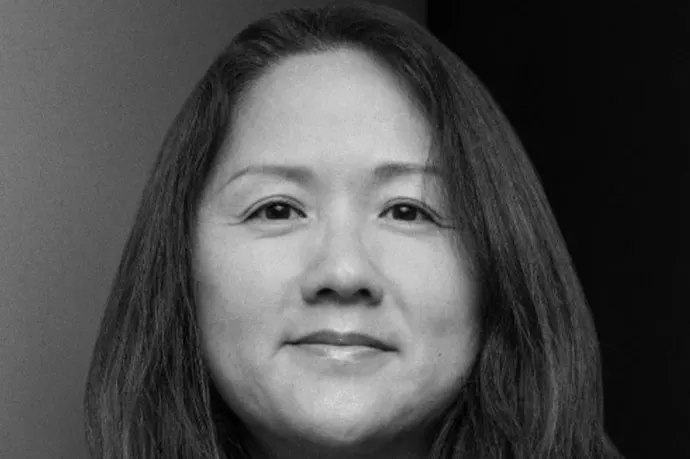
Fireworks AI
CEO: Lin Qiao
Headquarters: Redwood City, Calif.
A globally distributed virtual cloud infrastructure delivering open-source AI models with enterprise-grade security and reliability across mission-critical workloads is the aim of Fireworks AI.
In October, Fireworks locked down a $250 million Series C round of funding and counts among its investors Nvidia, AMD, MongoDB and Databricks. The money will go toward product expansion, growing the computation footprint at least threefold and minimizing cost per token.
Since the Series C, Fireworks has signed a strategic collaboration agreement with Amazon Web Service around joint go-to-market efforts and collaborated with Nvidia to bring Nemotron Nano 2 9B models to the Fireworks AI platform.
Firework has a partner program for consultancies, systems integrators, services partners and other business models, according to the startup’s website. Members include BCG and Deloitte.
Qiao co-founded Fireworks in 2022, according to her LinkedIn account. She previously worked at Facebook parent Meta for about seven years, leaving with the title of senior director of engineering. In that role, she “led 300+ world-class engineers in AI frameworks & platform,” building and deploying tools including Caffe2 PyTorch across Facebook data centers, billions of mobile devices, and millions of augmented and virtual reality devices.

Keycard
CEO: Ian Livingstone
Headquarters: San Francisco
Positioning itself as the missing ingredient for secure, trusted agent access, Keycard offers users a way to securely connect agents and applications with a managed enterprise cloud that extends into user environments through private networking if they desire.
The startup’s agent identity platform allows for agent-to-service connections across clouds and teams. Keycard aims to leverage ephemeral, identity-bound tokens with support for mixed delegation chains and task scoped policy enforcement to provide security that makes sense in a world of AI agents.
Keycard revealed in October that it had raised a $38 million seed and Series A funding round. The next month, Keycard said it acquired Runebook to accelerate its ecosystem of integrations and SDKs for building production-ready agents and tools powered by the Model Context Protocol.
Livingstone co-founded Keycard in January, according to his LinkedIn account. He previously held a role in platform strategy with security vendor Snyk for about three years. He co-founded data science platform Cape Privacy in 2018 and served as its head of engineering until 2020.
He also co-founded Manifold in 2016 and served as its CTO. Snyk acquired Manifold in 2021.

Mondoo
CEO: Soo-Choi Andrews
Headquarters: Berkeley, Calif.
Mondoo’s Agentic Vulnerability Management product seeks to autonomously identify, prioritize and remediate vulnerabilities and policy violations across a user’s cloud, on-premises, applications, endpoints and other parts of the IT estate.
The structured, context-aware AI-native security model powering Mondoo’s platform helped it land $17.5 million in funding in September, with the funds giving Mondoo new resources for go-to-market and platform innovation in 2026. Mondoo also wants to strengthen its partner channels, according to a company statement.
Mondoo offers a partner program aimed at resellers, MSSPs and other business models, according to the company’s website.
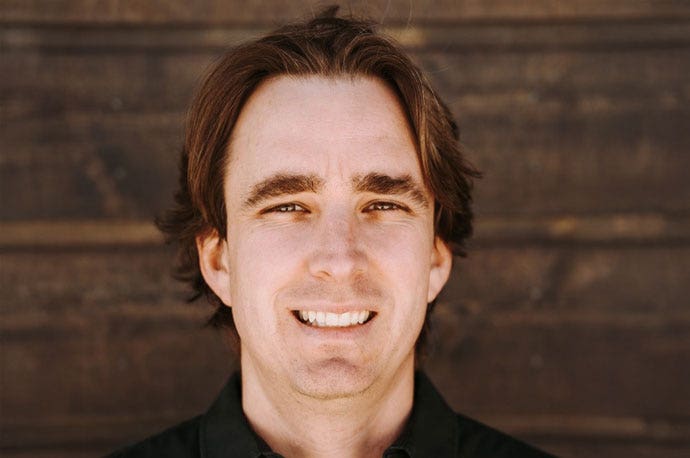
Andrews co-founded Mondoo in 2021, according to her LinkedIn account. She previously worked in partnerships at Google for about two years.
Nudge Security
CEO: Russell Spitler
Headquarters: Austin, Texas
Nudge Security has a healthy amount of funding to battle in the competitive software and AI security governance market with a $22.5 million Series A round of funding revealed back in November.
The ability to discover and secure unmanaged cloud accounts is one of the startup’s main selling points. Users can find accounts in Amazon Web Services, Microsoft Azure and Google Cloud Platform and enroll them into centralized cloud governance organizations, according to Nudge.
The company continuously inventories all employee-made cloud assets, centrally tracks cloud services and domains, and can even save users some money on underused cloud services.
Spitler co-founded Nudge in 2021, according to his LinkedIn account. His resume includes about two years with AT&T as vice president of the cybersecurity product portfolio. He joined AT&T through the 2018 acquisition of AlienVault, where he worked for about seven years, his last title being senior vice president of product.

The San Francisco Compute Co.
CEO: Evan Conrad
Headquarters: San Francisco
A traditional cloud experience for large-scale, GPU clusters is the promise of The San Francisco Compute Co.
Users can order 800 H100s on a single InfiniBand fabric for an hour, eight H200s for a year and any other number of GPU arrangements, according to SF Compute. Users can sell back what they don’t need and don’t sign long-term contracts.
SF Compute’s pitch landed it a $40 million Series A round of funding, as revealed in November. The vendor also offers users 24-hour support, more than 1.5 TB of NVMe storage, more than 1 TB of RAM plus no ingress or egress fees. SF Compute has its own virtualization and bare-metal stack and on-boards only a few customers at a time.
Conrad co-founded SF Compute in 2023, according to his LinkedIn account. His resume includes time with OpenAI working on the enterprise version of ChatGPT. He also previously co-founded Quirk in 2019. The upstart released tools for video podcasting and live-video chatting, operating until 2023.