AWS Partner BizCloud On Anthropic Claude Push, AI Not Killing Jobs And AWS FDEs
BizCloud Experts President Sepehr Noorizadeh explains Anthropic Claude momentum, if AWS’ new Forward Deployed Engineering organization is a threat to the channel, and why AI isn’t killing jobs.
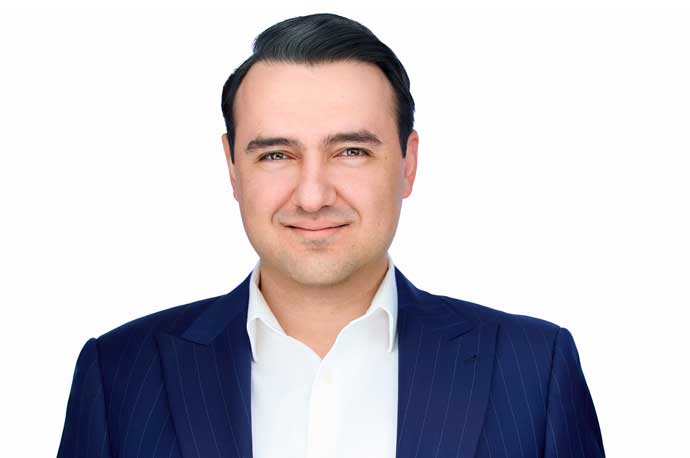
Amazon Web Services premier partner BizCloud Experts is witnessing new Anthropic Claude opportunities as artificial intelligence creates jobs for BizCloud customers versus reducing headcounts.
“We have yet to see where organizations have come back and said, ‘Thank you for the efficiency. I’ve now been able to go reduce headcount,’” said Sepehr Noorizadeh, president of BizCloud Experts.
“It’s been, ‘We’ve uncovered so much more work, and now, actually have to go hire more,’” he said.
[Related: Anthropic’s 5 Huge Hires From OpenAI, Google, Microsoft And xAI In 2026]
BizCloud is a fast-growing AWS Premier tier partner and Anthropic solution provider that designs, builds, and operates cloud architectures. The Lewisville, Texas-based company has capabilities ranging from generative AI and DevOps automation to cloud contact centers and database migration.
“Whether if it’s on an Amazon [AI] model or if it’s an Anthropic [AI] model, a lot of our customers request has historically been, ‘Hey, can we start building on Anthropic?’” he said. “So last year and this year, that’s been a big request from our customers.”
BizCloud is collaborating with AWS and Anthropic to build the best purpose-fit models for each customer.
“We used to run into this question with a lot of customers: build versus buy? That was the debate within organizations is: ‘Do we want to go buy an out of the box solution? Or do we want to go build this?’” Noorizadeh said.
“We’re seeing customers now have shifted to, ‘We’re going to build. How do we build together? And who do we build with?’ That’s the question that all organizations are asking for,” he said.
In an interview with CRN, Noorizadeh takes a deep dive on Anthropic, if AWS’ new Forward Deployed Engineering organization is a threat to the channel, BizCloud’s market momentum and why AI isn’t killing jobs.
Why did you partner with Anthropic and is there Anthropic demand from your customers?
A lot of our customers’ model choice early on has been on Anthropic.
So whether if it’s on an Amazon model or if it’s an Anthropic model, a lot of our customers’ request has historically been, “Hey, can we start building on Anthropic?”
So last year and this year, that’s been a big request from our customers.
What we’ve done is look at how can we collaborate with the AWS team and the Anthropic team to actually find the purpose-fit model for them, and provide that feedback loop back to Anthropic and to the AWS team on what we’re seeing in the front line for customers.
Give me a successful Anthropic use case.
One customer was looking for us to build a solution platform for them that allowed them to get quotes, invoice scheduling, and employee efficiency faster.
As we went through the development lifecycle, we saw they were building on Claude themselves. They were experimenting with it.
So they said, “We have a really good problem because our users are experimenting at a rate that, as an organization, we’re just having a hard time keeping up with. So BizCloud, can you all come in and build this? We want to have access and control over what our users see and interact with on the front end.’
They were all doing it built on Claude.
We said, “We can take what your users have done and figure out what that changes from the previous version of it.” And then put a set of measures and controls that we agreed upon on what would actually constitute this being ready to go to production. And as long as those set of checks and balances are met, we can actually move this to production for your team. So they can start seeing the benefit of it in production.
Did that improve production efficiency?
Here’s what that solved.
Before that, there used to be an entire conversation with the customer where we had to get on a call, had to get the user story, the technical requirement, the business requirement, go through a review with the customer, go through a review internally, put the path forward together, agree with them, etc.—so you’re talking about couple of weeks.
But now, if they want to build on their co-piloting platform—whether if it’s on their companion tool, whether if it’s Anthropic or AWS Kiro, if they want to go build that and they enjoy pushing changes on the user experience, and they rely on our expertise to run the control on the back end and the infrastructure side and make it scalable, secure—we’ve automated that process for them to get to get to that faster.
We’re seeing a lot of our customers that are coming to us, users of Claude, and that’s why we’ve been very excited to work with them and to build with their models.
\
Some people think AI is killing jobs. What are your thoughts on that?
We have yet to see where organizations have come back and say, “Thank you for the efficiency. I’ve now been able to go reduce headcount.”
It’s been, “We’ve uncovered so much more work, and now actually have to go hire more.” So that’s the other thing that we’re seeing.
Can you give a use case of how AI creates more job versus cuts?
Specifically in the logistics space, a lot of organizations will receive requests for quotes like RFQs or proposals like RFPs, and there’s only a certain number of headcounts that can actually address or answer those quotes.
It’s a high volume and competitive space. So usually when these requests for RFQs are going out, they’re going to multiple companies.
So whoever has the best market intelligence that can give the most competitive pricing at the right time—and respond the fastest—just set themselves up to win that quote that business.
Historically, if that organization was getting a couple of hundreds of requests for quotes, by the time they actually got to process and respond to all of them, some of them already lost the business because somebody else got to it first.
So for one of our logistics customers, it would take them on average between 30 to 40 minutes to get a request from an RFQ and respond back to that customer. Multiply that across five agents and scale that to however many number of quotes they’re able to get to.
So, on average, they can get to effectively 70 percent to 80 percent of those quotes.
Now, if we can give them the ability to get to all of their quotes and spend less than five minutes per quote to respond back, I just gave them a platform to respond to 100 percent of their RFQs that are coming in, in a fast and speedy time.
And we give them the right market intelligence that gives them the right access to what pricing should be to position them to go win the business.
They used to get in the single digits or low double digit percentage win-rate. Their win-rate has gone up for them to win the business.
So they’re able to respond to more RFQs. They have a higher win rate percentage, and that has a real economic impact on their organization.
Because they’re like, “OK, if I can do this with a couple of agents. Let me go add three or four more and actually scale my business.”
That’s why it’s had a positive economic impact on that organization and that’s how it translates to why they’re going and hiring more headcount.
As an Anthropic solution provider, where do you see the opportunity as an Anthropic and AWS partner?
If you look back a couple of years ago on the three-layer stack of AWS AI solutions they came out with: one of the value propositions was model choice for customers.
AWS was on this very early on. So they came out with some of their own models, some of the Anthropic models, [Meta’s] Llama models—that was one of the value props on being on AWS. Is that as a customer, ‘We’re going to give you the infrastructure and the platform to get secure and scale. We’re going to give you access and choice to models.’
As the market itself has shifted and matured, that’s where you’re seeing the attraction that’s coming with OpenAI and Anthropic now being on the platform.
It’s a great thing for the customer because now they have more choices on the platform to use. They’re already using those solutions to some extent or capability.
So now, you can give them the enterprise-grade security, governance, controls and measures that the customer knows and is familiar with, and provide the right access control to it. So it’s a great thing.
What’s your thoughts on Anthropic channel and AWS partnership?
I think Anthropic’s channel is going to grow.
One of the value props of AWS is, “We’re going to give our customers choice to build on our platform with what we see as the best solution for them to be.”
We used to run into this question with a lot of customers: build versus buy?
That was the debate within organizations is, ‘Do we want to go buy an out-of-the-box solution? Or do we want to go build this?’
We’re seeing customers now have shifted to, “We’re going to build. How do we build together? And who do we build with?” That’s the question that all organizations are asking for.
They’re still going to go buy to some extent. Within the solutions that they are buying, they’re figuring out, “OK, what else can I build that’ll be complementary or be supplemental to that purchase? What partner can I bring in? And at what point of the development cycle do they play in?”
Be it an SI [system integrator], be it an ISV [independent software provider], be it an AI model provider— those are the choices our customers are looking for.