HPE VP Kristian Kerr On ‘Unprecedented’ VMware Price Increases, Public Cloud Repatriation, New HPE Unified Private Cloud Platform
‘Customers are facing unprecedented rises in VMware [pricing], virtualization and memory,’ said Kerr in an interview with CRN. ‘So our positioning is very much to create budget in that environment by leading with HPE technologies.’

New HPE Vice President of Worldwide Hybrid Cloud Channel and Partner Ecosystem Kristian Kerr said the company’s new “fourth- generation” unified private cloud platform is opening the door for partners to provide compelling hybrid cloud “infrastructure economics” for customers.
“Customers are facing unprecedented rises in VMware [pricing], virtualization and memory,” said Kerr in an interview with CRN. “So our positioning is very much to create budget in that environment by leading with HPE technologies.”
To that point, Kerr said HPE has been “very successful” working hand in hand with partners to “create” budget opportunities for customers to move to new modern, simplified and unified architecture with HPE offerings like VM Essentials, private cloud and HPE GreenLake.
Kerr, a seven-year NetApp veteran, joined HPE on March 2 in the newly created role as part of a stepped-up HPE hybrid cloud channel sales offensive.
Partners have told CRN that the sharp rise in VMware pricing since Broadcom acquired the company three years ago is opening up big new opportunities for HPE hybrid cloud and HPE VM Essentials, Morpheus and the HPE CloudOps software suite. In many cases, partners report price increases of two to five times what customers were previously paying for VMware licensing.
During HPE’s most recent quarterly earnings call, VM Essentials virtualization revenue grew sequentially for the third consecutive quarter, with high-double-digit new-logo growth year over year, driven by what HPE President and CEO Antonio Neri called the “escalating cost of legacy virtualization software.” He said HPE’s “unique portfolio” of cloud management software, AIOps and platform services is building a “strong sales” pipeline.
Kerr, for his part, said HPE is seeing “significant interest” from partners in its virtualization stack. “We’re seeing an incredible amount of success, not just on the skills and competencies and certifications, but in terms of customer adoption through the channel as well,” he said. “It’s one of the biggest trends that we’re observing in the marketplace. It is top of mind for customers and represents one of the biggest opportunities for our partners as well. We provide a leading alternative, and we’re seeing partners lean in significantly.”
As to the new unified HPE private cloud portfolio with Kubernetes management and the ability to manage a complete hybrid stack on a unified platform, Kerr said: “This is the fourth generation that we’re bringing to market. So this is mature from a customer standpoint and from a partner standpoint. It’s easy to position: simpler to automate, simpler management, huge services wrap-around opportunity, built for VM workloads, built for AI workloads, and the opportunity as well to wrap security, data protection, backup, recovery all around a single solution.

What are the big underlying market drivers as HPE partners bring the new next-generation unified HPE Private Cloud portfolio to market?
The virtualization shake-up is driving a huge amount of infrastructure modernization, and especially for partners it is creating significant services-attach opportunities.
So there are sort of two things coming together: the big virtualization shake-up plus from a customer standpoint the need to invest in AI and harness the full value of their data.
So when you look at everything we’re doing around private cloud, it is really the foundation. And this is not new for us. This is the fourth generation that we’re bringing to market.
So this is mature from a customer standpoint and from a partner standpoint. It’s easy to position: simpler to automate, simpler management, huge services wrap-around opportunity, built for VM workloads, built for AI workloads, and the opportunity as well to wrap security, data protection, backup, recovery all around a single solution.
So this is everything that the channel has been waiting for. And not only that, we’re also providing partners’ customers freedom of choice around how they want to consume that, whether it be as a service through HPE GreenLake Flex, through HPE FS [HPE Financial Services] or as a CapEx transaction.
So from a solution standpoint, there is continued innovation in a fourth-generation platform, built for virtualization, built for AI workloads. It’s hybrid by nature and design and provides that security layer. Everything that I’ve just mentioned—virtualization, AI, security—you talk to a partner and that translates to significant services drag and opportunity.
What is the architectural importance of HPE Private Cloud versus VMware Cloud Foundation and Dell Technologies AI Factory?
As we react to the market and what’s happening from a customer standpoint, a lot of these AI projects were spun up in the public cloud with proof of concept and proof of value.
Now customers want to scale those AI environments, and they want to bring them on-premises for various different reasons, including data security and sovereignty. Customers want a landing spot, and these converged engineered offerings provide the perfect landing spot. By the way, AI is hybrid by design, so it creates that elasticity to bring them out of the public cloud into the customer edge environment. And everything that we’re doing is built by us. Others are sort of piecing together multi-vendor offerings. This is a full-engineered HPE stack. It is scalable as well. AI is going in one direction, and it will continue to grow. It is not as if this is going to become obsolete. You don’t need to buy a new system. This will just scale out as the data footprint increases.
What is the biggest takeaway from an in-the-sales-trenches perspective that partners should be taking to customers on HPE’s new unified private cloud offerings?
From a customer standpoint, they’re facing huge costs, spiraling costs associated with everything we’ve talked about, complexity, different silos spanning across the organization. From a sales standpoint, this allows us to have one conversation with the customer. One conversation from a partner perspective about breaking down those silos, simple, stand-up infrastructure that supports virtualization and AI workloads in a secure environment. That is exactly what our customers are looking for today. That allows our partners to just go in and deploy [these private cloud solutions]. And as I mentioned many times, it’s all about the services opportunity around that, the opportunity for partners to stitch their services around it and put their own proposition around that.

The biggest issue for partners right now is the supply chain crisis with the memory shortage and delays in shipment and delivery. How is HPE handling this, and what is your advice to partners?
The situation is very dynamic. I think Antonio said it best during the last earnings call [Neri told analysts that rising memory prices—which have resulted in tough new measures including the ability for HPE to reprice server and GreenLake orders up until shipment—will persist well into 2027].
We will provide updates, relevant updates, but the market is very dynamic. It’s changing week to week. That’s our current position,
How do you see the new unified private cloud announcements in the wake of the supply chain issues?
When you look at the announcements that we made especially around private cloud, a big positioning of ours is supporting infrastructure economics. So customers are facing unprecedented rises in VMware [pricing], virtualization and memory. So our positioning is very much to create budget in that environment by leading with HPE technologies.
We’ve been very successful together with our partners on supporting customers, helping them create budget by leading with HPE technologies like VME [VM Essentials], private cloud offerings that we talked about as well as financial offerings that we’re bringing to market to provide more flexibility on how customers can consume technology.
Any comment on the chaos in the market with the pricing difference [between HPE and VMware] and the difference in the approach with HPE private cloud?
There is significant interest in [HPE VM Essentials and Morpheus], and it’s growing every day. They want to familiarize themselves with our virtualization solutions and offerings. We’re seeing an incredible amount of success, not just on the skills and competencies and certifications, but in terms of customer adoption through the channel as well.
It’s one of the biggest trends that we’re observing in the marketplace. It is top of mind for customers and represents one of the biggest opportunities for our partners as well. We provide a leading alternative, and we’re seeing partners lean in significantly.
Is there anything you have changed out of the gate in the hybrid cloud partner go-to-market as you take the helm?
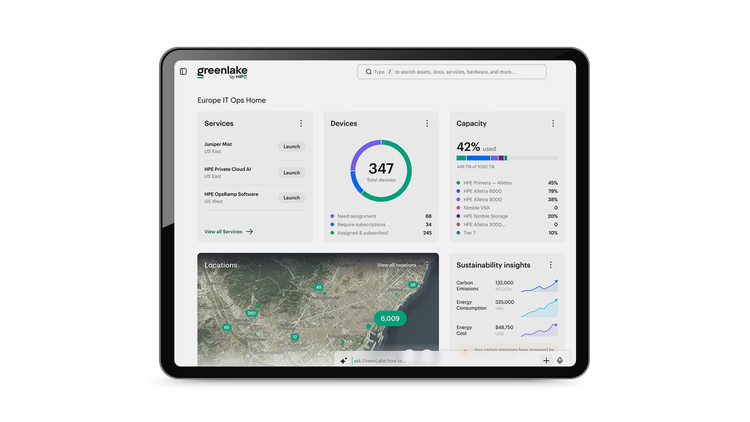
We’re very much here to help partners with the integrated approach through GreenLake and then unified managed virtualized and cloud-native workloads, very much positioning the unified data layer and integrated protection with security and backup recovery.
We are delivering true hybrid cloud infrastructure with simplified management and automation associated with that. That’s the positioning. It’s really about simplification. It’s breaking down the silos. It’s helping and supporting customers deploy those virtualized environments on new platforms by building out the capabilities to support their AI environment.
We want to help partners win. It’s all about leading with repeatable solutions and private cloud, and everything we talked about today are repeatable solutions that partners can take to market. There’s a huge amount of opportunity around assessment, consultancy, design, implementation, migration and all the associated cyber services as well, as well the ongoing opportunity to deliver managed services based around these private cloud offerings.
How big a leap forward are these new unified private cloud offerings with full integration with Zerto, Veeam and the unified data fabric?
I think the big difference is this is not the first edition. We’ve been doing this for four years now. This is the fourth generation. What we’re bringing to market now is the containers for cloud- native workloads and integrating enterprise-grade virtualization for existing VM estates.
On the data side, we can now sell a unified platform of block, object and file, integrating all the security offerings around that with migration tools and Zerto backup and recovery.
This is complete, and it is the result of experience. We’ve been doing this for four years with continued innovation.
It was really built for partners. Partners have been asking for these simple, engineered offerings that they can build services around to take complexity out of customers’ environments.
What was your biggest surprise coming into HPE?
I joined HPE because of the strength of the portfolio, and the fact that they really are a channel-first organization focused on supporting partners, creating new opportunities and building services capabilities.
Now that I’ve entered the building, I’m blown away. There’s even more that I didn’t know about in terms of innovation and how everything’s coming together across the different business units and the integration of Juniper.
It’s really exciting. I joined for a reason, and now that I’m inside I see the opportunity is even bigger. I know a lot of the partners from before and they’re all giving huge validation in terms of the strategy and the direction that that we’re heading with the expansion of the portfolio.