Sentinel CTO On Google-Wiz Security Demand, Cisco’s 360 Program, AI Strategy And Network Hardware Shortages
Cybersecurity guru Bob Keblusek says hardware price increases and shortages are spreading ‘across the board,’ the Cisco 360 partner program is ‘promising, and explains Sentinel Technologies’ AI strategy.
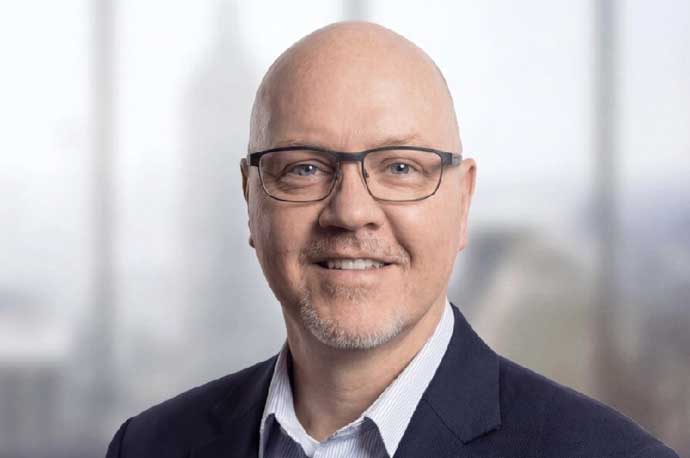
Keblusek is head of Sentinel Technologies’ innovation strategy as chief innovation and chief technology officer of the Downers Grove, Ill.-based company, with over 30 years of experience.
In an interview with CRN, Sentinel’s CTO also provides insight into channel-friendly vendors in 2026, where he’s seeing security sales growth and market trends, as well as his company’s AI secret sauce.
Sentinel recently enhanced its partnership with Google. How are Google’s security acquisitions of Wiz and Mandiant helping?
When you take a look at MCP servers and some of the security that’s necessary around there, we think Google-Wiz has an interesting product offering that we’re going to start to see more demand in the market for.
Their acquisition of Wiz is a pretty powerful solution that’s been out there for a little while now.
Also, Mandiant, some of the things that they have with their detection and response—that’s a hot area for us as well. So we’re starting to see a little more increase in the demand there.
We aren't selling their detection and response, or Mandiant, not partnering closer with Google yet. We are a partner though, and we are seeing increased interest for Wiz.
We hadn’t seen as much Google demand in our customer base over the past years, but it’s starting to increase now. We’ve had a Google partnership for a few years, and it’s one that we’re starting to ramp up a bit more.
How is Google helping your AI practice?
We have an AI practice that’s incubating, and we’re doing a lot of AI projects. A lot of customers are leaning in to us as a trusted adviser to help them create their AI road map.
We think that Google’s got a lot of upside from an AI perspective.
In fact, just last week, they released a memory-optimized AI language model, which is very interesting [and] we want to learn more about [it] because we’re starting to feel the constraints from the memory prices and availability—from our data center and even hitting the networking practices.
If we can see software that can optimize this and start to lean in toward that, I think more people can adopt it at a more affordable rate over time.
Are the memory and CPU shortages affecting you? Where are the price increases happening?
We’re watching on a daily basis, really, announcements come out from all of our various partners saying they’re going to have a memory constraint or a price increase in these particular areas and these particular products.
It is starting to get across the board. We’re seeing it hit networking equipment.
Traditionally, we saw it hitting the memory in the servers first. Now we’re seeing storage systems. We’re seeing memory—pretty much every device … it’s having an impact on all those things.
It’s a challenge, especially for those that had a project or they did an RFP.
If you’re a public sector [solution provider] and you have a price point you need to be at, we’re having to work through those things with our customers and say, ‘OK, here’s your alternative to right-size this down. Here’s what you can consume today. Do we need to extend some life on what you already have?’
If you’re going to run things past their usable life, we have ways to put compensated controls in. Also put some detection and response around those things. So you’re keeping a closer eye on it in case of any kind of compromise.
These are all things to try to live within the budget constraints. Or if you just want to pay the premium, get that refresh in place today, then you have to deal with delays. So we’re navigating all that.
When do you see these price increases and shortages ending?
I think the memory availability and pricing is something that gets worked through over the course of the next 12 to 24 months.
What vendors are standing out in 2026 as partner-friendly?
Cisco just redid their partnership with [the Cisco] 360 [partner program]—that one has a lot of promise. Cisco’s raised the bar a bit for people to be certified and then enjoy some of the benefits of being certified. It seems to be very promising, but it also required a lot of investment for us.
Palo Alto [Networks] is another one that we’re looking at trying to work with that channel program to make sure that we’re engaged in the proper ways. CrowdStrike is yet another.
From the cloud perspective, Microsoft in general has been a good partner for us as well. They tend to have a lot of services around their offerings, and if you do it well, you can be a profitable partner from a Microsoft perspective. A lot of people [are] adopting a lot of Microsoft’s security—whether it’s Entra, Purview, the Defender suites of products—there’s a lot of activity in that space.
All of them are investing in AI very, very heavily. So we’re investing pretty heavily with all of them.
Will AI startups be acquired?
So the big vendors have made multibillion-dollar investments.
But if you take a look at some of the startups, they’re really coming out with some point products that leverage agentic AI-first.
I’m imagining you’ll see a lot of those get consumed by the bigger guys over time, but at the same time, they really brought a lot of creativity to what’s possible out there with AI. It’s a lot of what we’ve been exploring of late.
What are some hot sales areas and positive market trends for Sentinel?
There’s a lot of excitement in managed detection and response still. You’re seeing those SOC operations really modernize with AI.
There’s some trends there that are changing the way that we look at, ‘What is an event? How many events do we investigate? How do we eliminate noise? What is noise? By definition, what’s a false and true positive anymore?’ There’s some changes in things that are happening there that we think agentic AI is going to have a big impact on.
The other thing would be security CTEM, that’s continuous threat exposure management. There’s a lot more validation with tools that might use machine learning, go out and evaluate your entire network in your system. So, ‘Are all these investments that you’ve made, are they really performing as you would expect them to be performing?’ Getting more on your existing investments, but then also identifying gaps to where your future investments should be.
What is Sentinel’s AI special sauce?
We have 19 business units, so we’ve got a pretty broad portfolio. AI is really touching every part of it, all the way from collaboration—which has been fairly mature if you take a look at what it’s doing in the contact center area, there’s some excitement there—networking and security have really always been together. But it’s entirely different, even today.
If you start to look at AIOps and how agents are operating networks to some level today, and what the road map from pretty much every vendor looks like going forward—that’s an impressive road map as well.
Some of the things that are out today and that are coming in the future are really going to revolutionize the way that we do networking and the way that we secure networking. And that security has been—whether you’re securing AI or AI products and technologies that are embedding AI capabilities to help you combat the bad actors—there’s just a tremendous amount of development going there, including startups.
What’s one big new innovation strategy Sentinel is doing or looking at in 2026?
We’ve been refreshing our detection and response capabilities, and that’s been a pretty exciting place to be in.
A lot of the agentic AI and the AI that we’re seeing embedded in these tools is really helping us investigate faster for our customers. We feel that that’s an important place, and we’ve got a really strong strategy there that we’ve just sort of relaunched.
It is something that we are constantly refreshing.
And quite frankly, it’s something that will be refreshing every year, year after year, going forward with the pace of change that’s occurring in the cybersecurity space.
We’re really leaning in with customers around conversations like, ‘Are you taking advantage of all these things? Have you redeployed with a Cloud Control Plane versus the traditional way we would always do this? Here’s where the advantages are today and here’s where the advantages will be in a few years.’