Intel CEO Lip-Bu Tan Defends Integrity, Says Firm Is ‘Engaging’ With Trump Administration
In a letter to employees, Intel CEO Lip-Bu Tan says he has ‘always operated within the highest legal and ethical standards.’ The chipmaker is ‘engaging with the Administration to address the matters that have been raised and ensure they have the facts,’ he adds.
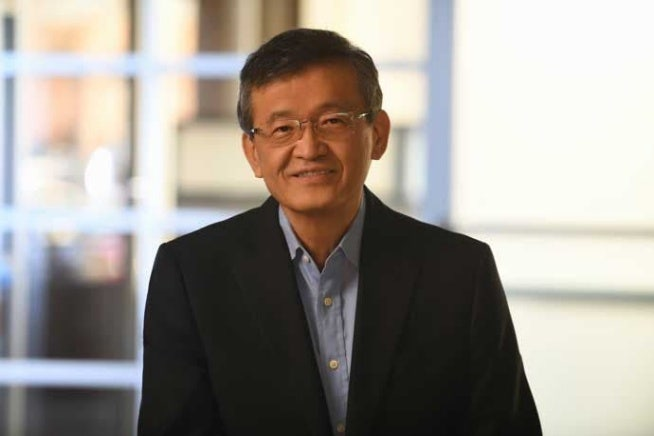
Intel CEO Lip-Bu Tan defended his integrity as a tech executive and investor in a late Thursday letter to his employees and said the chipmaker is “engaging” with the Trump administration to address concerns it has.
Tan’s letter, which was published to Intel’s website, was a response to President Donald Trumps’s Thursday morning demand for the Intel CEO to resign “immediately.” The president claimed that Tan is “highly conflicted,” two days after Sen. Tom Cotton sent a letter to Intel’s chairman raising concerns about the CEO’s alleged connection to Chinese firms.
[Related: Trump’s Call For Intel’s CEO To Resign: 6 Big Things To Know]
“There has been a lot of misinformation circulating about my past roles at Walden International and Cadence Design Systems,” Tan wrote. “I want to be absolutely clear: Over 40+ years in the industry, I’ve built relationships around the world and across our diverse ecosystem—and I have always operated within the highest legal and ethical standards.”
Tan, a naturalized U.S. citizen who was born in Malaysia and raised in Singapore, said Intel is “engaging with the Administration to address the matters that have been raised and ensure they have the facts.”
“I fully share the President’s commitment to advancing U.S. national and economic security, I appreciate his leadership to advance these priorities, and I’m proud to lead a company that is so central to these goals,” he added.
CRN has reached out to the White House for comment.
Tan said Intel’s board is “fully supportive of the work we are doing to transform our company, innovate for our customers, and execute with discipline—and we are making progress.”
“It’s especially exciting to see us ramping toward high-volume manufacturing using the most advanced semiconductor process technology in the country later this year,” he wrote. “It will be a major milestone that’s a testament to your work and the important role Intel plays in the U.S. technology ecosystem.”
Tan called the opportunity for Intel “enormous.”
“I’m proud to be on this journey with you,” he added.
Tan Addresses Love For United States, Intel
While Tan did not directly address Trump’s call for him to resign, the CEO acknowledged at the beginning of his letter that “there has been a lot in the news today,” and he wanted to “take a moment to address it directly with [Intel’s] employees.”
“Let me start by saying this: The United States has been my home for more than 40 years. I love this country and am profoundly grateful for the opportunities it has given me. I also love this company. Leading Intel at this critical moment is not just a job—it’s a privilege,” he wrote.
Tan called Intel’s success “essential to U.S. technology and manufacturing leadership, national security and economic strength.”
“This is what fuels our business around the world. It’s what motivated me to join this team, and it’s what drives me every day to advance the important work we’re doing together to build a stronger future,” he said.
Tan sent his letter after the chipmaker said in an earlier Thursday statement that it is “deeply committed to advancing U.S. national and economic security interests and are making significant investments aligned with the President's America First agenda.”
Tech Analyst: ‘Intel Doesn’t Need The Stress Right Now’
In Sen. Cotton’s letter to Intel’s chairman that apparently prompted Trump’s resignation demand, the senator claimed that Tan “reportedly controls dozens of Chinese companies and has a stake in hundreds of Chinese advanced-manufacturing and chip firms.”
Reuters reported in April that Tan “has invested in hundreds of Chinese tech firms, including at least eight with links to the People’s Liberation Army,” through his San Francisco-based venture capital firm, Walden International, as well as two Hong Kong-based holding companies.
While Intel declined to comment on Tan’s investments in China at the time, a company spokesperson told Reuters that that the CEO was required to disclose any potential conflicts of interest, and a separate source familiar with the situation claimed to the news outlet that Tan no longer holds positions in Chinese entities.
Cotton pointed out Tan’s alleged links with Chinese firms to highlight his “concern about the security and integrity of Intel’s operations and its potential impact on U.S. national security.”
Veteran tech analyst Jack Gold, principal analyst at Northborough, Mass.-based J. Gold Associates, told CRN that many tech companies, including Intel, “have major operations in China” and that other venture capitalists besides Tan have invested in Chinese companies.
A similar sentiment was echoed by another longtime analyst, Mario Morales, general manager of semiconductors, storage and enabling technologies at research firm IDC.
“Almost a third of the total [semiconductor] industry is driven by markets in China, which means that every leader in our industry at some point has done or is doing business across the country,” Morales wrote in a LinkedIn post.
Considering Trump’s big push to boost U.S. manufacturing, Gold said it’s “totally counterproductive” for the president to apply pressure to Intel in this way, particularly when the company is making one last push to boost its chip manufacturing business.
“Intel doesn't need the stress right now,” he said.
CEO Leadership Expert: Trump Call For Resignation Is Unprecedented
Jeffrey Sonnenfeld, senior associate dean for leadership studies at the Yale School of Management, told CRN that while previous U.S. presidents have been critical of CEOs before, none before Trump had ever called for a company leader to resign.
“We haven't ever had the president of the United States decide that he could supplant the board of directors and handle top-level staffing and governance issues of a private enterprise on his own,” said Sonnenfeld, who also leads the Chief Executive Leadership Institute, a nonprofit focused on CEO leadership and corporate governance.
While Trump’s call for Tan to resign represents a significant escalation between the president and the United States’ only advanced chip manufacturer, Sonnenfeld said Trump could “still become a great ally” to Intel. As an example, he cited Trump’s previously rocky relationship with former Sen. Marco Rubio, who is now the president’s Secretary of State.