Intel’s Earnings Bombshell: Layoffs, Foundry Warning And Other Things To Know
CRN reviews the most important things to know from Intel’s bombshell of an earnings report last week, including its plan to shed nearly 25 percent of its workforce this year and its warning about the future of the Intel Foundry contract chip manufacturing business.
While Intel surpassed Wall Street’s expectations for revenue in the second quarter, the chipmaker delivered a bombshell of an earnings report last week with the announcement that it will shed nearly 25 percent of its workforce this year, among other disclosures.
The Santa Clara, Calif.-based company said last Thursday that it “plans to end the year with a core workforce of about 75,000 employees” due to layoffs and attrition, which would amount to nearly a quarter of its workers leaving in a matter of 12 months.
[Related: Exclusive: Intel Reveals Plan To Spin Off Networking Business In Memo]
But that wasn’t the only major revelation from the earnings report for the beleaguered semiconductor giant, whose new CEO, Lip-Bu Tan, has been pushing for major changes, including a “new financial discipline,” in the latest attempt to turn around the company after several years of struggles and waning fortunes.
“These are the building blocks of a new Intel—and we took important steps in the right direction in [the second quarter],” he wrote in a public letter to employees.
In Intel’s quarterly filing with the U.S. Securities and Exchange Commission, the company said that it has been “unsuccessful to date in securing any significant external foundry customers” for its Intel Foundry contract chip manufacturing business. This includes the Intel 18A manufacturing node that recently entered production and was viewed as key to the comeback plan by former Intel CEO Pat Gelsinger.
The company also said it “may pause or discontinue” development of Intel 14A—the successor to Intel 18A—and future leading-edge nodes if the company is “unable to secure a significant external customer” for the node, as it has yet to do.
However, Tan said he’s confident this worst-case scenario won’t play out.
“The team is laser-focused, and the feedback from the partners and outside is that, ‘Wow, Lip-Bu, the culture is changing, and you guys are really focused on the yield, better than just performance,’” he said on Intel’s second-quarter earnings call last week.
On top of the foundry warning, Intel said it’s canceling construction projects in Germany and Poland, which were once key to Gelsinger’s plan for Intel Foundry. The company said it’s also shutting down assembly and test operations in Costa Rica, with sites in Vietnam and Malaysia expected to pick up the slack. In addition, the company noted that it is slowing down construction for what was supposed to be a major manufacturing site in Ohio, which was another key announcement under Gelsinger.
Despite the cutbacks and warnings about potential changes to Intel’s strategy, Tan said the company’s operating performance in the second quarter “demonstrates the initial progress we are making to improve our execution and drive greater efficiency.”
“We are laser-focused on strengthening our core product portfolio and our AI road map to better serve customers,” he said in a statement.
“We are also taking the actions needed to build a more financially disciplined foundry. It’s going to take time, but we see clear opportunities to enhance our competitive position, improve our profitability and create long-term shareholder value,” Tan added.
Intel’s stock price is down 12 percent since reporting earnings last Thursday.
What follows are six things to know from Intel’s second-quarter earnings report, including new disclosures about layoffs, how restructuring and other charges weighed down the company’s earnings, how Intel performed in the PC and data center markets, Intel Foundry’s plan for gaining big customers and Tan’s “new financial discipline.”

Intel’s Workforce To Shink By Roughly 24,000 This Year
With Intel saying last Thursday that it “plans to end the year with a core workforce of about 75,000 employees,” this means the company is expected to lose about 24,500 workers this year, which amounts to about one-quarter of its personnel.
This is based on the company’s stated core workforce of roughly 99,500 employees at the end of last year from its first-quarter earnings report from April.
In last week’s earnings report, Intel revealed it is laying off 15 percent of its workforce, with most of the cuts having been made in the second quarter. The company—which had 96,400 core employees at end of June, according to the earnings report—said that layoffs and attrition will be the two main drivers of the larger reduction in force.
In his letter to employees discussing his strategy, Intel CEO Lip-Bu Tan said the job cuts allowed the company to reduce its number of management layers by about 50 percent.
“These actions are necessary, not just to reduce our operating expenses, but to make the company more agile, collaborative and vibrant, to simplify our business and improve our product and process execution,” he said on the earnings call last Thursday.
The layoffs resulted in a $1.9 billion restructuring charge, which reduced Intel’s earnings per share by 45 cents, according to the company.
Intel began notifying the states of Oregon, California, Arizona, Texas and New Mexico of its plan to lay off thousands of employees earlier this month.
According to an analysis conducted for CRN by the state of California’s Employment Development Department, roughly 1,350 Intel employees there were laid off.
Intel cut roughly 2,390 jobs in Oregon, nearly 700 in Arizona, 110 in Texas and nearly 230 in New Mexico, according to public notices the company filed with each state.
This amounts to roughly 4,770 employees laid off across the five states.
The expected workforce reduction is coming after Intel cut its workforce by 15 percent last year between layoffs, buyouts and early retirement packages. These job cuts happened under its previous CEO, Pat Gelsinger, in response to worsening financial conditions.

Layoffs, Excess Tools Drag Down Intel’s Earnings
Intel’s second-quarter revenue was $12.9 billion, slightly higher than it was the same period last year and above the high-end range of its guidance from last quarter. It was slightly lower than the $12.7 billion Intel made in revenue in the first quarter.
While revenue surpassed Wall Street’s expectations, Intel fell short when it came to earnings per share, which came in at -0.1 cents per share on a non-GAAP basis, below the average analyst consensus of the company breaking even at 0.01 cents.
On a GAAP basis, Intel’s earnings per share were far lower at -67 cents, down 76 percent from the same period a year ago. Two major factors contributed to this: a $1.9 billion restructuring charge related to the recent layoffs that resulted in a 45-cent decline, and few other charges of different types that brought earnings down by another 23 cents.
These other charges included roughly $800 million in non-cash impairment and accelerated depreciation charges related to an excess of manufacturing tools the company doesn’t plan to use again, the company said. It also recognized approximately $200 million in one-time period costs.
These non-restructuring charges also dragged down Intel’s GAAP and non-GAAP gross margins by 800 basis points. As a result, Intel’s GAAP and non-GAAP gross margins came in at 27.5 percent and 29.7 percent, respectively. These figures were 7.9 points and 9 points lower than they were for the same period last year.
Intel’s operating margin, on the other hand, declined by 9.4 points to -24.7 percent while its net income slid 81 percent year over year to $2.9 billion.
For the third quarter, Intel has forecast a revenue range of $12.6 billion to $13.6 billion, GAAP and non-GAAP gross margins of 34.1 percent and 36 percent as well as GAAP and non-GAAP earnings per share of -24 cents and 0 cents, respectively.
Intel Reports ‘Solid Demand’ In PCs, ‘Variability’ Among Hyperscalers
Revenue for the Intel Products group in the second quarter declined by 1 percent year over year to $11.8 billion, which was roughly the same as the previous quarter.
While Intel’s Client Computing Group revenue grew 3 percent sequentially to $7.9 billion, sales were 3 percent lower than they were in the same period last year. Data Center and AI revenue, on the other hand, declined 5 percent sequentially to $3.9 billion, which marked a 4 percent increase from last year’s second quarter.
Intel CFO David Zinsner said while he warned last quarter that the “economic landscape had become increasingly uncertain” due to “shifting trade policies, persistent inflation and increased regulatory risk, “markets largely functioned normally” in the second quarter.
This allowed the “fundamental demand drivers underpinning [Intel’s] core markets to manifest,” he added on the company’s earnings call last week.
For the Client Computing Group, Intel “saw continued solid demand driven by the end of service for Windows 10 and the aging COVID-era installed base,” according to Zinsner. AI PC processors also grew as a percentage of its product mix, he added.
“I was pleased by the team’s ability to support revenue upside in the quarter, as capacity for Intel 7 remains very tight,” Zinsner said, referring to the node that is used for the company’s Alder Lake and Raptor Lake processor families.
As for Intel’s Data Center and AI revenue, Zinsner said the company suffered from “variability in hyperscale demand,” which was “partially offset by continued strength in host CPUs for AI servers and storage compute.”
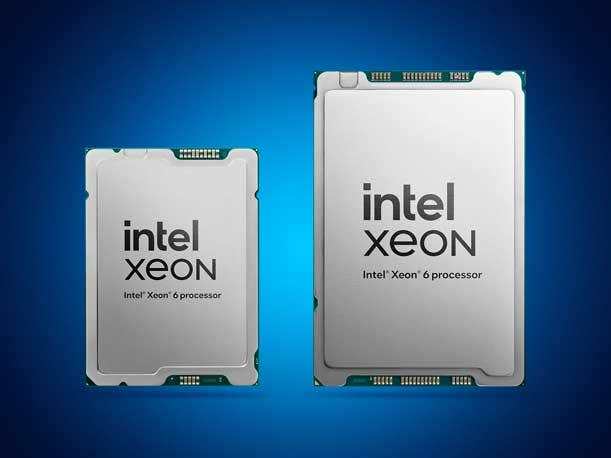
“In addition, we saw upside to plan on the continued ramp of Xeon 6, code-named Granite Rapids,” he said.
Earlier in the call, Intel CEO Lip-Bu Tan said while Intel continues to “see good demand for our more established server products,” it will take time for the company to make “sustainable share improvement” in the data center market.
“Specifically, we need to improve in broader, hyperscale workloads where performance-per-watt is the key differentiator,” he said.
Elsewhere across Intel, Intel Foundry revenue grew 3 percent year over year to $4.4 billion while the “all other” segment increased 20 percent year over year to $1.1 billion.
Intel Still Hopes To Gain ‘Significant’ Customers For Intel 18A
While Intel has previously announced Amazon Web Services and Microsoft as Intel 18A customers, the company’s admission that the node does not yet have “significant external foundry customers” indicated that it still has work to do.
On last week’s earnings call, Intel CEO Lip-Bu Tan said the company hopes to attract big customers for Intel 18A, which will serve as the “foundation of at least [the] next three generations of Intel client and server products.” This includes Panther Lake, which will succeed the Intel Core Ultra 200 series when it launches for PCs by the end of this year.
Intel 18A and the node’s offshoot, Intel 18A-P, are “critical nodes for Intel products and will drive meaningful wafer volumes well into the next decade,” according to Tan.
Tan said Intel “will be in a better position to attract external customers” to Intel 18A “once we get our own product ramping in high volume.”
On the same call, Intel CFO David Zinsner said that Intel 18A “probably won’t get a lot [of customers] in wave one” but left open the possibility for the company to land more customers in the future.
Both Tan and Zinsner said one critical area of focus is improving the manufacturing yield of Intel 18A to make it more attractive for customers.
“There’ll be more opportunities for us to attract external customers after we do so much improvement in terms of performance and yield on our own products,” Zinsner said.
Tan Says He Is Confident About Intel Foundry Despite Warning
While Intel said it “may pause or discontinue” development of Intel 14A—the successor to Intel 18A—and future leading-edge nodes if the company is “unable to secure a significant external customer” for the node, Intel CEO Lip-Bu Tan said he’s confident it won’t come to that.
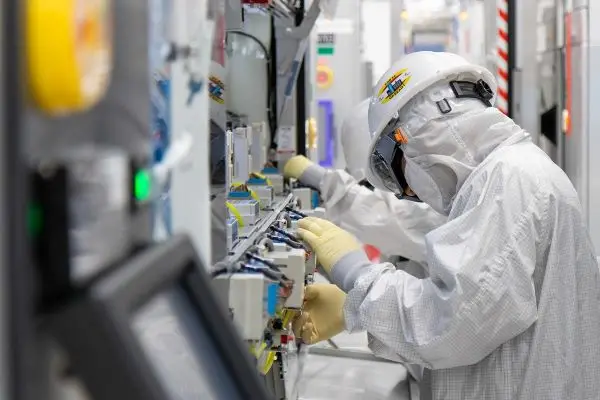
On last week’s earnings call, Tan said the company is “laser-focused on building up” the critical elements needed for Intel 14A’s success, including the technology definition, transistor architecture, process flow, process design kit, foundation IP and test chip to “verify and improve the performance and defect density.”
The CEO added that the company has “learned quite a lot” from the mistakes it made on Intel 18A and is now applying those lessons to Intel 14A. Intel is also working with partners to help it improve manufacturing yield for the node, which Tan said gives him “a lot of confidence” about prospects for Intel 14A.
Another source of confidence for Tan is Intel’s early engagement with customers on the development of Intel 14A, according to the leader.
“They’re going to enable us, and with clear milestone, to execute in terms of process development and with [process development kit], with all the different IP that we need to really put it together,” he said.
After noting positive feedback from partners on Intel’s focus on improving the yield and performance of Intel 14A, Tan said the company is engaging with electronic design automation and IP partners to “make sure that we have the whole program together to do the pattern-matching for the customer.”
Nevertheless, Tan said he will not deploy capital expenditures for Intel 14A production until he sees “internal customer, external customer volume commitment.”
“We’re not going to put any CapEx until we see the yield performance and also our internal customer and external customer feedback and the volume commitment that we put the CapEx in,” he said on the earnings call.

Tan Touts ‘New Financial Discipline’ For Foundry
Intel CEO Lip-Bu Tan (pictured) said his decision to require volume commitments from customers before he makes further investments in Intel Foundry is part of a “new financial discipline” he has instituted for the contract chip-making business.
On last week’s earnings call, Tan said this more conservative approach to manufacturing investments not only applies to the development of leading-edge nodes like Intel 14A but also to the company’s manufacturing facilities.
As a result, Intel canceled projects for big facilities in Germany and Poland in addition to shutting down assembly and test operations in Costa Rica, with sites in Vietnam and Malaysia expected to pick up the slack. The company is also slowing down construction for its future manufacturing site in Ohio.
“Perhaps most importantly, we need to build capacity smartly and carefully on a schedule that meets the needs of our customers and supports the economics of our business,” Tan said before criticizing the expansion strategy of former Intel CEO Pat Gelsinger.
“This approach is fundamentally different than the path we have been on for the last four years,” he added. “Unfortunately, the capacity investment we made over the last several years were well ahead of demand and were unwise and excessive. Our factory footprint has become needlessly fragmented.”
Instead, Intel will only grow its manufacturing capacity “based solely on the volume commitments” from customers and spend money in “lockstep with tangible milestones—and not before,” according to Tan.
“I do not subscribe to the belief that ‘if you build it, they will come’ under my leadership. We will build what customers need, when they need it, and earn their trust through consistent execution,” he said earlier in the call.