AMD Expands Microsoft Foothold With New Azure AI Deal
Dominic Daninger, vice president of engineering at Burnsville, Minn.-based systems integrator Nor-Tech, tells CRN that it’s good to see AMD attacking the data center opportunity with its latest collaboration with Microsoft.
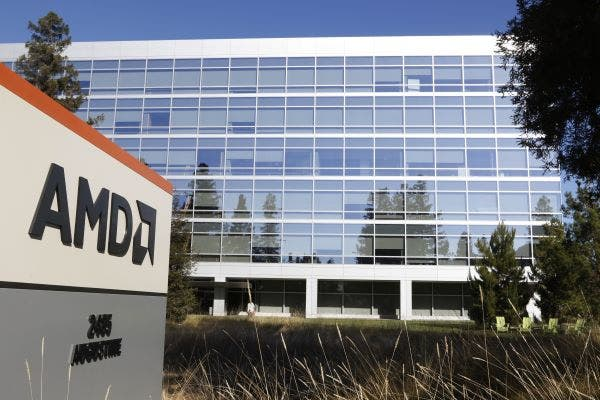
AMD said Monday that it expanded its collaboration with Microsoft in a deal that would see the chipmaker deploy its latest Helios AI rack-scale architecture and next-generation EPYC data center processors to Azure.
As part of the deal, Redmond, Wash.-based Microsoft will deploy Helios to power “frontier model AI inference for Microsoft, its AI customers and support Azure AI services,” the companies said. AMD and Microsoft both said that Azure will also add two new AMD EPYC CPU-powered VM series and broaden its deployment of Pensando data processing units (DPUs) to support Azure networking services. Santa Clara, Calif.-based AMD will begin shipping Helios to customers, including Microsoft, in the second half of 2026.
Dominic Daninger, vice president of engineering at Burnsville, Minn.-based systems integrator Nor-Tech, told CRN that with more deployments of chips, “sometimes parts might be a little harder to get” given the current global chip shortage. But it’s good to see AMD attacking the data center opportunity, said Daninger, who praised AMD CEO Lisa Su’s leadership. “Competition always breeds innovation.”
Helios rack-scale architecture integrates AMD Instinct GPUs with EPYC Venice CPUs to deliver high-performance AI infrastructure. In AMD’s quarterly earnings call in May, Su said that the company is “seeing significant customer interest” around Helios and AMD’s Instinct MI450 data center AI accelerator chip. Su cited AMD’s partnerships with OpenAI and Meta, saying those collaborations are “going really well,” according to a transcript of the call.
“We appreciate the deep co-engineering that has gone on there,” said Su at the time. “Based on our current visibility, how those forecasts are coming in with all of our customers, we’re actually seeing it above our initial plans that we had planned for 2027. I think the encouraging thing is we're seeing a breadth of customers who are now very interested in deploying at significant scale, MI450 series.”
The Microsoft deal would significantly expand the availability of the Helios product to another technology powerhouse.
“Our approach to AI infrastructure is designed to support the breadth of how AI systems are built and run,” said Scott Guthrie, Microsoft’s executive vice president of cloud and AI, in a blog post. “We closely work with industry innovators like AMD as well as our own purpose-built silicon and systems to provide customers with a comprehensive, open and heterogenous platform to achieve the best performance, cost and energy efficiency outcomes.”
An AMD spokesman declined to disclose additional details on the scale and the financial terms of the collaboration. A Microsoft spokesperson pointed CRN to Microsoft’s blog post and AMD press release.
Shares of AMD stock rose nearly 2 percent on Monday to $503.57.
In the last quarter, AMD grew its data center revenue to a record $5.8 billion—once again higher than what its larger rival, Intel, made for the segment. Even with the growth in sales, AMD is still behind leader Nvidia in sales, which reported record data center revenue of $75.2 billion in its last quarter, up 92 percent from a year ago.