Intel CEO Lip-Bu Tan: ‘This Is A Fundamentally Different Company Today’
As Intel starts to reap the benefits of the AI data center boom, Lip-Bu Tan is crediting the major changes he made to the semiconductor giant in his first year as CEO for the ‘continued and steady progress’ it has seen in that time while cautioning that it has ‘a lot of work ahead.’
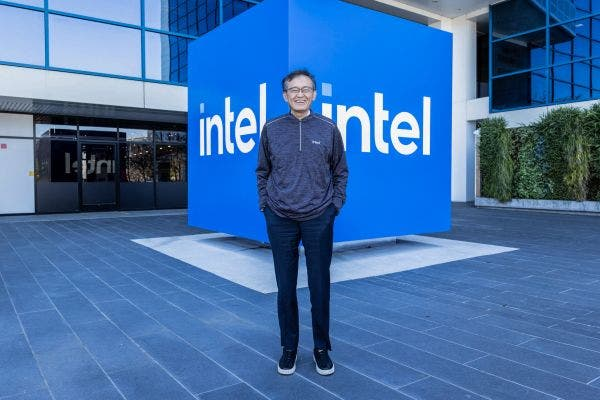
As Intel starts to reap the benefits of the AI data center boom, Lip-Bu Tan is crediting the major changes he made to the semiconductor giant in his first year as CEO for the “continued and steady progress” it has seen in that time.
“A year ago, the conversation about Intel was about whether we could survive,” he said on Intel’s Wednesday earnings call. “Today is about how quickly we can add manufacturing capacity and scale our supply to meet enormous demand for our products. This is a fundamentally different company today, and we still have a lot of work ahead.”
The Santa Clara, Calif.-based company reported first-quarter revenue of $13.6 billion, up 7 percent year over year, largely thanks to the 22 percent growth it reported for its data center business in the face of pent-up AI demand. The revenue as well as its non-GAAP earnings per share were well above Wall Street’s expectations.
Intel’s stock price was up more than 19 percent in after-hours trading.
How Tan Has Changed Intel Over The Past Year
Since he became CEO in March of last year, Tan has made significant organizational changes as he committed to the strategy of his predecessor, Pat Gelsinger, which calls for Intel to manufacture chips designed by other companies in addition to its own.
The changes included a 15 percent reduction in the company’s workforce, a 50 percent decrease in the number of managers, the hiring of outsiders for key leadership positions in areas like AI and data centers as well as a more conservative approach to how the company commits to costly manufacturing projects and manages overall spending.
Tan also parlayed a demand from President Trump last year for him to resign into a move by the U.S. government to convert previously awarded federal grants into a roughly 10 percent stake in the company, which helped Intel improve its balance sheet.
“With a stronger balance sheet, a new leadership team, a rejuvenated and motivated workforce, and a renewed focus on engineering execution, we are turning our attention squarely towards innovation to capture opportunities in the near term and to position the company for robust growth in the long term,” he said.
Intel Highlights Strengths In Data Center And PC Markets
During the first-quarter earnings call, Tan and his CFO, David Zinsner, highlighted the company’s strengths in the data center and PC markets.
“Even as we improve factory output, demand continues to run ahead of supply for all our businesses, especially for Xeon server CPUs where we expect sustained momentum this year and next,” Tan said on the call.
Out of the “multiple long-term supply agreements with key customers” it has for the data center business, Tan named Google as one of them, saying, “this is a good example of how we win in the AI infrastructure build-out” while teasing future announcements.
Intel CFO David Zinsner noted that its new Core Ultra Series 3 processors for PCs represented its “strongest product launch” in five years. This helped its PC business grow 1 percent in the face “industry-wide component shortages and inflationary pressures,” with AI PC chips now representing over 60 percent of the client processors it ships.
Intel Manufacturing Improves But Foundry Customers Still Needed
From a manufacturing perspective, Tan reported that the company is making progress for its Intel 4 and Intel 3 nodes as the yields for its most advanced process, Intel 18A, “are now running ahead of the internal projection, representing a meaningful inflection in our execution and our factory finished goods output.”
The CEO continued to sound confident about prospects for the Intel Foundry contract chip manufacturing business, which is still in need of big customers for long-term success.
According to Tan, the company has grown the customer backlog for its Intel 18A-P and Intel 14A nodes, the latter of which represents its most advanced process. He added that the maturity, yield and performance for 14A are “outpacing” its predecessor, 18A.
While Intel has yet to announce any major foundry customers, Tan said, “We expect to see earlier design commitments emerge, beginning in the second half of 2026 and expanding into the first half of 2027” while noting exploratory work with Elon Musk’s companies.
How Else Intel Hopes To Improve Amid Global Concerns
Despite the progress the company has made, the CEO warned multiple times during the earnings call that “we still have a lot of work ahead.”
With Intel’s data center business growing 22 percent year over year in the first quarter and the company expecting further double-digit growth, Tan said he’s “confident that the CPU franchise will continue to be a meaningful growth engine for the for the company in the years ahead.”
But he noted that the company still has room for improvement in other areas.
For instance, Intel is planning to reverse a decision made before Tan’s time to remove multithreading from the company’s Xeon road map with the introduction of the “Coral Rapids” CPUs, which are set to succeed this year’s “Diamond Rapids” chips that will lack the feature.
The chipmaker is also “quietly building up” the company’s new GPU offerings, Tan said, after previous accelerator chip efforts failed to catch traction.
“The accelerator remains central to frontier AI, and we will continue to participate, innovate and partner in that category,” he said.
Intel is also facing what Zinsner called “dynamic” macroeconomic and geopolitical environments without mentioning the U.S. war on Iran and ongoing tariff changes.
“Views on global growth, policy and trade continue to shape customer behavior and investment decisions,” he said. “In addition, constraints and rising prices around key components like memory, wafers and substrates are driving higher costs that could impact demand for our product at some point in the year.”
Against all this, Tan said there is much more for the company to accomplish.
“It has been an eventful first year for me at Intel. It is gratifying to see our progress, even as we know we have a lot more to do,” he said.