Dell Lowers Pro Essential Price As COO Jeff Clarke Moves To Take PC Share
“Many customers experience our company through the PC business. They experience our brands. They experience their interaction with our company through our PC business. And that’s why it’s very important. We’re focused on it. I’m not happy with the share performance. We’re going to turn that around,” Dell vice chairman and COO Jeff Clarke told investors during the company’s second-quarter earnings call.
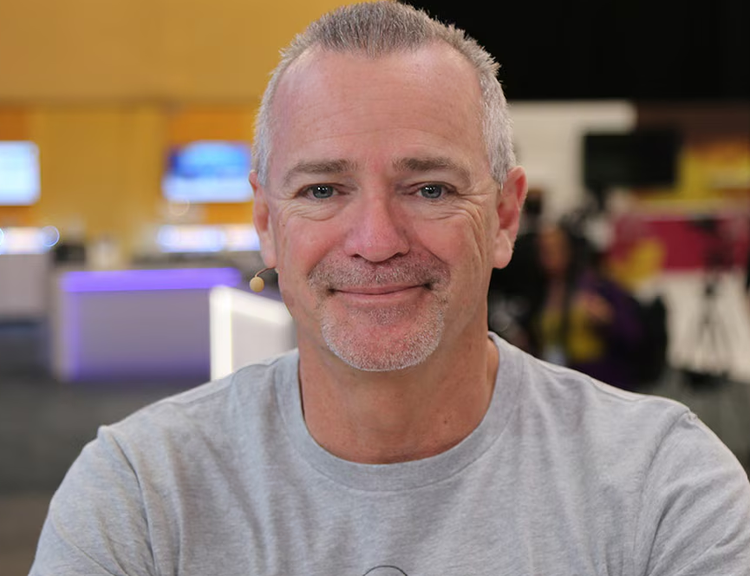
Dell Technologies’ Jeff Clarke is focused on gaining share in PCs and has fired his first shot at doing so with two Dell Pro Essential models priced as low as $300.
“We have every intention to grow,” Clarke, Dell’s chief operating officer and vice chairman, told investors this week on the company’s second-quarter earnings call. “We have every intention to outperform the marketplace and take share. That’s our goal. We have not done that consistently enough. That’s problematic. We are focused on doing so.”
Clarke said this is an opportunity for Dell to move more broadly into the PC market and also to reclaim the hearts and minds of customers.
“This business is hugely important to our company,” he said. “Many customers experience our company through the PC business. They experience our brands. They experience their interaction with our company through our PC business. And that’s why it’s very important. We’re focused on it. I’m not happy with the share performance. We’re going to turn that around.”
[RELATED: Dell Titanium Partner: COO Jeff Clarke ‘Going To Go Bare Knuckles’ On PC Market]
The Dell Pro 14 Essential and Dell Pro 15 Essential were released Thursday and priced between $300 and $600.
This is a new price band for Dell as it seeks to capture spending from an entry-level commercial market estimated at 6 million devices. During the second quarter, Dell’s Client Solutions Group, which includes its PC business, grew 1 percent year over year to $12.5 billion. On the commercial side, sales were up 2 percent to $10.8 billion, but consumer sales dipped 7 percent year over year to $1.7 billion.
In IDC’s most recent report on the top five PC makers globally, Dell, which was in the number three spot, is the only company that lost share in global shipments amid a refresh of devices that has lifted both Lenovo and HP.
There are about less than 48 days until Windows 10 loses support from Microsoft and goes “end of life.” When that happens, hundreds of millions of PCs will lose product support for their operating system, and about half of those devices have not been refreshed, Clarke said.
“To fully seize the refresh opportunity, we’ve taken steps to improve execution and expand our PC TAM (total addressable market),” Clarke said of the launch of the two devices. “This is indicative of the fast, strategic actions we’re taking to drive growth and gain share, while operating within our 5-7 percent long-term profitability targets.”
Dell introduced partner of record status for its PCs and client devices to resellers in 2024. The company said partners can earn partner of record status when selling the Dell Pro 14 Essential and 15 to eligible acquisition customers.
Dell said the distribution strategy is also a top priority for Dell Pro Essential’s launch.
Beginning Monday, Sept. 1, the Dell Pro 14 Essential and Dell Pro 15 Essential will be available on its distributor product lists and partners can begin placing orders immediately, Dell said. Fulfillment timelines will vary by region, but Dell said most distributors will be able to deliver to customers within a month.
CRN spoke with Kevin Terwilliger — Dell’s head of product, commercial, consumer, and gaming PCs — about the launch of the new products at the lower price point. He said the devices come with either AMD Ryzen or Intel Raptor Lake chips as well as fingerprint readers, lock slots, an aluminum chassis, and they are built to military specification standards.
“These are proven to be able to withstand that commercial life cycle, especially for those customers that are looking to buy a very affordable PC, they tend to actually hold it to a really high bar,” he said. Additionally, the products come with fleet management capability and with the option of a five-year Dell service plan, he said.
“This product hits that sweet spot of $300 to $600, giving those essential security, essential, manageability functions,” he told CRN. “Those capabilities that a professional needs. So that’s really our focus with this product.”
What were some of the capabilities that you folks have identified as being what these commercial users need?
So generally, what we see is the baseline is they need hardware TPM (trusted platform module). They need to have some capabilities around biometrics, in this case, a fingerprint reader on the power button. And those are really the core capabilities from a security perspective, to say, ‘OK, we’re comfortable with that being in a corporate environment.’
And then from a manageability perspective, it’s really about integration into Intune and Microsoft Autopilot and having those capabilities, so they can do fleet management. So those are all capabilities that we’ve enabled within that Dell Pro Essential offering. And then on top of that, our support capabilities of up to a five-year warranty support assist, those type of things, to make sure that that service experience is great over the life of the product.
Is this aimed at mid-market? Is this aimed at SMB? Is this aimed at medium enterprise? Can you kind of tell me a little bit about where you guys see this landing best?
So what we see is in that $300 to $600 market, there are about 6 million units in the TAM. A lot of that is small and medium business that are buying through the partners, because they really value that relationship and the extra capabilities of having that engagement through the partner.
And it really spans from small business up into medium business, kind of the lower end of enterprise, and then a little bit of some public buyers down in that range. And oftentimes it’s a combination of that with other products.
They look at it more from a persona basis, and you want that most affordable product for certain personas in the environment. And then they’ll have maybe two or three other personas where they’ll buy up the stack for other users in their environment. But we want them to be able to get all of that from Dell, all of that through our partners. And so that’s why we built out that capability all the way down to $300
When you talk about that TAM of 6 million units. This is the year of the refresh for PCs. How many of those 6 million are ready to be refreshed with these new Dell units?
So lots, right? And in particular, what we’re seeing is in the refresh, and when we get to the tail end of the refresh, more of that opportunity. The laggards in the refresh tend to be more of those lower price bands.
They’re trying to hold on as long as they can. And so that’s why we’ve also introduced it now. It’s really perfectly timed with the refresh. They’ve done more of the upper end of their stack, in a lot of these environments, and they’re looking to go get those last couple of users over to Windows 11.
So we see a big opportunity in Q3 and Q4 specifically tied to that refresh.
At this price, you’re not just competing with other Windows users, you’re competing with Chromebook as well. I think MacBook Air has a $999 price point for some of their commercial users. So there’s a lot of competition here. What is it that you folks are bringing that is setting Dell apart?
A lot of it has to do with we’re experts in what is commercial ready. And some of those other offers that might be in the price band, there’s trade-offs they have to make in security and manageability, in how they’re managing the image of that device.
This product really slots in with the way that they are supporting the rest of those commercial users with those security and manageability essentials. And so that’s really where it’s differentiated.
I’ll also tell you the chassis themselves, they’re really nice form factors for that price point.
We don’t want to make a bunch of trade-offs going down into that $300 to $600 range so we even have aluminum options on those chassis. They’re great from a weight perspective as well. Because we find that, especially in some of the emerging markets, a big, big priority around the device, still being lightweight, even if it’s more of the affordable, more of an entry device.
We talked with partners who said Clarke was going to be aggressive about coming for share in PCs. Is that fair to say? Is this one of his first moves?
This ties back to Jeff stepping in and driving our CSG division. This should also be a leading indicator that we’re very focused on share gain, very focused on broad coverage of the market, (and) enabling offerings across the multiple different price points. And so this is one step towards continuing to build out full coverage of the marketplace so that we can meet customers where they are.
Jeff’s a seasoned veteran in the client business. He built the client industry. And so this is the first step in that. Of ensuring that we’re building out that coverage so that we can quickly get back to share gain
I don’t think I’ve seen Dell at this price point. Is this a new band for you in terms of the $300 to $600?
Bringing in this price point significantly expands our coverage of the commercial market. That 6 million unit TAM, if you think about it, total commercial notebooks globally, that’s about seven and a half percent coverage of the market that we didn’t have before.
Just on that Ryzen processor, that’s got some significant graphics capabilities that you don’t normally see in laptops at this price.
When you look at the AMD processor, it’s great value from a graphics perspective and a multi thread perspective, and so that’s obviously a great option down in this price band. And then when you look at the Intel Raptor Lake processor that’s really good in in single-thread and snappiness.
And so it really comes down to again, meeting customers where their needs are, depending on their workloads, depending on what they’re looking to do. Intel and AMD both have great value props for different types of workloads.
We covered a lot of ground here. Is there anything we left out?
We talked about the security and the manageability side of things. And we talked about the fact that we have hardware, TPM, we’ve got fingerprint reader, privacy, shutter, lock slot. These are all capabilities that we know our commercial customers really value.
I would also just hit on from a durability perspective, MIL Standard 810H durability. So it’s proven to be able to withstand that commercial life cycle, especially for those customers that are that are looking to buy a very affordable PC. They tend to actually hold it to a really high bar of that being a trusted investment. They’re looking to go use that asset for four, maybe five years. And so we hold it to a high bar of durability as well.
And then in our Pro portfolio, we’re very focused on sustainability as well. And so bringing in recycled materials into the product. We have recycled steel, recycled aluminum in this product, 100 percent recycled materials going into the packaging, EPEAT Silver [sustainability certification]. So many of those things that we hold to a high bar within our professional portfolio, we’ve brought that even down to the essential line as well.