HP Inc.’s New PC, Print Products Aimed At Driving AI Value
A battery-free, fast scrolling mouse and printing that automatically removes ads and unwanted formatting were unveiled Thursday alongside a 2.6-pound desktop PC capable of running a 200-billion parameter large language model.
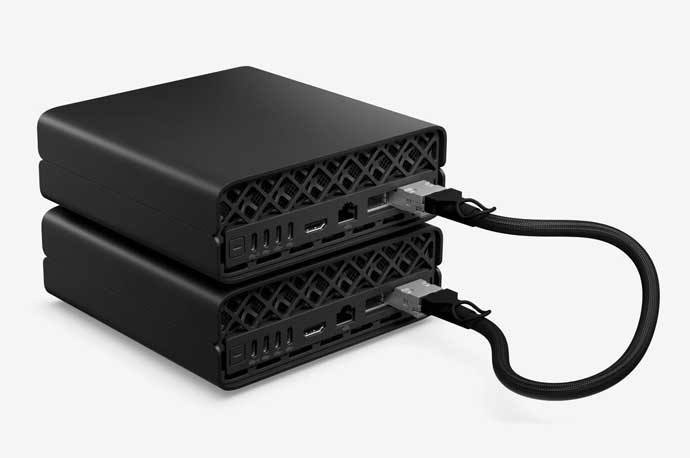
The star of HP Inc.’s fall product launch is the Nvidia-powered HP ZGX Nano (pictured above), which is powerful enough to run a 200-billion parameter model but small enough to fit into the palm of any hand capable of holding the 2.6-pound device.
HP reached out to 50 customers about AI development and how the company could alleviate friction in their workflows, said Brian Allen, manager of the global HP Z product team. He said according to the survey, AI development is driving hardware needs while concerns remain around data privacy and unpredictable cloud costs.
Eighty percent of HP customers surveyed saw a need for specialized AI development hardware, which led the company to create the HP ZGX Nano G1n AI Station.
“An overwhelming number of customers we spoke to told us that they see great value in an on-prem AI station solution particularly as a companion device among existing infrastructure,” Allen said during a media briefing. “This device is expected to provide more predictability around cloud cost while also offering better security for proprietary data.”
[RELATED: Leadership Shake-Up At HP Inc.: PC Boss Departs, New Strategy Officer Arrives]
Allen said there are several potential use cases for such a device, with many customers citing fine-tuning and creating domain-specific models. The HP ZGX Nano is a differentiated offering built to meet customer needs, Allen said.
The HP ZGX Nano uses Nvidia’s GB10 chip and can be tethered via an Nvidia ConnectX 7 Smart NIC to run models as large as 405 billion parameters.
“It’s small, but it’s powerful. It fits in the palm of your hand and only weighs 2.86 pounds,” Allen said.
Allen said the device can support an organization’s entire AI journey from prototyping to fine-tuning to inferencing.
“It’s preloaded with a complete enterprise-grade software stack so users can focus on innovation, not setup,” he said. “It comes ready with the latest AI toolkits and libraries and container support. This means you can immediately tap into today’s most powerful AI frameworks to deploy advanced workflows, models and microservices with ease.”
Also coming this fall are new monitors, including a sprawling 49-inch display that can be structured in several configurations, HP said.
Surveyed HP customers told the company that half of them would upgrade their printer if it had AI print tools built in, with 52 percent of them wishing AI could deliver print tools that make that process easier and more than one-third that would use AI to enhance print quality, fix print errors and print custom designs.
In response, HP has developed new scanning workflows that work with a user’s phone as well as AI for Print, which streamlines webpages that users want to have printed to avoid the multiple-page, advertisement-cluttered format disasters that can result from printing online recipes or news articles.
Here is a breakdown of some of the five biggest products HP unveiled Thursday.
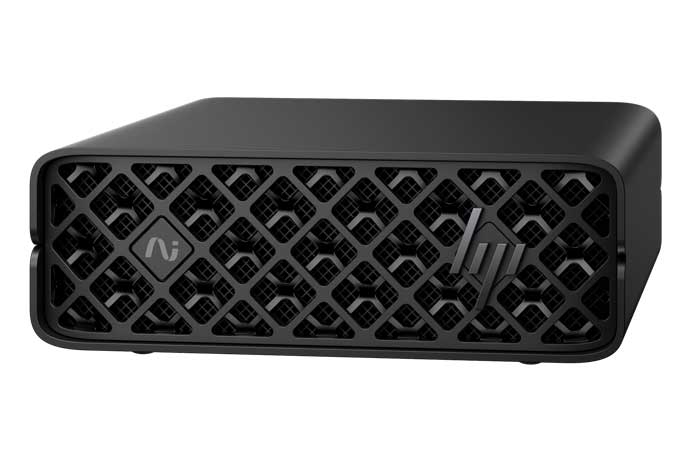
ZGX Nano G1n AI Station
HP says this a supercomputer in a compact size that can run 1,000 TOPS (trillion operations per second). The 2.6-pound device runs an Nvidia GB10 Grace Blackwell Superchip on an Ubuntu operating system capable of running a 200-billion parameter model on-premises.
However, pairing the devices via the Nvidia ConnectX 7 Smart NIC can double that capacity for users, giving them the ability to run models as large as 405 billion parameters in-house.
The original GPT-3 model was roughly 175 billion parameters, while the Llama 4 Maverick is around 400 billion parameters, according to Amazon Web Services documentation.
Included with the device is the HP ZGX toolkit, which includes open-source tools and libraries for out-of-the-box productivity.
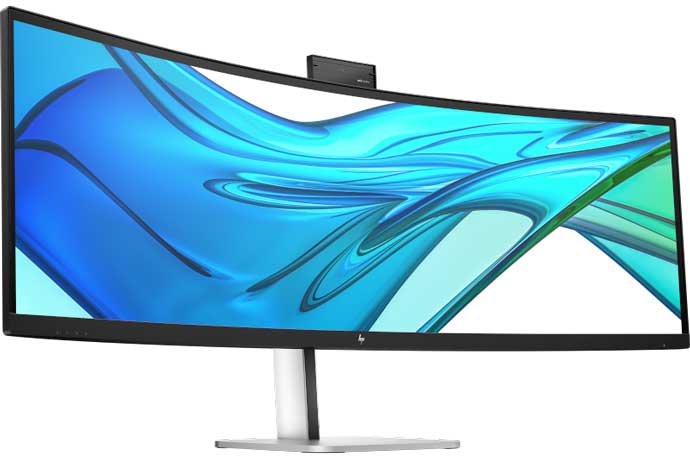
Series 5 Pro 49 Conferencing Monitor
HP is calling this “the ultimate command center” for modern AI product managers, who place a premium on screen real estate. The 49-inch curved display can be configured to suit the work-area preferences of its user.
With a panoramic view, workers who need to analyze several images simultaneously have a place to keep them visible while still having room for email, spreadsheets and corollary tasks.
HP says this is the world’s first ultrawide monitor with integrated AI noise reduction, and it can mimic two 27-inch displays across a single pane of glass. Users can also connect two PCs to work on the same monitor simultaneously using a USB-C cable and HP Device Bridge 2.0.
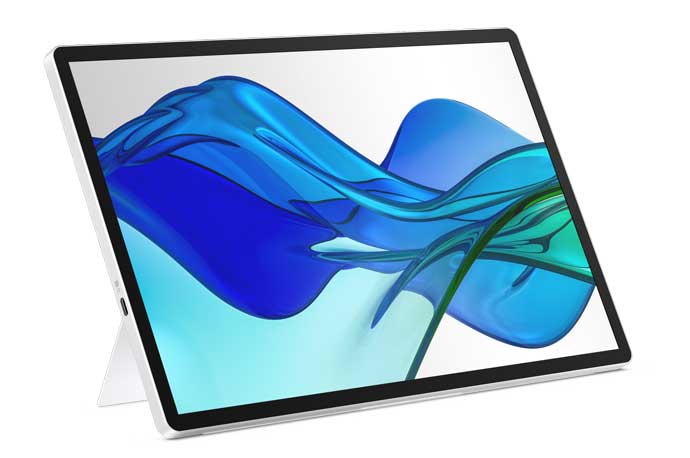
Series 5 Pro 14-Inch Portable Monitor
The Series 5 Pro 14-inch portable monitor is perfect for those who don’t want to leave their dual display set up at home or the office.
The USB-C-connected and charged device comes with a kickstand to stretch the mobile desktop further, giving users a place to put their email and notifications while working on more urgent tasks on a main screen. The screen can be configured in either landscape or portrait mode depending on user preference.
The soft cover doubles as a mouse pad.
Battery-Free Ultra-Fast Scroll Wireless Mouse
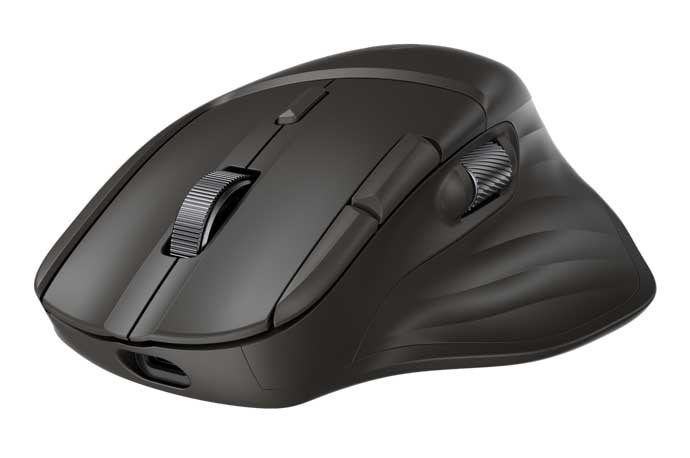
When every second counts, users can rely on the HP Ultra-Fast Scroll Wireless Mouse 785M, which HP said is the world’s first battery-free wireless mouse with a metal side scroll wheel as well as a metal center scroll wheel.
The design eliminates the need for a battery. This is accomplished through an HP-engineered power storage and energy delivery system that uses a super capacitor in place of a battery. This also speeds up charging, with a three-minute charge providing users 30 days of use.
The device has six programmable buttons and a 10-meter range, communicating with devices via AES 128-bit encryption.
HP AI For Print
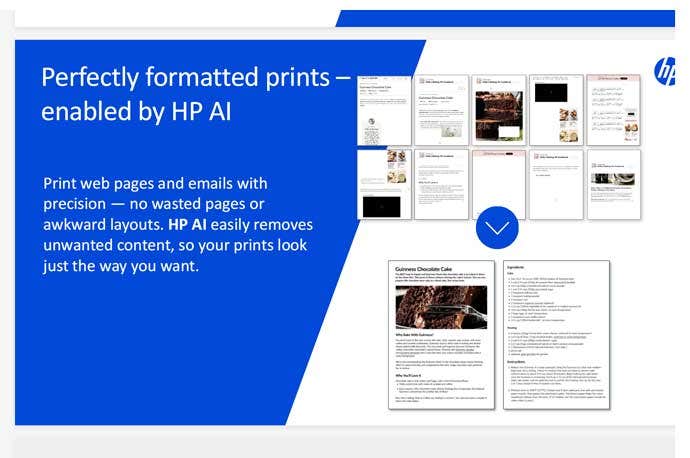
When users need to print web pages, one obstacle is often translating the online formatting designed for monitors into a clean-looking paper hard copy.
It usually results in reams of blank pages, ads that run down one side of a page and additional toner consumption as the content that users need is often cut up and spread across several incoherent prints.
HP vows that is now in the past with HP AI for Print, which removes unwanted ads, misshapen and enlarged images and online formatting and then takes only the content the user wants from a webpage, arranging it in a clean layout using the bare-minimum paper and toner.