Lenovo Consolidates Partner Tiers, Incentives Amid Services Push
The Chinese tech giant says the move to consolidate tiers and incentives for channel partners is meant to simplify the way it works with solution providers, but the vendor is emphasizing that these changes does not mean its level of investment in the channel is going down.
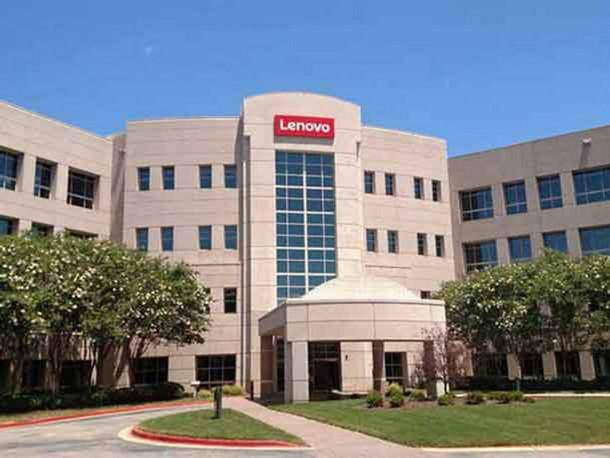
Lenovo is consolidating the number of tiers and incentives for channel partners to simplify the way it works with solution providers, but the vendor said that doesn’t mean its level of investment in the channel is going down.
“The feedback that we’re getting has been very, very positive, because we haven’t shrunk the pie. We’ve just increased the focus,” said Jeff Taylor, executive director of partner ecosystem and programs for international markets at Lenovo, in an interview with CRN.
[Related: Top Lenovo Exec Urges Partners To Focus On Top-Selling Products Amid Memory Crunch]
The Chinese tech giant announced the rollout of these and other changes last Thursday for its Lenovo 360 global channel framework, which has served as the way the vendor trains, enables and incentivizes partners since its launch roughly three years ago.
Other changes include a geographic expansion of its MSP pathway, through which the company has already driven nearly $150 million in the past year, and the introduction of a new pathway to encourage partners to push Lenovo’s services offerings.
The company has also launched an online community called Lenovo 360 Tech Connect, which is meant to connect technical members of the channel with Lenovo experts.
Lenovo Removes Tiers Specific To Business Units
With the change to Lenovo 360’s tiering, the company is getting rid of tiers specific to its client device and data center businesses and moving to a broader set of tiers for all partners, regardless of which products they’re selling.
This means partners won’t have to manage different tiers for Lenovo’s Intelligent Devices Group and Infrastructure Solutions Group. Instead, the tiers—which now consist of authorized, gold, platinum and platinum 360—will be based on the revenue and competency goals partners are achieving across Lenovo’s entire portfolio.
Taylor said this change is aligned with the “One Lenovo” strategy—which is meant to encourage partners to sell across its client device, data center and services portfolios—but the original intent is to make Lenovo 360 simpler for partners to navigate.
“We want to make sure that we’ve got a structure within there that enables them to grow with Lenovo and with whatever growth aspirations they have,” he said.
With Lenovo moving from tiers based on individual business units to a broader base of tiers, the executive director admitted that some partners could find themselves at a different level from where they previously were.
“Anytime you make a structural change to this type of structure, there’s inevitably some impact to somebody out there,” he said. “We’ve been very diligent in the fact that we wanted to minimize any negative repercussions and focus more on the positive side of it.”
However, Taylor noted that revenue and competency goals vary by region, which should “minimize the impact on partner movement within the new tiers.”
Chris Bogan, vice president of sales at Houston, Texas-based Lenovo systems integration partner Mark III Systems, told CRN on Monday that the convergence of tiers is happening as the OEM starts to position client devices and servers on the same spectrum depending on a customer’s level need for AI computing power.
“I think they’re looking at end user customers and realizing that not everything that says AI needs to go in a data center. It could go in a desktop. It can go in a number of different [form factors, including laptops],” he said.
For instance, Bogan pointed to growing interest in Nvidia’s gold-colored DGX Spark mini PC, which is being marketed for AI power users and developers. OEMs, including Lenovo, are releasing their own versions of the Spark.
“I think the idea is, hey, this now can sit on your desktop and a Spark can still have that same golden cache [as Nvidia’s DGX servers], so to speak, because they’re just physically beautiful devices,” he said.
Lenovo Consolidates Incentives But Maintains Same Investment Level
The other big change to the Lenovo 360 framework is the company’s move to reduce the number of partner incentives by roughly 90 percent while retaining the same level of value across those that remain in place, according to Taylor. The company found that many of the different incentives it offered “had the same intent,” he said.
“When we started this journey a couple years ago, we had over 2,000 different incentives in the market. We have now reduced that, not the investment,” he added. “The individual incentives are richer and they’re more focused, because they’re not spread across this vast number of incentives that we had previously had.”
To illustrate how “there’s been no negative impact to the earning power of our partners,” Taylor invoked the imagery of a pizza.
“If you had a pizza and you divided it into 2000 slices, the relative impact of each of those slices can be quite small, so we have fewer slices with higher relative impact on those slices,” he said. “So the earning power stays the same, but the incentives increase [in value] because there’s fewer slices.”
Bogan said that Taylor’s explanation about incentives is in line with what the Chinese tech giant told his company a few days ago.
“From our perspective, the incentives still look very lucrative,” the Mark III executive said.
Lenovo Seeks To Help Partners Develop Recurring Revenue
With the new Lenovo 360 for Services pathway, the company is providing what it is calling a “clear flexible framework that enables partners to attach services to every deal and evolve toward higher-value solutions over time.”
The pathway addresses Lenovo ready-to-sell attached services and advanced solutions, including its digital workplace, hybrid cloud, AI and TruScale as-a-service offerings.
Taylor said the goal is to help partners shift to selling Lenovo’s value-added services that offer more opportunities for recurring revenue.
“What we found in the industry is that for a long time services tended to be very transactional, [representing] add-ons to devices or whatever,” he said. “More and more, what partners are looking for [and] what customers are looking for are recurring, value-added, outcome-driven services.”
Taylor pushed back against any notion that Lenovo’s services offerings, provided through its Solutions and Services Group, are a threat to the services businesses of its partners by pointing out that the channel has played a key role in driving growth for the division.
“Our services business has grown in the channel for five consecutive years. It’s grown overall for five consecutive years, but the rate of growth within the channel has exceeded the overall growth,” he said. “So more and more of our services business is actually flowing through the channel, and it’s a very big market.”
Bogan said that Mark III has taken advantage of Lenovo’s services offerings “very successfully,” noting that such engagements are done based on customer need.
“We prefer to use our partners in the ecosystem for services offerings where it makes sense, and then we augment where there are gaps or where there are specific customer needs,” said the solution provider executive.
Lenovo Sees Success With Expanding MSP Pathway
After launching the Lenovo 360 for MSPs pathway last year, the company is expanding the program to several more geographies, including the United Kingdom and Ireland, the Benelux region, Nordic countries such as Denmark, Brazil, Mexico and Australia.
Taylor said more than 3,000 MSPs have signed up for the pathway so far, generating nearly $150 million in revenue through Lenovo in the past year.
This, according to the executive director, is another sign that Lenovo is taking the correct approach to the channel with its Lenovo 360 framework, which allows the company to design programs for different kinds of partners.
“It’s just a good proof point of how you still need to enable, you still need to connect, you still need to grow,” he said. “But how you do it with an MSP is very different, and the feedback we’re getting from that community has been outstanding.”