Intel Sales Leadership Shake-Up: Old Guard Out, New Guard In?
When Intel in August announced the hiring of Marvell Technology executive Dean Jarnac as its new sales leader, it was the second time in less than five years the chipmaker had replaced a company veteran with an outsider for the role.

**W**hen Intel said in August that it had appointed Marvell Technology executive Dean Jarnac as its new sales leader, the move marked the second time in less than five years the chipmaker had replaced a company veteran with an outsider for the role.
The Santa Clara, Calif.-based semiconductor giant announced in early August that Jarnac would take on the title of executive vice president and chief sales officer, replacing Greg Ernst a little more than a year after Intel CEO Lip-Bu Tan put him in the top sales post.
[Related: Intel’s CPU Market Share Falls To 31-Year Low As AI Mania Fuels Record Growth]
Ernst’s abrupt exit is one of many changes, including recent channel-related job cuts, that Intel’s global sales organization—renamed under Tan to the Sales Management Group to retain its long-held “SMG” initials—has endured over the past several years as top leaders attempt to turn around the company.
Harry Zarek, president of Richmond Hill, Ontario-based Intel partner Compugen, told CRN that Ernst was an accessible and resourceful leader who was loyal to Intel.
“He always wore Intel on his sleeve. The good news is he did have access to peers and others up the organization if there were issues or questions, and [he was] always very responsive,” said Zarek, who sits on an Intel Partner Advisory Board and whose company ranked No. 68 on CRN’s 2026 Solution Provider 500.
With Jarnac coming in from the outside, the solution provider leader said the former Marvell executive faces a “pretty hefty learning curve” in “understanding the complexity” of Intel’s channel ecosystem. But Zarek was heartened to learn that Jarnac has several years of channel sales experience from his time at Marvell and, before that, Broadcom.
“I’m hoping that will help him,” Zarek said.

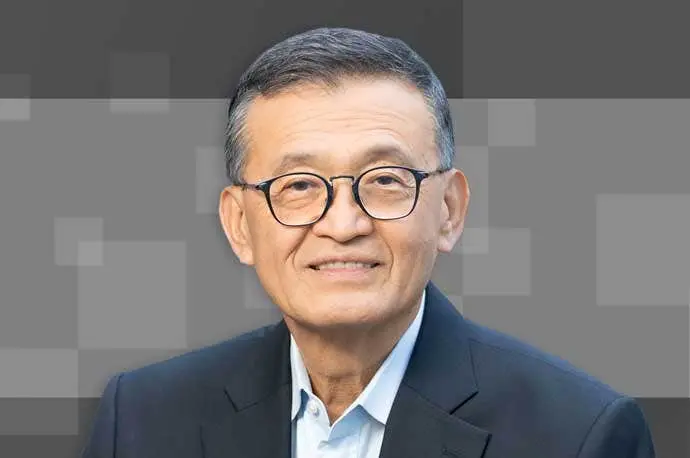

Intel declined to make Jarnac, who started his new role on Sept. 15, available for an interview.
When Intel announced his appointment, it said Jarnac would lead SMG to strengthen its customer relationships and go-to-market execution for products across five key areas: client computing, data center, AI, networking and ASICs. The latter area is one in which Santa Clara, Calif.-based Marvell has found recent momentum thanks to deals with companies like Google.
At the time, Tan called Jarnac a “proven leader with deep industry relationships and a strong track record of building high-performance sales organizations.”
“His customer-first mindset, operational discipline and extensive semiconductor experience will help us deepen customer partnerships and accelerate growth across our business,” the CEO said in a statement.
First New Sales Leader Hired Under Jarnac
It didn’t take long after Jarnac joined for one of his former colleagues at Marvell, Sunil Kaul, to become one of his first major appointments in SMG.
Kaul, who was most recently Marvell’s vice president of data center sales, announced Sept. 30 on LinkedIn that he is joining Intel as a vice president to lead the chipmaker’s global hyperscale and data center sales organization.
The executive said he would work closely with Jarnac as well as the leader of Intel’s Data Center Group, Kevork Kechichian, and the leader of the Central Engineering Group, Srinivasan Iyengar, who is focused on designing custom chips.
“Together with our global partners and customers, our focus will be clear: accelerating growth, delivering scale, and driving the future of AI infrastructure,” Kaul wrote.
Ernst’s Departure Appeared To Be Sudden
Intel didn’t make it clear if Ernst, an electrical engineer who spent most of his 27 years at the company in sales positions, was leaving voluntarily or fired by Tan.
Instead, the semiconductor giant only mentioned in its announcement about the leadership change that Ernst would be “leaving Intel after 27 years with the company” and thanked him “for his many contributions over nearly three decades of service.”
However, his departure appeared to be sudden.
Ernst had posted on LinkedIn roughly a week before the announcement about how he was feeling “energized” about the “opportunities ahead” by an “incredible visit to India” with customers, partners and Intel teams. He has been silent on LinkedIn ever since.
Ernst did not respond to a request for comment.
A senior executive at a U.S. systems integrator told CRN he was surprised to hear about Ernst’s departure because of the leader’s loyalty to Intel. At the same time, the executive said, “he never really knew where [Ernst] sat with the new leadership team.”
“If you talk about a loyal employee [who was] trying to keep morale high [and] keep the troops motivated, he definitely was that,” said the systems integration executive, who asked to not be named to speak candidly.
In response to questions by CRN about the nature of Ernst’s departure, an Intel spokesperson said in an emailed statement that “customer focus and execution are central to Intel’s strategy and future success.”
The company representative then echoed points from the press release about Jarnac’s appointment reflecting a “continued commitment to strengthen Intel’s leadership, deepen customer engagements and execute with greater focus and accountability.”
“A proven leader with deep industry relationships, a customer-first mindset and a strong track record of building high-performance sales organizations, Dean is the right person to deliver for our customers and drive this stage of Intel’s growth,” the spokesperson added.
Intel Moves From Outsider To Insider—And Back Again
When Ernst was named CRO by Tan in June of last year, he was taking over from Christoph Schell, a former HP Inc. executive who served as Intel’s top sales leader for three years under its former CEO, Pat Gelsinger. At the time, the sales organization was known by its long-running name, the Sales and Marketing Group.
Schell had succeeded Michelle Johnston Holthaus, another longtime sales executive who served as Intel’s co-CEO after Gelsinger was ousted and held the position as CEO of Intel Products before leaving the company a year after Tan took over.
The CEO of a second U.S. systems integrator said Ernst’s departure is likely another reflection of Tan looking to “kick the old guard out,” referring to how Tan has brought in outsiders for many key functions, including to lead its PC and data center businesses.
“[Tan] thinks that Intel’s problem is the culture. The culture rot is essentially what has brought this company to its knees, so he thinks the old guard is the problem,” said the systems integrator CEO, who sought anonymity to speak candidly.
Leadership Shake-Up The Latest Of Many Sales Changes
The leadership shake-up was the latest of many changes that have happened within SMG over the past several years as leaders try to adapt Intel’s sales organization to the semiconductor giant’s broader transformation.
Before Jarnac was announced as the new sales leader, Intel in June cut an unspecified number of channel-facing roles within SMG, including account managers, according to two channel partners and two distributors in the U.S. as well as posts on LinkedIn. This has left one of the channel partners, Nor-Tech in Burnsville, Minn., without Intel representation since June.
In an email to CRN, an Intel spokesperson declined to say how many roles were impacted but called the job cuts “targeted actions” that were made as it continues to “assess our workforce to ensure priorities and resources are appropriately aligned.”
The Intel spokesperson did not directly address the impact of job cuts on partners but said the company “remains very committed to its channel and partner ecosystem.”
“Lip-Bu Tan is driving a new culture and a commitment to excellence across the company, and we are actively working to strengthen engagement, improve responsiveness, and ensure partners have the support they need to succeed,” the spokesperson added.
The job cuts came after the company slashed thousands of positions over the previous two years. As part of last year’s workforce reduction, many marketing and operations roles in SMG were made redundant in tandem with the company’s move to outsource such functions to Accenture—before the remaining marketing roles were moved out of the group. And in 2024 under Gelsinger, a large but undisclosed number of sales and channel roles were cut.
But despite the job cuts, Intel Global Channel Chief Dave Guzzi told CRN in February that the company increased its channel budget this year and last.
“At a time when Intel is making significant reductions in operating expenses so that we can deliver an even greater return to our shareholders, we’ve continued to invest in the channel, and I think that will continue to be the case going forward as well,” he said at the time.
Those increased investments came with various changes to Intel’s partner program, the Intel Partner Alliance, over the past two years. These changes included moves to a two-tier member system, an outcome-based MDF model, deal registration for select data center partners as well as new ways in which partners can receive more financial incentives.
The company also reduced direct coverage for an undisclosed number of channel partners last year, moving them to receive support from Intel-authorized distributors.
Despite Channel Changes, Intel Is Soaring
While Intel’s sales engine has been rocked by a variety of changes as it ramps up channel investments, the chipmaker has started to show signs of a long-sought-after comeback.
The largest signs came more than two months ago, with Intel reporting in late July record 59 percent year-over-year revenue growth for the Data Center Group in the second quarter. The company also disclosed that it has signed 10 long-term CPU supply agreements with customers, including Google. Shortly after, Intel announced a $15 billion common stock offering and, a day later, upgraded it to $20 billion.
The chipmaker cited largely the same reason for the record revenue growth, supply agreements and common stock offering: strong demand driven by AI development. A great deal of the spending is from hyperscalers, which are expected to shell out $860 billion for capital expenditures this year, according to a recent estimate by Bank of America.
Tan, in a recent appearance at Cisco’s Splunk .conf26 event, said demand is so high for Intel’s CPUs that his company can only provide “50 percent” of what customers want. The chipmaker has said that it is managing supply constraints by prioritizing the production of server CPUs over client CPUs without abandoning its PC customers.
“Many CEOs call me up, I have to apologize: I’m not manufacturing enough of them,” he said in a Sept. 14 interview with Cisco President and Chief Product Officer Jeetu Patel.
Compugen’s Zarek said while he is not concerned about the channel’s ability to secure supply from Intel, he said the chipmaker should nevertheless not “forget about the folks that brought you to the party.”
“They need our traditional OEM partners. You need lots of them, and they play a very big role. Those large folks like Google don’t sell any of that gear [related to data center infrastructure], so the sales channel for them still has to come through OEMs, and so they’ve got to protect that part of their ecosystem,” he said.