There’s No Denying It: Channel Behemoth Dell Is On A Roll
Dell Technologies is winning over solution providers to be their AI infrastructure provider of choice as it continues to make massive investments to drive channel sales growth, provide relentless field sales engagement and prove its mettle when it comes to communicating and remediating supply chain constraints.
**E**choStor Technologies has set itself a daunting task.
The Norwood, Mass.-based solution provider is in the midst of expanding across the U.S., a challenging move it feels confident making in large part because of the strength of its partnership with Dell Technologies, said EchoStor President Jeremy Lombardo.
“We’re going national as a company. We couldn’t be looking to do that without Dell’s executive alignment with us,” Lombardo said. “They are in lockstep with us.”
EchoStor—which debuted on CRN’s Fast Growth 150 list at No. 88 in 2024 and landed this year at No. 25—three years ago considered Dell to be one of several top-tier vendor partners.
Now, Lombardo said, it’s No. 1, drawing a direct line between the growth the solution provider is seeing in its Dell business and the growth it is seeing overall.
“Today our growth as a company and our Dell growth is basically in line at roughly 70 percent,” he said.
As far as Lombardo is concerned, EchoStor and Dell’s partnership is on a roll.
EchoStor is just one of many solution providers that is seeing the benefits of aligning with Dell, which has become one of the largest channel vendors in the world since stepping past its direct-only sales heritage and introducing its first formal channel program 19 years ago.

Today, the magnitude of Dell’s channel business and its investments dwarfs those of many channel stalwarts. By combining its long-standing supply chain relationships with an ever-increasing investment in channel sales and incentives as well as relentless field sales engagement, Dell has earned the trust of a growing number of solution providers to become their AI infrastructure provider of choice.
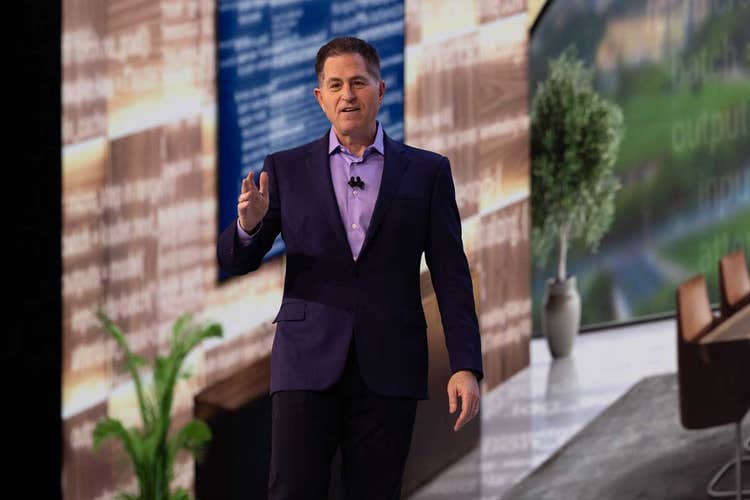
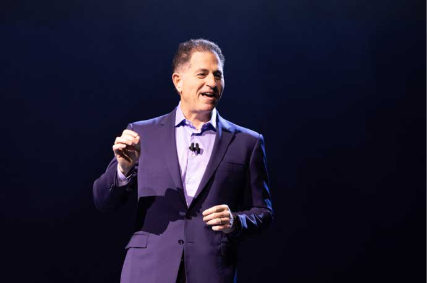
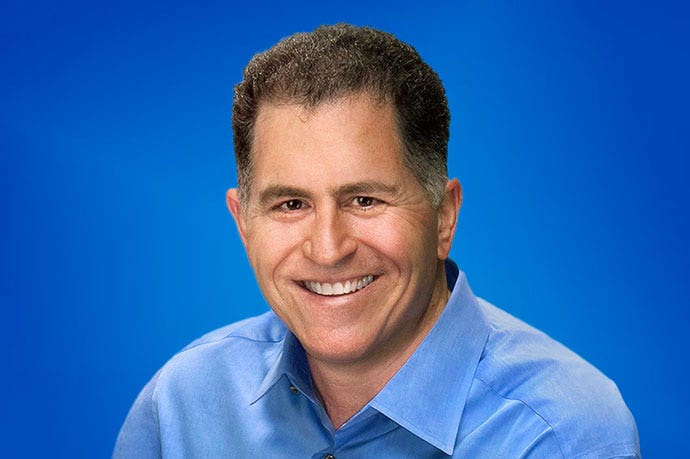
“I don’t think there’s anybody that is close to us in terms of the size and scale,” said Dell founder, Chairman and CEO Michael Dell, speaking about the Round Rock, Texas-based company’s channel business in an interview with CRN. “And certainly when I talk with partners, which I do on a regular basis—maybe hourly, daily, with emails, text messages, phone calls, etc.—we’re growing together.”
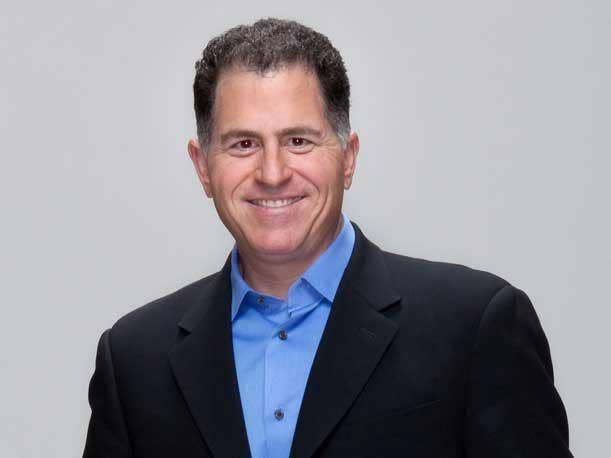
‘I don’t think there’s anybody that is close to us in terms of the size and scale. And certainly when I talk with partners, which I do on a regular basis—maybe hourly, daily, with emails, text messages, phone calls, etc.—we’re growing together.’
—Michael Dell, Dell Technologies Founder, Chairman, CEO on the company’s channel business
The executive-level support Dell has shown to EchoStor, for example—connecting the partner with leaders in every major city the solution provider is expanding into—has been one key to EchoStor’s growth.
Another factor has been EchoStor working hand in hand with Dell to grow its robust AI division, a cornerstone the solution provider’s national expansion.
“A big part of that is our technical expertise and the services we deliver around Dell, especially around AI,” Lombardo said. “Without that alignment, it would be very difficult to expand. We’ve been champing at the bit to expand, and now it’s off to the races.”
Like many other Dell partners, EchoStor has also seen the benefits of the vendor’s supply chain prowess, which has helped it deliver products to customers even as memory shortages and supply constraints have made inventory scarce and sent compute, server, storage and networking prices soaring.
“Years ago, supply chain never really came up. Now it’s a leading discussion point,” Lombardo said.
Dell, for its part, is seeing the return from the investments it is making in its channel. The company doubled its channel revenue in its second fiscal quarter, ended July 31, with 69 percent of new and reactivated sales coming through the partner ecosystem. The channel sales growth comes with Dell on track to report a 69 percent increase in sales for Fiscal 2027 to $192 billion.
Dell executives wouldn’t confirm the company’s channel revenue, but the company historically has said that roughly 50 percent of sales in recent years have come from partners. That indicates that the channel approximately will account for an astronomical $96 billion in Dell sales in this fiscal year. (“That’s not a horrible assumption, although we don’t really provide a specific number,” Michael Dell said).
Dell’s financial growth comes as the company is tapping into well-established relationships with memory and other component suppliers to navigate the current shortage, which has no end in sight.
“Yes,” said Michael Dell, when asked if the supply chain crisis has made Dell the most trusted and reliable partner for the channel. “When technology is scarce and the world’s changing quickly, customers and partners want someone they can count on, and we have incredible scale, the engineering, our global supply chain, the supplier relationships. It all gives us a powerful advantage that partners and customers rely on. And so, periods in the past when there’s been supply disruptions, we’ve done very well, and we’re certainly doing that again.”
The numbers show that more partners and customers are choosing Dell in the midst of the supply chain crisis, he said.
“If you look at it from a scale standpoint, we have been leading in the [AI] sector here certainly, so more customers and partners have been choosing Dell,” he said. “If you look at the breadth of the ingredients that we have, certainly there’s the Nvidia elements, but then when you get into storage and compute servers and networking as it relates to AI and data center, we have a super strong portfolio there.”
He said the company’s growth in its Infrastructure Solutions Group (ISG)—which comprises servers, storage and networking products and was up 89 percent to $31.8 billion in the second quarter—is a testament to Dell’s leadership position in AI infrastructure.
“It tells the story for us,” he said. “We’re substantially larger than the next nearest competitor, roughly four times larger and roughly growing four times faster. So there you go.”
He has reason to be exuberant given the company’s dominant position in the AI infrastructure market. Dell has a record AI server backlog of $95 billion, with an AI sales pipeline that continues to grow sequentially.
Dell has raised its AI-optimized server revenue guidance for the fiscal year to $74 billion, up from $60 billion. Market researcher IDC lauded Dell for retaining its top position in worldwide server revenue with a market-leading 13.4 percent revenue share and 165.4 percent year-over year-growth for the second calendar quarter. The next closest competitor was Supermicro with 6.1 percent revenue share, followed by Lenovo with 5.1 percent revenue share and HPE with 3.5 percent share.
As for the growth and scale that are driving what Michael Dell called the company’s “powerful” supply chain advantage, Dell reported sales of $47 billion with 58 percent growth in its second quarter, ended July 31. That compares with $26.9 billion with 43 percent year-over-year sales growth for Lenovo Group Limited for its first fiscal quarter, ended June 30; $19.9 billion for Supermicro with 282 percent sales growth for its first fiscal quarter, ended Sept. 30; $12.2 billion for HPE with 34 percent sales growth for its third fiscal quarter ended July 31; and $17.3 billion with 18 percent growth for Cisco Systems for its fourth fiscal quarter, ended July 25.
Dell will report its third-quarter Fiscal 2027 results on Nov. 24, and all indications are it will be another strong quarter. The consensus estimates are for adjusted earnings per share of $6.60, up 155 percent from $2.59 in the year-ago quarter, on sales of $49.25 billion, up 82 percent from $27.01 billion in the year-ago quarter.
“You asked about the supply chain—certainly scale matters there,” Michael Dell said. “And when you think about developing a modern enterprise, what we believe is that the advantages compound to the companies that get there early, fast and first. That’s why we’ve been on this modernization journey now for several years. You see it in the results. It’s also why we have chosen to go big in infrastructure with commercial PCs and storage and servers and data center networking and all the capabilities we built in our supply chain, our services, the incredible engineering innovation, the scale of our partner program, and all of it ties together. So I think it’s pretty unmatched in terms of size and scale.”
Dell’s ability to communicate early on regarding the supply chain constraints and pricing has been key to building trust with both partners and customers, said Pete Trizzino, president of global sales, modernization and go to market at Dell.
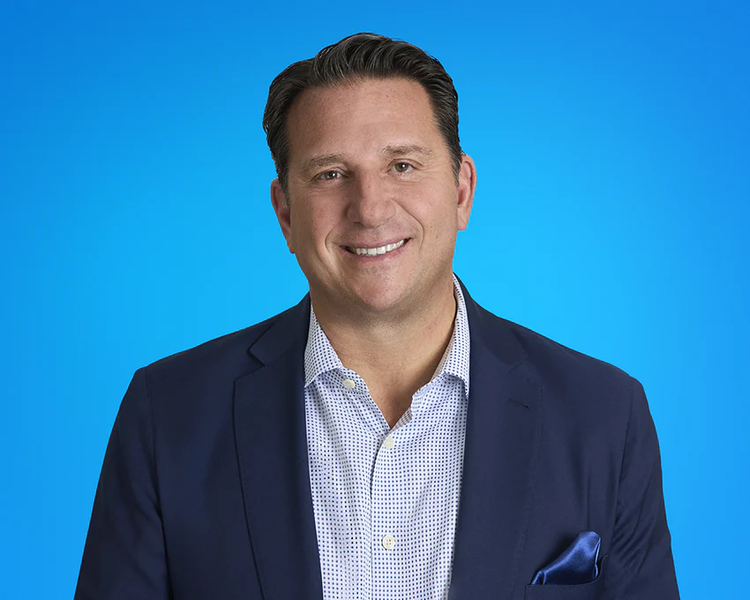
‘I think we earned a lot of trust and credibility across our customer base and our channel because we were communicating early. … It’s been all about communication, and that’s why we have built the trust that we have, especially over these last nine months.’
—Pete Trizzino, President, Global Sales, Modernization, Go To Market, Dell Technologies on supply chain constraints and pricing
“I think we earned a lot of trust and credibility across our customer base and our channel because we were communicating early. … It’s been all about communication, and that’s why we have built the trust that we have, especially over these last nine months,” he said. “We continue to see ourselves with an opportunity to serve our customers and partners as best in class.”
As for how long the supply constraints will last, Trizzino said: “Agents are driving more and more data. Data is driving more compute and storage. We are seeing this demand continue. If the demand continues the way it is projected, this supply constraint environment will last for a while. I can’t give you a date.”
The Supply Chain Advantage For Partners
Gary McConnell, CEO of VirtuIT Systems, a Nanuet, N.Y., Dell Platinum partner knocking on the door of Titanium-tier status, agrees that communication during the component shortage has been one of Dell’s strong suits.
“Dell has done a phenomenal job of overcommunicating with the channel community on supply chain and price increases,” McConnell said. “When you have an OEM like Dell that is very transparent with its partner community, it makes it much easier to talk to customers in a less-than-ideal environment where supply chain is truly constrained, prices continue to go up and there is a ton of uncertainty. If you can overcommunicate with customers, that is half the battle.”
McConnell said Dell’s end-to-end portfolio has also provided a significant advantage for partners like VirtuIT, which has grown its AI solution sales by 50 percent over the last year. “It’s been very exciting to see Dell positioned to capture the entire IT opportunity from desktop to data center with an AI layer on top of it,” he said. “It’s exciting to bring the full portfolio to our customers.”

‘When you have an OEM like Dell that is very transparent with its partner community, it makes it much easier to talk to customers in a less-than-ideal environment where supply chain is truly constrained, prices continue to go up and there is a ton of uncertainty.’
—Gary McConnell, CEO, VirtuIT Systems
EchoStor CRO Mark Baxter expects the memory shortage to continue for years to come and sees Dell coming to the fore with “the strongest supply chain” in the business.
“We need that because things aren’t slowing down,” Baxter said. “We’re seeing those deals go from pilot to production, and the deals just keep getting bigger and bigger,” he said.
Baxter credited the Dell team—including its top sales executives—with helping customers navigate the supply chain crisis by working closely with EchoStor to provide delivery dates for much-needed infrastructure. “That’s huge to the customer,” he said. “If the customer has a trial in place and they need their infrastructure built out—whether it is CapEx or OpEx—and they can better understand the supply chain and when they can get that product, that’s a pretty compelling story for EchoStor and Dell,” he said.
Customers are looking to consolidate technology manufacturers and solution providers, said Baxter. “They want one trusted partner from a manufacturer perspective who owns the supply chain and who has a massive portfolio,” he said. “On the partner side, they want a company like EchoStor that is going to be able to drive [business] outcomes.”
Winslow Technology Group (WTG), No. 51 on the 2026 CRN Fast Growth 150 list, has been able to utilize the Dell supply chain story as a “door-opener” in some accounts that were working with competitors that were “short” on product, said WTG CTO Rick Gouin.
“Between Dell and Dell’s [distributors], sometimes we’re able to find supply when other vendors have been unable to,” he said. “Also, Dell does a great job of communicating with transparency in terms of lead times, availability, shipment, tracking those things and being able to escalate critical orders.”
That ability to work strategically with Dell on deals is driving healthy double-digit sales growth this year for WTG, which has experienced a triple-digit growth rate in new customers. Dell makes up the vast majority of the solution provider’s annual revenue, said Gouin.
In the case of several municipalities, WTG was able to find supply from Dell to meet tight customer deadlines. In the SLED (state, local and education) market, the ability to provide supply chain transparency is the difference between winning and losing a deal, he said.
Dell’s AI infrastructure products, meanwhile, are driving a “significant amount” of business as part of WTG’s AI solutions practice, which includes data scientists and provides WTG services around the full suite of Dell AI products.
WTG has completed hundreds of half-day AI workshops—including as many as 20 in one week—to drive AI infrastructure sales growth. Those AI workshops’ sales hit rate is “very high,” said Gouin.
“Those AI sessions are heavily driving our ability to win data center refresh-type business,” he said. “It makes us credible and lets customers know we are going to be there for the AI integration and the business process improvement. AI has significantly impacted our business this year.”
The solution provider’s Polaris AI service is delivered as a recurring revenue service. “It combines our services, our AI practice and we wrap that around the Dell AI stack,” said Gouin.
The Polaris AI service has been a big hit in regulated industries where customers are not willing to put their data into frontier models or in public cloud AI solutions. Those private cloud stacks have also been key to customers discovering breakthrough AI solutions.
“We’re providing a safe space on-prem where customers can leverage that whole Dell stack,” Gouin said. “That’s a huge enabler for discovering use cases.”
Dell’s sales tools and tokenomic calculators that provide detailed data on how many tokens a solution will require have been critical in closing deals, said Gouin. “We are warning our customers that tokenomics are going to be a significant factor for their budgets in the future,” he said. “Even if customers are not worried about it today, we should be planning their ability to process AI locally.”
One of WTG’s most successful engagements is for a defense contractor that is now doing dozens of AI use cases with a Dell PowerEdge XE9680 server fully loaded with Nvidia H100 GPUs.
“That’s the ideal outcome,” said Gouin. That defense manufacturer recently expanded its AI solutions capabilities by adding Dell Pro Precision compact micro-desktops with Nvidia’s GB10 Grace Blackwell system-on-chip.
Gouin said the key to WTG’s success has been following Dell’s lead on technology shifts. WTG, in fact, has grown exponentially since it first doubled down on Dell as an infrastructure provider after Dell acquired EMC 10 years ago for $67 billion. Since the completion of that deal, WTG has soared from No. 442 on the 2017 CRN Solution Provider 500 to No. 231 on this year’s list.

“As Dell has continued to broaden their portfolio, we are just trying to go along with them. When Dell makes a big bet on something, we make a big bet on it. When Dell says, ‘We are going AI next,’ we say, ‘We are going AI next.’”
—Rick Gouin, CTO, Winslow Technology Group
“As Dell has continued to broaden their portfolio, we are just trying to go along with them,” said Gouin. “When Dell makes a big bet on something, we make a big bet on it. When Dell says, ‘We are going AI next,’ we say, ‘We are going AI next.’ And it has never led us astray. ... That has allowed us to dramatically broaden our capabilities because we are leaning on Dell’s expertise and portfolio.”
Dell Transforms Partner Experience With One Dell Way
Even as it sees explosive sales growth, Dell is moving fast to transform the way it goes to market with its ambitious One Dell Way initiative, which is moving the company to a unified enterprise platform that simplifies and standardizes the company’s infrastructure. From the partner perspective, that includes a new agentic AI platform that automates deal registration and provides dynamic pricing.
The One Dell Way initiative is a “huge win” for the channel, said Dell Chief Partner Officer Denise Millard. The One Dell Way agentic AI platform, which has been piloted in a number of markets, was rolled out for the client business on Nov. 1 and then sometime next year will be expanded into the ISG for servers, storage and networking products, said Millard.
Dell has made an enormous investment with One Dell Way in completely reimagining the partner experience with a new era of agentic AI capabilities that are designed to allow partners to reach more customers faster to accelerate sales growth.
“Our objective is to be the partner of choice for all of these partners around AI,” said Millard. “We talk about being customer zero at Dell. That is a big part of One Dell Way: How do we build and embed AI and agentic into everything we do and redesign the workflow aligned with that, not for how we do business today but for how business will happen in the future. … It’s one of the largest investments we’ve ever made.”
The One Dell Way initiative provides Dell sales reps and Dell partners with the same sales tools and opens the door for the company to clearly see when sales originate from a partner or a Dell rep and also track co-selling. It will also allow Dell to track the influence of multiple partners in the sales process with ISVs, systems integrators and technology service advisers.

‘When the full end-to-end life cycle is all on One Dell Way and we really turn on the agentic and AI capabilities—enabling partners to do more of the quoting and architecture and validation themselves—the level of empowerment of our partners is going to be, I think, market-leading.’
—Denise Millard, Chief Partner Officer, Dell Technologies
“When the full end-to-end life cycle is all on One Dell Way and we really turn on the agentic and AI capabilities—enabling partners to do more of the quoting and architecture and validation themselves—the level of empowerment of our partners is going to be, I think, market-leading,” said Millard.
“We are just at the tip of the spear in terms of what is the art of the possible for how we engage with partners,” said Millard. “No. 1 is just the seamless integration of quoting and placing orders. That is going to get better and be able to scale significantly. But I think what that does is set us up for the future. That is, how do you make partners smarter with the demand signals, but then how do you empower them with tech refresh proposals or various campaign proposals that is all automated through the process where they’re empowered with the information to support delivering that outcome with a customer? We’re just scratching the surface as we go live, but it’s going to set us up to do massive things.”
Bob Venero, CEO of Fort Lauderdale, Fla.-based Future Tech Enterprise, a Dell Titanium global partner that has been using the One Dell Way automated deal registration and dynamic pricing since the launch of the program, said the new agentic AI tools are helping Future Tech reps move more “quickly to close deals,” which is driving revenue and profits for his company.
Venero said Future Tech has placed orders for tens of thousands of systems with the new client device dynamic pricing model, which has “streamlined the sales process with pricing, quotes, delivery and marketing materials.”
“The ability for Future Tech to have access to the same tools that Dell internal sellers have is key to us being able to move quicker and be able to drive opportunity and revenue,” he said. “When there are a couple of individuals that support your entire company, you have a bottleneck. One Dell Way eliminates that bottleneck with access to the same tools used by Dell internal sellers.”
Venero commended Dell for reacting quickly to fixing early glitches in the system before the widespread launch. “Dell has done a good job rolling out a complex system with minimal disruption to the sales process,” he said.

‘Future Tech would be a much different company today if Dell did not launch a channel program and double down on its channel partnerships. Michael [Dell] had the vision, and [Dell Vice Chairman and COO] Jeff Clarke executed on that vision.’
—Bob Venero, CEO, Future Tech Enterprise
Future Tech was one of the first channel partners to go all in when Dell launched its first channel program in 2007. Since then, Future Tech has grown from $70 million in 2008 to over $700 million in 2025, with the majority of that sales increase coming from Dell, said Venero.
“Future Tech would be a much different company today if Dell did not launch a channel program and double down on its channel partnerships,” he said. “Michael [Dell] had the vision, and [Dell Vice Chairman and COO] Jeff Clarke executed on that vision.”
VirtuIT’s McConnell said One Dell Way has increased the rate of order processing and sales operations by at least 20 percent.
“This is a huge investment in the channel,” said McConnell. “This is going to make our operations team’s job a lot easier when it comes to price quoting and order processing. … If it’s good for Dell, it’s good for the channel, and that means it’s even better for the customer. As someone who has been a Dell partner for decades, this is a great time to be a Dell partner.”
C.R. Howdyshell, CEO of Independence, Ohio-based Advizex, a Myriad360 company and a Dell Titanium partner, said One Dell Way puts the vendor ahead of the curve when it comes to helping partners move faster.
“This provides the channel with the ability to close more deals more quickly,” said Howdyshell. “Speed is something we have requested from our OEMs, and Dell is the first to answer that call. Dell understands time to deals is critical. This automation means deals get registered quicker and competitive pricing gets turned around quicker, which means you get a decision quicker from the customer.”
Howdyshell said Dell has “doubled down” on the channel and is seeing a “good return” on that channel investment. “Dell continues to demonstrate its commitment to the channel,” he said. “Dell is a channel machine.”
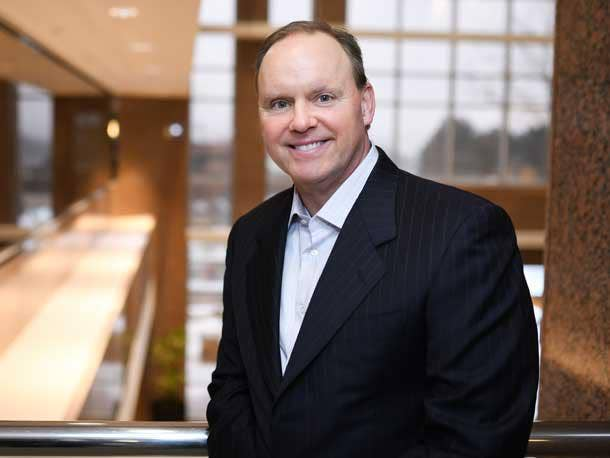
‘Speed is something we have requested from our OEMs, and Dell is the first to answer that call. Dell understands time to deals is critical.’
—C.R. Howdyshell, CEO, Advizex, A Myriad360 Company
Dell Senior Vice President of Global Partner Revenue Operations Darren Sullivan said the new agentic AI partner platform is going to increase sales collaboration between Dell sales reps and partners.
“This is about sharing information and treating our partners like an extension of the sales force that they are,” said Sullivan. “In other words, not thinking about our partners as a separate entity but as an integrated part of our go to market. So the work we are doing with the platform is to ensure we are sharing the best information between our partners and our sellers in real time.”
Sullivan said the omni-channel Dell approach—with a strong direct sales force and a robust partner ecosystem—is a big differentiator for the company. Key to that is making sure that the two sides “work together in an integrated way” to drive sales reach and scale, said Sullivan.
“We are providing partners with competitive online pricing so they can take that quote and opportunity and go to customers without having to engage other resources unnecessarily,” he said. “So we are providing much more transparent competitive pricing online. We’re early days. Right now, it is about getting the new platform established. This is a significant undertaking.”
Sullivan said for non-transactional sales, partners are likely going to want to negotiate price. “Partners always have the ability to do that,” he said. “All we are doing is giving them a starting point, particularly in the transactional space, that is competitive to win.”
Dell will also be providing an “objective response in minutes” on deal registration requests, said Sullivan. “That information gets shared across the sales team and partners immediately and in real time,” he said.
If there is a dispute, partners can resubmit the deal registration, which will be investigated and reviewed by the Dell team.
“If we got the answer wrong, then we’ll overturn it and accept the registration,” said Sullivan. He said the company is providing complete transparency with the Dell sales rep and partner team.
As part of the new agentic AI partner platform, the company is delivering “high-propensity” AI demand signals and leads to partners, with a focus on customers that are likely to acquire, buy more or cross-purchase across the Dell portfolio.
Dell is focused on all the points of data in the buyer’s journey aimed at signaling “propensity” to buy and has shared over 200,000 of those AI demand signals with partners in the last fiscal year, said Dell Vice President of Global Partner Marketing Eric Arcese.
“It’s accelerating sales cycles, and it is amplifying deal sizes, which is awesome,” he said. “A sales cycle is going from nine months to six months to five months to four months, and the deal is getting bigger.”
He called the investment Dell is making to transform the sales process “enormous.”
“It is across every function that we do,” Arcese said. “It is across everything that we deliver for customers and partners around the world. It has been years in the making.”
Partner Speed Is Key To Capturing A $6 Trillion Market Opportunity
With a $6 trillion market opportunity in front of Dell and its partners, Dell global sales leader Trizzino said partners are critical to delivering the business outcomes and complete solutions customers are demanding in a fast-moving, high-pressure AI market.
“Customers are being pressed daily by their boards and by senior leadership to deliver value faster, and speed has never been more critical to what we can do, and we believe we can be faster with our channel partners,” said Trizzino. “Budgets are being expanded in some cases and are being reallocated in other cases. Many of our customers are investing in infrastructure and AI ahead of their own plan. We need partners to help us deliver that full outcome. We’ve got the infrastructure. We’ve given them the ‘easy button,’ but we need them to pull together the entire solution.”
Dell has invested heavily in a forward-deployed engineer (FDE) model that puts engineers on-site at customers to redesign workflows and drive AI transformation opportunities. “Those forward-deployed engineers are going to be critical to success, whether they are inside Dell or within our partner ecosystem,” said Trizzino. “We believe firmly [in] that model, and we are going to continue to invest there and move our top resources into those roles.”
Brad Maltz, senior director of AI solutions for Dell, said the FDE model is key to the success of the channel in the agentic AI era.
“The value is taking a business use case from a business line, work with the AI operations team and convert that into an outcome,” he said. “You don’t have to become [a management consulting firm like] Bain or McKinsey, but you have to have FDE or consultative staff in your business that can have a business conversation and convert that into a prototype or [proof of concept]. That is going to pull through the [Dell] AI Factory and the hardware and software stacks.”
The channel needs to become a technology-savvy “prototyping machine” that can help customers quickly leverage the power of the AI stack, said Maltz. “You need more techies that are able to understand the business,” he said.
Trizzino said Dell is seeing increasing demand for on-premises [Dell] AI Factories. To that point, it took Dell eight quarters to get the first 3,200 [Dell] AI Factory solutions deployed and only three quarters to get the next 3,500 [Dell] AI Factory solutions deployed.
“That is really accelerating for us,” said Trizzino. “From a speed standpoint, that [Dell AI Factory] easy button is really helping customers deploy on-prem.”
The on-premises Dell AI Factory opportunity in front of Dell and its partners is absolutely massive, said Trizzino, noting that the forecasts for AI solutions have fallen short time and time again.
“The token generation by 2030 is [now expected to be] 1,000 times what it was predicted [to be] in 2024. … We can’t do that on our own,” said Trizzino. “We need the partner ecosystem we have to try to capture all that demand. The best partners are going to help us do that.”
Michael Dell, for his part, credits partners for turning Dell infrastructure into successful business outcomes. “We see that at incredible scale, given all the work that we do with partners around the world, and together we’re building this new AI economy, which is amazing,” he said. “But we’re kind of just at the beginning of this, so we’re very excited about it.”
EchoStor’s Lombardo feels the same way. “We’re incredibly optimistic,” he said of the EchoStor-Dell partnership. “It’s been key to our growth. … We are at the beginning of a massive wave of expansion, and Dell is our top partner.”