New Dell Storage Products Pack In Features: 5 Things To Know
‘What we’re finding is that disaggregated infrastructure is a new modality that is really allowing customers to deploy resources strategically and efficiently and be ready for not just the needs of today but also for the future,’ says Varun Chhabra, Dell’s senior vice president of infrastructure and telecom marketing.
“What we’re finding is that disaggregated infrastructure is a new modality that is really allowing customers to deploy resources strategically and efficiently and be ready for not just the needs of today but also for the future,” said Varun Chhabra, senior vice president of infrastructure and telecom marketing at Dell.
Speed to value is critical in the AI era, and organizations are looking to escape the overly complex infrastructure silos of the past that increase inefficiencies and slow down innovation, Chhabra said.
[RELATED: Dell, Nutanix Expand Storage Partnership With New PowerStore Offering]
In addition, security practitioners are already girding systems for the AI attack era, Chhabra said, which requires an all-encompassing strategy around an organization’s IT estate.
“There is a growing awareness that AI is really grounded in data, and if your data is not secure that really makes your AI operations, and increasingly your businesses operations, more difficult and more a threat than ever before,” Chhabra said.
Dell holds the No. 1 market spot across several categories of storage devices. While the company still has offerings that integrate VMware, it has also launched product partnerships with Nutanix and Red Hat to help users who are looking to move away from being locked into VMware.
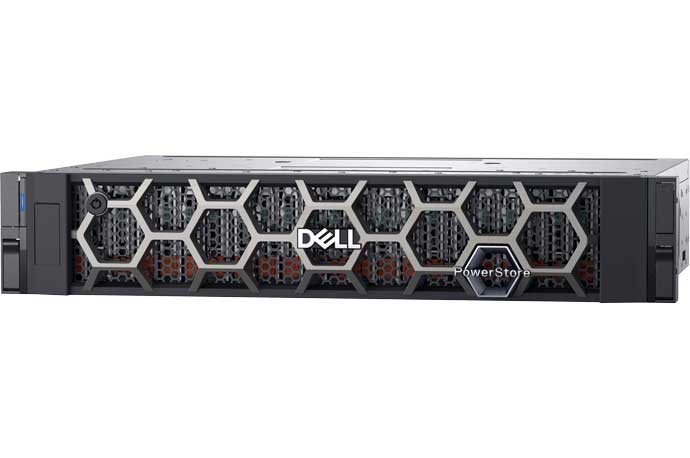
The most recent announcement is in Dell’s popular PowerStore lineup, which next spring will feature the Nutanix Cloud Platform.
With models that can match small- to large-business needs, there is strong momentum for PowerStore, Dell said, and partners are a driving force behind that through the Partner First Strategy for Storage. Last quarter, 46 percent of the buyers were new PowerStore customers and 23 percent were new to Dell storage, Dell said.
Dell Private Cloud
To safeguard the customer’s capital expense around the new storage hardware, Dell Private Cloud has been built to give customers the ability to swap hypervisors while keeping their infrastructure, Chhabra said.
“What the Dell Private Cloud does is provide investment protection through its open infrastructure approach,” he said. “That allows organizations to deploy a specific private cloud operating system or hypervisor solution as they choose, and then later to be able to actually reimage the hardware and deploy a completely different hypervisor solution, if they so choose to, but to be able to do that with the existing hardware and the existing capabilities for an automation platform.”
The platform currently works with VMware vSphere, RedHat Open Shift and Nutanix Acropolis Hypervisor and offers fully transferable hardware and flexible licensing to meet the customer’s needs.
Chhabra said Dell Private Cloud has been validated with more than 45,000 hours of testing to provide 90 percent fewer steps to deploy.
“You can deploy Private Cloud in under 2.5 hours with zero manual effort,” Chhabra said.
Dell PowerStore
The PowerStore offering is getting updates throughout the lineup that are designed to make it more robust for mission-critical workloads.
PowerStore also is receiving significant hardware and software updates. The new 5200Q QLC model will offer high-capacity performance with the economics of flash. New software advancements include improved software-driven security such as single sign-on, encryption enhancements and performance anomaly detection. In addition, PowerStore is now a self-healing platform, Dell said, with on-board AI that now takes corrective action autonomously to reduce risk, effort and downtime.
Dell PowerFlex
Dell PowerFlex’s new release introduces the Scalable Availability Engine, which simplifies workload management and reduces cost, Dell said. PowerFlex’s Scalable Availability Engine is built on a native block, fully distributed, erasure-coded architecture that delivers breakthrough storage efficiency, resiliency and scalability for software-defined data centers.
This gives customers “10 nines” of availability, meaning the unit is operating 99.99999999 percent of the time.
The latest version of PowerFlex achieves up to 80 percent storage efficiency with a greater than 50 percent reduction in physical storage footprint.
Dell PowerMax
Dell PowerMax is receiving software advancements that deliver up to 25 percent better overall IOPS performance on PowerMax 2500 and PowerMax 8500. PowerMax, which is made for high-performance storage and mission-critical workloads, now also features one-click software updates.
It also now has improved automation and enhanced security. PowerMax 2500 now includes QLC drive support for capacity-intensive workloads while delivering flexible single-drive scaling from 122 TB to 8.8 petabytes per array.
Dell PowerProtect
Dell PowerProtect Data Domain is the market leader and is a purpose-built, backup appliance with more than 15,000 customers.
It now comes in an all-flash configuration that has four times faster restores, 2.8 times faster analytics and replication speeds that are twice as fast as previous generations.
The appliance uses 40 percent less rack space, 80 percent less power and can achieve data reduction rates of 65 to 1.
The innovations will help customers reduce their attack surface, detect and respond to threats and quickly recover from cyber incidents, Dell said. The new PowerProtect Data Domain DD3410 is a compact offering ideal for remote offices and smaller environments. The new PowerProtect Data Manager Appliance delivers centralized management for consistent operations.