Schneider Electric Channel Chief Gordon Lord Powers Up Partner Pipeline With Gateway
‘They want help with talent, they want help with customer acquisition, and they wanted a reason to go differentiate themselves as to how they are engaging their customers,’ Gordon Lord, Schneider Electric’s vice president of U.S. channels, North America, tells CRN.
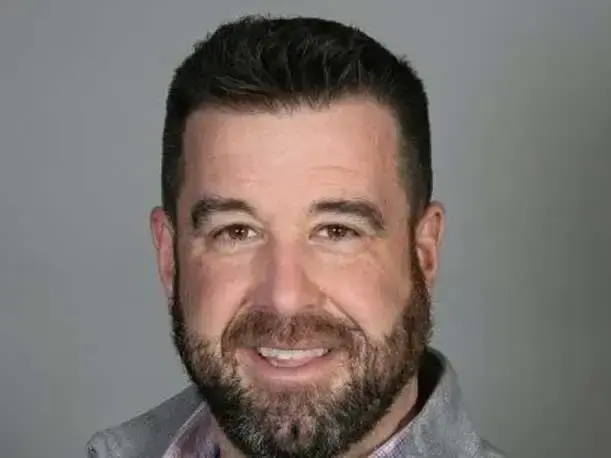
In the almost two years that Gordon Lord has led Schneider Electric’s North American channel, he has wanted to bring a software product to partners so they can connect with customers in a way that lets them see the battery and backup giant as more than a hardware provider.
The Boston-based company has done just that with Gateway, a new program inside its partner program that leverages EcoStruxure IT, a cloud-based software appliance that connects to a customer’s system and evaluates the entire backup estate, Lord, vice president of U.S. channels, North America, told CRN.
“The biggest thing we’re trying to do is this idea of engaging customers in a different way and helping our partners do that. What this does is it really starts to build pipeline for the partners,” he told CRN. “Then we tie it in on the back end with program incentives. It’s not just a program that we’re bringing partners. It’s really a reason to call customers.”
Infrastructure is hot again as the race to build out AI capabilities has organizations of all sizes looking for more compute and some spinning up powerful on-premises systems to keep their company’s data secure. The new devices require greater power to use and, in some cases, separate cooling units—all of which add up to a rich opportunity for Schneider Electric partners.
EcoStruxure IT is designed to prepare customers for a new infrastructure shift with a holistic look at their battery and backup environment.
Once partners sign up for Gateway, they can use EcoStruxure IT to run a full UPS Health Assessment that delivers an overall score with specific recommendations to optimize performance, identify outdated firmware and vulnerable configurations to improve security, quantify avoided downtime and actual downtime, as well as measure Power Usage Effectiveness and power consumption to reduce cost and carbon footprint.
Through Gateway, partners will have access to enablement and training, Schneider Electric’s own in-house experts for support, as well as license reimbursement at the higher levels of its partner program.
“We look at the age of the UPS. What age are the batteries? When was the last time they were deployed? The nice thing is the partner has a reason to call [customers]. Not to sell them anything, but to say, ‘Hey, my partner here Schneider Electric has this free assessment that I’d love to come talk to you about,” Lord said. “It’s helping them understand what their power infrastructure looks like. If they have a network upgrade coming, are they ready for it?”
CRN spoke with Lord about this new program and how Schneider Electric is seizing the surge in IT infrastructure building.

Obviously, there’s huge interest in power supply to data centers—that’s your bread and butter, right? How are you driving that into returns for the channel?
I took on this role as vice president of U.S. channels just about two years ago. One of the things we started to look at was we know more and more of our partners are moving more in the way of software and services, and we, as you just described, make UPS racks, PDUs, so much more of a hardware vendor.
So we took a look over the last, I would say, 16 to 18 months to say, ‘How do we do more with software? How do we engage with our partners more around software and services to really become more relevant with them?’ So that’s where we really started. And I would say this program is an element of what we’re doing here.
But it really starts with, ‘How do we engage our partners in a more relevant way so they think of us?’ and what we want to help them do is help them engage their customers.
We’ve had two advisory councils, executive advisory councils over each of the last two years, and that was one of the things that partners were very clear about. They want help with talent, they want help with customer acquisition, and they wanted a reason to go differentiate themselves as to how they are engaging their customers.
That’s where we started to look. What we’re talking about here is three things. It’s the offer, which is our software, which is Schneider has a platform called EcoStruxure. ... Then the next part of it really was the enablement with our partners, and that ties into the assessment. And then finally, it’s the third piece, which is the supporting program, which is Gateway.
So we talk about Gateway, but really the lead on it is the offer and, even more importantly, the assessment and how we help our partners to engage their customers.
What are you hearing around on-premises infrastructure? The big vendors are talking about the return of the on-site data center and hybrid architectures. Obviously, the cloud always has a place in those conversations, but what are you seeing?
I’m sure I’ve seen a lot of the same numbers that you’ve seen, but I think it’s only amplified now with AI.
You’re seeing a lot of the build-out of AI. A lot of deployments are going to the hyperscalers as they start building the training modules. But we’re hearing lots of conversation about once this moves to inference, how much of that is going to be done in the cloud versus how much of that will be done on-premises?
So if we are going to bring some of this compute back on-premises—and nobody seems to know or agree on what percentage of that it will be—but it’s sparking that conversation, and that’s where we see this entry point now with the assessment.
So we’re launching this tool. We want to work with our partners. Give them a reason to go call customers, and we’ve had early success already. We’ve worked with many of our regional and national partners. We spent a lot of time starting with the program on the training to get them comfortable with both the offer and the assessment.
But essentially, what we do with the assessment is we put the appliance within the EcoStruxure platform on the customer’s network and we go look at the inventory of all of the UPSes and PDUs that are across a customer’s network. And we do a health assessment. We look at, ‘What is the age of the UPS? What is the age of the batteries? Last time they were deployed?’
The nice part is again, starting with the partner, the partner has a reason to call, not sell them anything, but say, ‘My partner here, Schneider Electric, has this free assessment that that I’d love to come talk to you about.’
We’re not selling anything to them out of the gate, but it’s really helping them with understanding what their power infrastructure looks like. And if they have a network upgrade coming, are they ready for it? Are they putting in a new network infrastructure and do they have UPSes that are seven or eight years old? So those are some of the things that we’re trying to help our partners have a proactive dialogue about with their customers.
I know you said this isn’t something that is immediately profitable. But what is that path to profitability for partners when using this?
The biggest thing that we’re trying to do, which we were just talking about, is the idea of engaging customers in a different way and helping our partners do that.
What this does is it really starts to build pipeline for the partner. And then, we tie it in on the back end with program incentives. So that’s how I look at this. It’s not just a program we’re bringing to our partners. It really is that reason to call customers. And then it’s that assessment that looks at the health of the power infrastructure and then it’s the supporting program.
So what we’re trying to do is help partners build pipeline. And even early on, we’ve had a few partners that have looked at us as a hardware vendor in the past, and now they look at it and say, ‘You guys are even more relevant today. You guys just helped me get into two net-new customers with this assessment.’
Well, that’s great. Not only are they now selling a new category from Schneider in terms of software, but then there’s the hardware pull-through that they see in support of a new network upgrade. Or they start looking at readiness around their on-premises data center when inference does start to happen on-premises, and they have to go look at how do they modernize their power and cooling infrastructure to support AI and inference at the edge.

This almost seems like you are positioning the partner for that future spend, whenever that landing takes place. Is that right?
It flips the script a bit. A lot of what we’ve sold with partners over the past bunch of years has been, ‘They have a networking deployment. So I’ve got to attach a UPS to that. Or I need a rack for that. I need PDU.’
So it’s always been follow the network switch, follow the server, follow the storage.
Well, rather than wait for partners to have a networking opportunity and then we come to help them, what we want to do is we want to help them from the jump and say, ‘Let’s look at the power infrastructure.’
Knowing that everybody’s looking at AI means a lot of different things to a lot of different people, and we’re all learning now. So for us, this is a way to go from being an attached vendor to how can we help our partners be proactive in engaging their customers? And that’s quite different for us.
Can you talk about the opportunity in terms of the sheer wattages that are coming to infrastructure as these new systems get deployed?
You would have a server in the past that might be a couple of hundred watts. And now you’ve got server racks that could be 200 to 300 kW-plus, right?
So, how do you power the GPUs, and then how do you cool that amount of heat that comes out? So we’re seeing a lot of that in the cloud and service providers right now.
But when you start to look ahead to more of that compute coming back on-premises, whether it’s going to be GPUs or real high-end CPUs, we know that the power consumption, the density that will go into even a single rack, is going to grow. If you look at a typical rack on-premises today, that might be 2 kW based on what we’re seeing from all the server manufacturers now that could grow to 10, 15, 20 times that.
We’ve seen some deployments where there’s 60 kW per rack, and there are two servers in there. How do you get power to it, and then how do you cool it? One of the phrases I think you’ll hear a lot in the coming months and year will be ‘time to power.’
I’ve got the gear, but do I have the power from the grid? Do I have the power coming in from the utility to go support that? And then, how do I get that amount of power down to the rack level?
And then the third piece of it is, is, how do we cool it?

For partners, it sounds like you’re telling a very compelling story on the AI front for them. Now you’ve got a way for them to look forward, to continue to do business with Schneider. Is that fair to say?
If you look at the three pillars to this initiative, it is first becoming more relevant and adding more value with our partners and being more software-led with our partners. It’s the offer, which is EcoStruxure, the power infrastructure assessment that we were talking about. And then the third piece really is that program, which is Gateway.
So we’re spending a lot of time now within the Gateway program. It’s really two big components. It’s the training piece of it. How do we train them on the offer, EcoStruxure, as well as the assessment? How do you deploy it? How do you build reporting on it?
The other thing is we’ve taken it to a few partners, and they get excited because a lot of the partners—especially some managed service providers—they’re trying to get their sellers to sell the value of the reseller. For the solution provider, not just sell the value of the solutions they represent but sell the value of themselves.
How do they transition from leading with hardware to selling managed services? So some of the folks that we’ve met with, they’ve said, ‘Hey, your assessment and all the training that you do, and the incentives that you have in this Gateway program, this is how I activate many of my sellers to go out and sell my managed services.’
Not Schneider’s, but the partner’s managed services. Because you get a lot of sales representatives within the solution provider where you have to change that behavior too. They look at this assessment as a way to help them do that.
And then the managed service experts from the partner come in and utilize that as a foot in the door to go start talking about, ‘Boy, we can not only sell you the hardware, software and services here, but we could sell this as a managed service for you.’
So it’s a door-opener, but specific to the program. The program doesn’t stand alone. The program, the power infrastructure assessment and the offer is really one integrated initiative.