Lenovo Restructures Data Center Unit As AI Drives Double-Digit Growth To Record Sales
Lenovo says the restructuring occurred last quarter to ‘realign the cost structure’ of the business unit, which was accomplished by ‘streamlining the product portfolio, upskilling the workforce and driving sustained productivity improvements.’
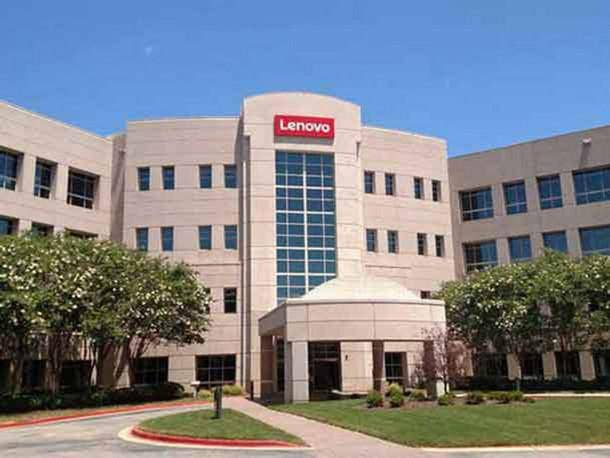
Lenovo said Thursday that it restructured its data center business unit to “accelerate the return to profitability” as demand for AI products across its portfolio drove a double-digit increase to record revenue in its recently completed quarter.
The Chinese tech giant disclosed the recent restructuring of its Infrastructure Solutions Group (ISG) in its third-quarter earnings report, for which it reported an 18 percent year over year increase to $22.2 billion for the three-month period that ended in late December.
[Related: Lenovo Exec: Partners Should Order ‘Quickly’ For Best Prices Amid Memory Crunch]
The vendor’s net income dipped 21 percent year over year to $546 million while adjusted net income grew 36 percent to $589 million. The company said the adjusted figure did not include restructuring charges, amortization of intangible assets from mergers and acquisitions, as well as impairment and write-off of intangible assets among other things.
Lenovo said the ISG restructuring, which resulted in a one-time charge of $285 million, occurred last quarter to “realign the cost structure” of the business unit. This move was accomplished by “streamlining the product portfolio, upskilling the workforce and driving sustained productivity improvements,” according to the company.
As a result, the vendor said ISG—whose portfolio includes servers, storage and other data center products—is “expected to accelerate the return to profitability in the next fiscal year and deliver annualized net savings of more than $200 million” over the next three years.
Lenovo CEO Yuanqing Yang said the vendor delivered an “outstanding performance across all fronts” with “AI becoming a leading growth engine” in the third quarter as it “effectively navigated market challenges of component cost increases and supply shortages.”
The company highlighted that its AI-related revenue grew 72 percent year over year to “represent nearly a third of overall group revenue, driven by strong demand across AI devices, infrastructure, services and solutions.”
“Looking ahead, as AI increasingly integrates into individuals' daily lives and enterprise operations, we will continue to drive Hybrid AI to capture the significant opportunities brought by AI democratization, accelerate growth, improve profitability, and deliver long-term value to our shareholders,” said Yang, who is also Lenovo’s chairman, in a statement.
ISG Achieves Record Revenue As It Nears Breakeven Status
ISG’s third-quarter revenue grew 31 percent year over year to an all-time high of $5.2 billion thanks to record sales from an expanding base of cloud service providers as well as ongoing demand from enterprise and SMB customers.
At the same time, the business unit reported an $11 million operating loss, which Lenovo said represented a “sequential improvement of $21 million” as ISG moves closer to its goal of breaking even by the end of its fiscal year, which ends in late March.
For the three-month period, ISG’s AI server business saw “high double-digit year-on-year revenue growth” thanks to a “robust pipeline” of customers as well as the deployment of its rack-scale solution based on Nvidia’s Blackwell Ultra GB300 NVL72 design, according to Lenovo. The company also noted 300 percent year-over-year revenue growth for its Neptune liquid-cooling products for data centers.
The vendor said ISG is “well-positioned to capture long-term growth opportunities, particularly as AI demand shifts from training to inference,” with Lenovo expecting to AI infrastructure market to triple by 2028.
Lenovo Reports Strong PC And Smartphone Sales
The Intelligent Devices Group—which includes PCs, smartphones and other client devices, —saw revenue grow by 14 percent year over year to $15.7 billion and operating profits increase by 15 percent year over year as it achieved a 25.2 percent share in the PC market.
The company said its PC market share for the 2025 calendar year was an all-time high for Lenovo at 24.9 percent. Both figures were from research firm IDC.
Lenovo attributed its 1 percent year-over-year share growth in the PC market to “high double-digit year-on-year revenue growth in AI PCs, a balanced portfolio across commercial and consumer, as well as a strong global presence that captured the Window [end-of-service] upgrade and PC replacement cycle tailwind.”
The vendor added that profitability for PCs, tablets and other client devices “remained resilient” thanks to “higher average selling prices and margin uplift from its premium PCs, AI PCs, gaming PCs and non-PC adjacencies.”
This was all achieved “despite industry-wide component supply shortages and rising costs,” according to the company. One of the main issues facing the tech industry is the global memory chip shortage, which is being driven by the ongoing AI data center buildout and is resulting in higher DRAM and NAND prices across the board.
As for Lenovo’s smartphone business, the company said it “delivered record volume and activation,” which allowed it to grow faster than the rest of the market in “key regions.”
Services Growth Led By Enterprises Moving AI To Production
The Solutions and Services Group grew revenue 18 percent year over year to $2.7 billion thanks to enterprises in the manufacturing, retail, sports, transportation and smart city sectors “moving AI from experimentation to production.”
This represented the business unit’s 19th consecutive quarter of year-over-year revenue growth, according to the company. It also saw operating margin grow 2.1 points year over year to 22 percent, Lenovo added.
The services unit saw a growing share of revenue come from high-growth areas such as managed services and project and solutions, which cumulatively represented nearly 60 percent of the group’s total revenue in the third quarter.
There was also an uptick in revenue growth for Lenovo’s TruScale device-as-a-service and infrastructure-as-a-service offerings, which the company said was “driven by GPU and AI Workloads as customers prioritize flexibility, scalability and faster time-to-value.”