MSP Valuation Scorecard: Sales Engines, Operational Maturity Drive M&A Value
‘As businesses start to mature operationally, they have a sales team, a management team, better KPIs and better processes, and all of those things command a higher multiple,’ says Kevin Damghani, founder and CEO of ITPartners+.
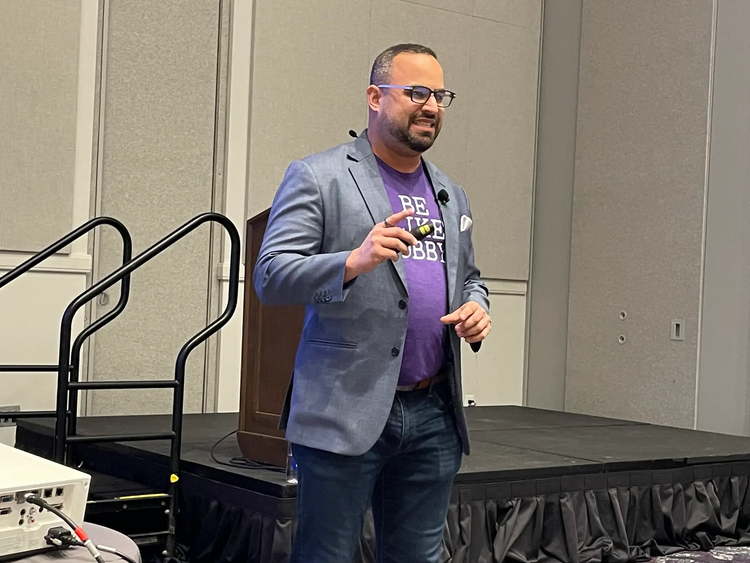
When it comes time to learn what it takes to prepare an MSP for a potential exit via a sale of the business, one of the first things an MSP might consider doing is looking at how their experienced peers manage M&A.
Kevin Damghani, founder and CEO of ITPartners+, is one of those to watch. Damghani, whose Grand Rapids, Mich.-based MSP has made seven acquisitions since 2023, with four closed this year alone and two more keyed up, looks specifically for smaller MSPs with under $5 million in top-line revenue. His record for acquisitions is also unusual in that ITPartners+ does not have a private equity company behind it.
Damghani told CRN that there are two key issues unique to acquiring smaller MSPs.
[Related: Panelists Offer Tips For MSPs Eyeing A Sale Of Their Business]
The first is that revenue generated by many smaller MSPs comes from the owner taking the primary role in its sales, leaving him or her with little or no time to focus on strategy or building a larger sales team.
That leads to the second issue, a lack of operational maturity. “There’s not a core management team, and so the business is very dependent on the owner itself,” he said. “As businesses start to mature operationally, they have a sales team, a management team, better KPIs and better processes, and all of those things command a higher multiple.”
Meanwhile, with smaller MSP acquisitions, vertical expertise is important in building MSP value if the MSP has a team with direct experience in a particular industry and can form the base for a new division within the acquiring MSP, Damghani said.
“That commands a higher multiple because they’re experts in that field,” he said. “They’re typically going to the trade shows of that field. It’s a lot easier to expand a vertical MSP, meaning add new customers, because you could just increase the marketing and sales dollars for that specific vertical and have a specific division within the acquired platform MSP.”
Here is more of CRN’s conversation with Damghani.
How many acquisitions has ITPartners+ done so far?
We’ve done seven starting in mid-2023. In 2026, we’ve done four so far, which has been a large uptick. We’ll probably do another two this year. So this year will be about six total is my guess.
We don’t have a PE company behind us in the traditional sense. I constantly say, ‘We’re not private-equity-backed.’ We do have $30 million in debt-based funding available to us to make acquisitions. But we’re a little unique in this platform concept, not being private- equity-backed.
How are MSP valuations changing?
Right now we’re seeing a lot of MSPs where the owner is leading sales. That’s typically MSPs below the $5 million top-line revenue mark. We’re seeing stagnant revenue growth over the last three years, whereas before that it used to be pretty high growth. So that’s been a huge factor lately. There might be minor fluctuations, but it’s been largely consistent, pretty flat overall.
The market is changing. I think with owners leading sales, they are very busy with a lot of other facets of their business. We had a lot of growth out of the COVID boom where it was very easy to add cybersecurity and things like that. But I don’t think MSPs are pivoting fast enough to where they are and what their customers are needing. Owner-led sales impacts how much time they have for strategic planning.
With flat-line growth, in 2026 we have to price that in the deal. It commands less of a multiple. If an MSP is growing, let’s just say 10 [percent] or 15 percent year-over-year growth, and they have a sales team, that has a lot more value to any acquirer than owner-led sales because with owner-led sales, there isn’t a sales engine.
If an MSP does have flat growth, we would absolutely consider an acquisition if there’s recurring revenue. Recurring revenue holds value. There’s definitely value there. It’s just a matter of whether they are adding more recurring revenue over customer attrition. That recurring revenue holds value. So absolutely we can still acquire that company. But now we have to come in and develop a sales plan and help integrate that sales plan, which adds cost.
Operational maturity is important. While there are exceptions, owner-led sales MSPs have a relatively low operational maturity in terms of their business and processes. That tells us their processes are typically going to be weak. The management team likely doesn’t exist. There’s not a core management team, and so the business is very dependent on the owner itself. As businesses start to mature operationally, they have a sales team, a management team, better KPIs and better processes, and all of those things command a higher multiple.
How important is technical expertise and geographical location in MSP valuation?
Geography is not an important factor. We’re acquiring across the United States, so it doesn’t matter.
Typically, we're looking at acquiring MSPs in the $1 million to $5 million top-line revenue range. We’re typically looking where private equity isn’t as interested. Now, when you get into the $5 million, $10 million, $20 million MSP range, it’s a very different market for the buyer and seller. In the smaller revenue range, there typically isn’t technical expertise that we’re acquiring. We’re already doing a lot of the same things they’re doing. Maybe they have a service delivery engineer as a lead or the main point person, along with Level 1, Level 2 and Level 3 technicians who are great qualified individuals. But it’s not like we're getting DevOps or similar roles in that size range. You will see that when you move upmarket to $20 million MSPs.
Vertical expertise commands a higher multiple if they’re experts in their vertical. That means their team would know that vertical better and speak the lingo better. When I say ‘vertical expertise,’ I'm not talking about somebody who just says they do a lot of dental. I’m talking about somebody that says they only do dental, and they say no to other potential customers. That commands a higher multiple because they’re experts in that field. They’re typically going to the trade shows of that field. It’s a lot easier to expand a vertical MSP, meaning add new customers, because you could just increase the marketing and sales dollars for that specific vertical and have a specific division within the acquired platform MSP. Again using dental as an example, we could have a dental division.
All the acquisitions we’ve done to date have been vertical-agnostic. That’s not because we were filtering those out. It’s very rare. This is an unofficial statistic, but if there’s 100 MSPs, I would argue just off the cuff and not rooted in any fact that about 95 percent of them are vertical-agnostic. Only a very small percentage are focused on a vertical. And I dare say it’d be even less than 5 percent.
What happens after the sale?
Through the due diligence phase and the getting-to-know-you phase, we look at the MSP’s budget and forecast. Are the owners leaving? How are we going to add sales? How are we going to add account management? What does that transition look like? Let’s say a target acquisition hasn’t had a price increase in many years. What you don’t want to do is acquire that company and then do a price increase within that first six or 12 months because customers are going to associate the price increase with the sale, and that will give them a bad feeling. Sometimes the strategy is to work on a price increase that the seller does as part of the due diligence process, adding value to the overall transaction. That’s a really interesting tactic.