CEO Antonio Neri On Creating ‘The True Alternative To Cisco’ And Why It’s A ‘Fun Time’ To Lead HPE
Hewlett Packard Enterprise CEO Antonio Neri tells CRN HPE-Juniper is creating ‘the true alternative to Cisco’ and talks about the high-margin opportunity for partners in the enterprise data center networking market and why now is a ‘fun time’ to lead HPE into the future.
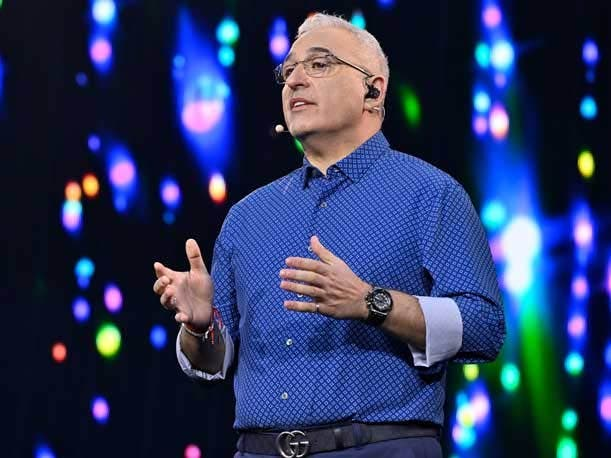
Hewlett Packard Enterprise President and CEO Antonio Neri said the successful completion of the $13.4 billion acquisition of Juniper Networks creates “the true alternative” to longtime networking market leader Cisco Systems.
“In many ways, in the past if partners wanted to sell the entire networking portfolio they were almost forced to sell Cisco because obviously they have the entire portfolio,” said Neri in an interview with CRN.
“Now this combination creates the true alternative to Cisco, but our view is to build the best networking business on the planet, which ultimately is a modern, secure, AI-driven networking infrastructure from client to the cloud,” said Neri.
Neri said he has “tremendous respect” for Cisco Chair and CEO Chuck Robbins. “I know Chuck personally,” said Neri. “He is an amazing leader, a terrific purpose-driven guy. Obviously, he made choices for his company, and he decided where to play and how to win. Our job is to give customers alternatives that are better than what is available in the market, and that alternative needs to be a better experience and lower cost that ultimately gives customers the flexibility and the choice to do what they need to do.”
The acquisition effectively provides HPE-Juniper with a “complete portfolio from silicon all the way to the services” that puts HPE on “equal footing” with Cisco, said Neri.
“Beyond that we will have more assets than Cisco because obviously we have a cloud, servers, AI at scale, storage, we understand data and even on the AI-driven side both Juniper and Aruba have done a better job I would argue in driving that AI integration into the solution,” said Neri. “Look, I am not worried about the competition. It is up to us to execute. It is all now in our hands. There are no excuses. It is all about our execution.”
Cisco, for its part, has maintained that “as the only company offering a complete, fully integrated networking and security offering, no one is better positioned to drive enterprise infrastructure in the AI era than Cisco.”
Furthermore, Cisco said, “By solving challenges across domains and driving architectural shifts with trust at our core, Cisco is leveraging its market leadership across industries to help organizations stay ahead and navigate the future of technology.”
Here is more of what Neri had to say in his interview with CRN, including his views on the benefits of the HPE-Juniper combination and the opportunities ahead for HPE partners.
What was it like going through all the challenges you faced through the long ordeal of acquiring Juniper?
Despite all the challenges you find out there and a lot of adversity that sometimes comes your way, the important thing is to stay true to your principles and values. That’s what has guided me throughout my career and definitely as a CEO. I’m really proud of what we have done. I’m very excited for what comes next in this new chapter of HPE.
It was a long haul to get this done. How did you feel when you got the word that the U.S. Department of Justice was going to greenlight the deal?
Actually, the same as the day before. But obviously a sense of what I would call ‘relief’ because from an employee and customer perspective, getting closure was very important. Personally, I was very confident. You heard me telling the story throughout the 18 months or so that we went through the process. I was very consistent, very upbeat. Nothing changed from January 2024 [when the deal was announced].
I also felt a sense of gratitude for the team. The team worked really, really hard navigating the challenges that were put in front of us, and without their support we could not have closed this transaction. For me, it was a moment in time when I felt that the vision that I have led for the last seven and a half years is now finally coming all together because the integration of Juniper gives us a very strong core foundation for the next architectures, which are all AI-driven in many ways. I think HPE is uniquely positioned, and for our partners it provides the opportunity to sell an amazing portfolio, which will be further integrated in our solutions.
So the work that they have to do to go sell it is less so they can focus more on the outcome of that portfolio, versus spending the time inside the portfolio.
Personally, I'm very grateful to the team. Obviously, I’m proud of what we have done. Now the real work starts, which is basically making sure this integration goes well and I have tremendous confidence in our team to do what needs to be done. And I will work with [HPE Networking President and General Manager and former Juniper Networks CEO] Rami [Rahim] to make sure we maximize every opportunity for HPE and for our partners.

Who called you when you finally learned that the path had been cleared for the Juniper deal?
A lot of the credit goes to our Chief Operating Officer and Chief Legal Officer John Schultz (pictured), who worked with our general counsel and the Juniper team and our advisers throughout this process. He deserves a tremendous amount of credit.
John is going to be the chief integration officer leading the HPE-Juniper integration. John has a tremendous track record. He was the one that operationally led the split of Hewlett Packard [into HP and HPE in 2015]. He also did the spin-off of software and enterprise services in 2017. He also led the divestiture with me of H3C. And, by the way, he also led the early phases of our as-a-service transformation with GreenLake. And then I hired Fidelma [Russo] as CTO to take it to where it is today.
John is the one that called me and said, ‘Look, I think we have reached an agreement. It’s a fair agreement for both parties, and we can go implement this. It does not by any means diminish the thesis or the financial value we will create for shareholders.’
For me, it was OK, great. Let’s go get it closed. From the time the agreement was filed and the judge signed it, we then had the opportunity to close the transaction.
What has John Schultz and the team meant to you as you completed the deal?
Every person in my executive council plays a critical role and has been personally handpicked by me.
Fidelma, [HPE Executive Vice President and General Manager of Hybrid Cloud and CTO], is the strategist from an architecture technology perspective and has done a remarkable job transforming the early views of GreenLake into the platform you are familiar with today, with over 42,000 customers now growing 30 [percent to] 40 percent every quarter.
[HPE Executive Vice President and General Manager of the HPE Server Business] Neil [MacDonald] is a technology and computing architect with a tremendous knowledge of AI.
Whether it is Phil [Mottram], who is now taking on a different role, or Rami with deep networking expertise, we have a terrific team.
John also has an adviser role because as Chief Legal Officer and COO he runs the back end of the company. On the other hand, he has [HPE Executive Vice President and General Manager of HPE Operations] Mark Bakker, who runs operations, supply chain and quote to cash.
So the diversity of the team allows me to use that enormous talent to divide and conquer so we can move forward with the vision and the strategy as laid out. There are moments when you rely on one person more than others. In this case because it was a legal antitrust issue, John was absolutely the right person.
Because of his background in separating and integrating things, he will be the chief integration officer [for the HPE-Juniper integration]. The idea there is very simple: He will drive that governance cadence while Rami and I will focus on technology and go-to-market.

What are you most worried about in terms of the integration, and how does it compare to the Aruba deal?
Well, this is the biggest acquisition we have done since 2010. In the last 15 years, this is going to be the biggest deal we have done. It’s much bigger than Aruba, which was a $750 million business at the time. This is a $5.5 billion business with 10,000 employees.
Generally, I don’t worry too much. The area where I tend to spend a lot of time is culture. The culture to me is very important because if you set the right culture with the right operating model and the right roles and responsibilities with the right empowerment and then the right oversight —because we as a company are going to have great oversight on what we get done here—then things will go the way they are supposed to go.
And you have to hold people accountable, starting with myself. The board is going to look at me and say, ‘Look, Antonio, we just spent $14 billion. Are we getting the value from that?’ And the answer has to be yes. Yes. That is for the shareholders.
On the other hand, you have to deliver on the promise to the customers, which is basically now HPE is a real strong player across the three key domains we all live with today with networking as the core foundation for what comes next to deliver on the promise of hybrid cloud and AI.
On the hybrid cloud, GreenLake has been our North Star and there we have a great portfolio with server, storage plus private cloud and all the cloud services built inside GreenLake. That was an organic approach and Fidelma has led that transformation after John spearheaded it. Fundamentally, she led it from a technical architecture and go-to- market perspective.
On the server side, we have a terrific portfolio. We get a lot of credit and awards for ProLiant, Cray and AI at scale. There it is all about leveraging the scale of the business to deliver better, more efficient infrastructure.
Now we have the third leg of this, which is obviously the networking piece where we go from clients all the way to the cloud. The cloud can be for virtualization or for AI.
I feel now HPE is uniquely positioned to address all these customer needs, all the disruption we are seeing in the market and to fundamentally address the opportunity we see with an expanded go-to-market opportunity.
When you championed the Aruba acquisition, was it part of your vision to make HPE at its core a networking company?
In 2018, I said the enterprise of the future would be edge-centric, cloud-enabled and data-driven. That was incredibly successful for us.
Cloud-enabled is still in the making, but I would argue it has been very, very positive with GreenLake. We established GreenLake as a true hybrid intelligent platform now, and customers like the flexibility and the choice they can get through it so they get the best of both worlds with private and public [cloud]. Last but not least, obviously, is the AI opportunity, which is data-driven.
We had the vision and [realized] that there were other options out there for extending the networking portfolio, but sometimes it is timing and the willingness of other parties to come to the table. We had to make a difficult decision with the divestiture of H3C, which was the right thing for the asset in China and for us outside of China.
Remember, I had the learning with our Slingshot fabric and the ability to deliver on supercomputing at scale. We started that journey in 2019 when I acquired Cray. I learned that if we were going to build these massive systems, you need differentiation. We are not a GPU or CPU provider. We work with amazing partners there. So what is the next level down? It is the network and the software.
If we wanted to scale that and integrate that with the rest of the architectures in the data center and so forth, we had to extend our leadership in networking. That is why I pursued the Juniper acquisition.
By the way, let’s remember that Juniper is a client-to-cloud company. Obviously, they were very successful with Mist [AI]. That integration with Aruba is going to be unique in many ways for campus and branch all the way to IoT and client. And then you have the data center for the enterprise. That will be the integration of their high-performance fabric with compute and storage and our private cloud and everything else with GreenLake. Then inside that we are going to put the switch, which is basically integrated into storage and the top of the rack.
For me, it is an opportunity across the board all the way to building an AI system at scale because now we can help customers pick a data center. We can design it from the door of the data center all the way to the last GPU that gets deployed. That is why to me it is exciting because we can serve every segment of the market from the enterprise side of the house to service provider side of the house.
GreenLake was conceived for the enterprise. The rest is infrastructure with software for the large service provider side of the business.
Some of the unique partners can play in the service provider space, but they are more solution integrators of sorts stacking and racking things, doing cabling and providing some line of services around that.
In the enterprise, now our traditional partners can sell everything. That is an opportunity to generate more revenue and more profit along the way. And then obviously add their own value on top of it.
Now more than 50 percent of HPE profits come from networking. What is the big money-making opportunity for partners, and will there be compensation changes come Nov. 1 to make sure HPE executes on the sales front?
At [HPE] Discover, we laid the foundation to drive one integrated program with our partner ecosystem. That was the first step. That started with Aruba being integrated now with the rest of the partner program and that was in preparation for closing the Juniper transaction.
Now over the next three or four months we are going to rationalize what are the right incentives and compensation as part of the networking track. But remember, one of the principles I always guide myself by is how I pay my people is the same way I want to pay our partners. There has to be 100 percent alignment because you want to have ropes to the ground on what are the top priorities within our portfolio so that together one plus one equals 11 in that journey. Therefore, everyone will be incentivized and motivated the same way. So that is what we are going to do. The good news from a programmatic perspective is this is exactly what we did at the Partner Growth Summit. That is all positive.
The benefit for partners outside the United States is now they can get access to the Juniper portfolio. As you know, Juniper fades a little bit when you leave Boston and keep going east. They don’t have all the reach that HPE has because as you recall more than 60 percent of our business comes from outside the United States, so the ability to upsell and cross-sell through our partner network in the networking space is now pretty significant outside the United States. And in the United States there is leverage based on verticals. Both companies sell into the enterprise, but they do it in a vertical way. Juniper has a large footprint in federal. HPE also has a very large footprint in enterprise and state and local education. So that gives us the ability to really construct things in a way that turbocharges the momentum as we go forward.
Isn’t the bottom line for partners higher margins and more services opportunities in the data center with Juniper in their portfolio to compete against Cisco?
In many ways, in the past if partners wanted to sell the entire networking portfolio, they were almost forced to sell Cisco because obviously they have the entire portfolio. Unlike, for example, Arista, which has not been very partner-centric, and they were very unique in the data center.
Now this combination creates the true alternative to Cisco, but our view is to build the best networking business on the planet, which ultimately is a modern, secure, AI-driven networking infrastructure from client to the cloud. The partners can pick what segments of the markets they want to address based on their strengths and capabilities. But this business has a structural margin, which is way higher than the rest of the IT stack starting with compute. The reality is the ability to attach services is much higher here than commodity hardware, for example.
But remember, as we incentivize partners to sell our private cloud and storage solutions, networking comes with it. So Juniper will be integrated in those offers as well so partners get the ability to multiply the benefits as well on that.
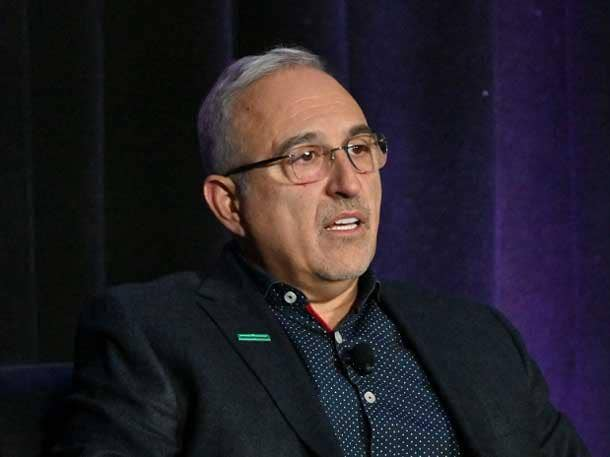
You have been CEO going on eight years. That’s a long time in the technology business. Partners wanted to know how committed are you to remaining CEO to make sure they and their customers get the full benefits of the acquisition?
First of all, this is just the beginning. I am more committed now than I have ever been. Although I have been with the company 30 years, seven and a half years as CEO, my job is not done here. I just closed the transaction. Now I have to deliver on that promise, and it is my job with my team to deliver on that promise.
But as you know, I am always at the service of the board. As long as the board wants me to keep doing this, and the board represents shareholders, then it is all good. But personally, from my vantage point, this is a fun time, a fun time to lead this company, a fun time to achieve that vision.
I think we are a significant step further than we were before because now we have the assets and the talent, to be honest with you.
As I always say, the partner ecosystem is one of the crown jewels. So for me from an innovation perspective, I have everything to give to them. From a go-to-market perspective, we have a great program that we will obviously incentivize the right way and then operationally we just need to execute.
How important was the board of directors’ support as you went through the process starting two years and five months ago when you first contacted Rami?
Obviously, you can’t do any of this unless you and the board are on the same page. One of the things I am really, really proud of is that we have a very, very experienced and diverse board. The directors have done large transformations and have led large businesses who understand technology. They understand that the best value creation path was this acquisition. So we as a board—because, remember, I am a director too—stayed united throughout the challenges. That is because we had the conviction—No. 1, that this was the right transaction and No. 2, this was going to get done.
Now the board obviously is going to hold me and my team accountable to deliver on that promise. I am privileged to work with such a talented set of directors who really want to accelerate that value for shareholders and who understand that ultimately the stakeholders are more than just shareholders. There are the employees and customers and everybody who participates with us, including our partners. It has been really remarkable to see.
I would argue that the outcome of this will not be seen just in the next two or three quarters or the next year or two, but honestly three to five years out once we see all the benefits of this transaction.

You have faced pressures for years from investors including Elliott Investment Management. What is your message to investors now that you have closed this historic deal?
First of all, my job is to create value for our shareholders. I together with the board represent the shareholders. That is a fiduciary duty. But the way you create that value has to be persistent and lasting. My strategy from the beginning was to position this company for the next decade and position it along with the trends we see in the market. Because you know part of the value creation is to give capital to shareholders, which we are extremely committed to. But obviously we had to deliver less in the last 18 months because we were waiting for this transaction.
This transaction will create a lot of value for shareholders, which will create an opportunity to give capital back to them. It is a terrific investment opportunity I would argue because we are now positioned well against those [market] trends. So that’s the message to the shareholders.
On the culture side, it is not only what you do but how you do it. I have been privileged to work with some of the most amazing leaders at HPE who have helped me a lot. But again, my job was to put in place a strategy that creates value for shareholders and also creates an opportunity for our employees to grow and develop themselves. Because when you grow, you gain share, you create more profit, more opportunities happen for our employees. That has been my direction, my motivation. And obviously at some point someone else will take it from here. But at least I will feel with my team—because you are not alone in this—that we have done the best possible job to make HPE relevant in the market. That relevancy drives value for shareholders, and that value creates opportunities for employees to grow and achieve their own desires. That has always been my direction. I am proud of what we have done. But the job is not done. We have to deliver against that.
How big a moment is this given the hegemony in the market that has existed for so long with Cisco?
I have tremendous respect for Chuck and Cisco. I know Chuck personally. He is an amazing leader, a terrific purpose-driven guy. Obviously, he made choices for his company, and he decided where to play and how to win.
Our job is to give customers alternatives that are better than what is available in the market, and that alternative needs to be a better experience and lower cost that ultimately gives customers the flexibility and the choice to do what they need to do.
I feel now together with Juniper we have a complete portfolio from silicon all the way to the services, and we will be positioned on equal footing against the biggest competitor, which obviously is Cisco. Beyond that we will have more assets than Cisco because obviously we have a cloud, servers, AI at scale, storage, we understand data and even on the AI-driven side both Juniper and Aruba have done a better job I would argue in driving that AI integration into the solution. It is up to us. I am not worried about the competition. It is up to us to execute. It is all now in our hands. There are no excuses. It is all about our execution.
Did you celebrate the deal when it got done?
Not yet.
What is the mood within HPE right now?
I hosted two calls with Rami and my staff. We had terrific attendance. The feedback was very, very strong. Obviously, there is tremendous excitement. They want to know way more details. In the calls I had more than 1,000 questions.
But I love it because it tells me that they like what we have done. There is terrific engagement, and there is a sense of pride and excitement. Now obviously we are going to be close to 67,000 employees when we combine the companies, much bigger than we were before. So now we need to demonstrate again that we can deliver on the thesis. I have to tell you, the employee engagement has been terrific and the feedback has been strong.
How important is the legacy that you took on as the CEO of HPE?
To lead a company that has ‘H’ and ‘P’ in front of it and obviously we have a unique position in the market is the privilege of a lifetime. It would be silly and stupid if you don’t take that opportunity to make a difference. I always said I have got the privilege to do something that very, very few people in the world get to do. I didn’t want to miss that opportunity. I understood it was going to be hard. I understood sometimes you will be unpopular. I understood sometimes you are going to get a lot of pressure. But as long as you have your convictions and you fail fast and improve and you have the board and employees that support you, [it will be all right]. One of the things I am really proud of is the employee engagement, which has been very high throughout my tenure. One of the key images I shared during my keynote [at HPE Discover] was our employees. Every picture on that screen was an employee of HPE. I am in service to them as I am in the service of shareholders. The reality is you have to be willing to do that. If not, move aside for somebody else.
Does the Bill Hewlett and Dave Packard legacy weigh heavily, given your 30 years at HPE?
I never had the honor to meet them. The first [HPE] CEO I met Lew Platt. I remember that vividly we were having a barbecue in Boise, Idaho. He was a super-humble, down-to-earth person who left an impression on me—as did [former Cisco CEO] John Chambers, for that matter, who is a dear friend of mine who has similar values as me. John has been an incredible supporter of me. John told me the story about when he visited Lew Platt and asked for some advice. Lew gave a lot of time to John to give that advice. When John asked Lew, ‘What can I do for you?’ Lew said, ‘Well, do the same for others.’