Cisco CEO Chuck Robbins On The ‘Incredible’ AI Opportunity And The Importance of Getting Cisco 360 ‘Right’
‘We just have to get it right. I think the balance we have to strike is rewarding those partners who build businesses across our portfolio, who really represent the platform approach to our customers, but also recognizing that you’re going to have partners that are going to go super deep in a certain area, and you need them to be successful as well,’ Cisco CEO Chuck Robbins said in an exclusive interview with CRN about Cisco 360 at Partner Summit 2025.
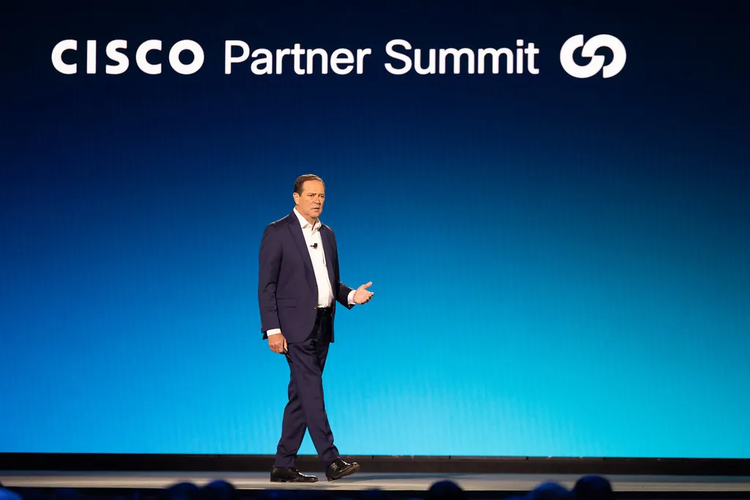
With more than three decades of IT experience, Cisco CEO Chuck Robbins is no stranger at all to technology transitions. But the tech giant’s leader of nearly 10 years is not mincing words when he calls AI the biggest technology opportunity of his lifetime, jokingly noting that he also lived through the dot-com boom of the 1990s.
Robbins spent the first half of his tenure as CEO steering the company, known for its networking hardware, toward software and services. Now, it’s all about AI. But because Cisco does about 90 percent of its business through the channel, the company needs partners to come along on the journey.
To that end, Cisco last year revealed that it was revamping its nearly 30-year-old iconic channel program. The resulting new program, Cisco 360, which the company said has been co-designed with the help of partners, will roll out January 25, 2026. The purpose of the new program is to support and reward Cisco partners that are moving toward more durable growth and helping their customers modernize in the age of AI.
The partner-customer relationship, said Robbins, has never been more valuable or important.
Robbins sat down with CRN at Cisco Partner Summit 2025 this week in San Diego to talk about Cisco 360, the massive AI opportunity waiting for partners, and how Cisco’s platform approach to the market has never been more relevant as customers adopt new technologies and overhaul their infrastructures to support the next generation of IT.
Here’s more of what Robbins had to say.
Why is now the time for a new partner program?
I think the partner program is just due for a refresh. It’s been fairly consistent since we built it with a few tweaks, but it was the same program that we designed almost 25 years ago. I think the initial effort to revamp the program was started before the AI explosion really began to occur. So, I think just making sure that it still supports everything we’re trying to accomplish with the partners in that space is an important thing that the teams have taken on in the last nine to 12 months.
We just have to get it right. I think the balance we have to strike is rewarding those partners who build businesses across our portfolio, who really represent the platform approach to our customers, but also recognizing that you’re going to have partners that are going to go super deep in a certain area, and you need them to be successful as well. So, you’ve got partners who are going to roll across the portfolio [and] you have partners who are going to go deep with [something like] security, for example, and the program has to recognize both of those are valuable without creating conflict. That’s part of the magic of what [channel leadership is] trying to accomplish. I think the message to the partners is the same thing we’ve always said: We will probably not get it perfect, but we will listen and we’ll adapt, and we’ll modify [the program] to the extent we need to. But we do believe that it lines up against this AI opportunity, which is the biggest opportunity we’ve seen in our life. It’s incredible. And that’s coming from the guy who lived through the internet buildout.
Cisco’s C-suite is filled with former channel leaders. How did you and your team’s experience help shape this fully revamped partner program?
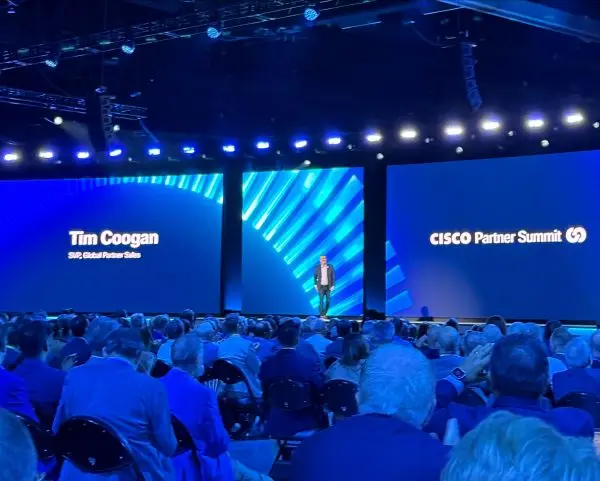
Well, you’ve got a lot of experts, so that’s probably not at all helpful every day they’re trying to build out [the program]. I had a chat with Tim [Coogan, channel chief] yesterday about a couple of questions we got in one of the [Partner Summit] sessions we were in, and he explained to me why it was the way it was. And I was like: “OK. I get that that makes sense.”
It’s been a long time since a lot of us have been in the details, but we get it quickly. It’s easier for us to just pick up the nuances of why it’s being designed a certain way and the implications of doing it a different way. Most of us just get it. We do have team members who haven’t worked directly in the channel and haven’t built the programs, like Jeetu [Patel, chief product officer] as an example, who hasn’t been in the depths of it, but he’s so committed to it and he constantly is learning. I think the good news is, given that I was in [the channel] as well as Oliver [Tuszik, chief sales officer] and others, so there’s never a discussion about whether we are going to do this. It’s just part of the DNA. It’s just every decision we make is: “OK. How does this affect partners?” It’s just how we all think.
Channel chief Tim Coogan has said that AI will be biggest portion of a partner’s business in the next 3-5 years. Can you talk about the AI opportunity for the channel?
In the discussions I’ve had in all my travels around the world with customers and government leaders, there’s a wide range of understanding [from] enterprises, the government, public sector customers, or even the telcos, on what the opportunities are and what they need to be doing now. Our responsibility with our partners is to create that vision for the customers. Take some of the things that we’ve done internally [and] take things that we’re learning as we engage with customers around the world, because there are customers doing incredibly unique things, and we think right now, we have to communicate more with our partners, probably than we ever have on this, because it’s moving fast, and this is super complicated, but I think right now we’re in the midst of it. Our customers need our help, so the more we can share what we learn around the world with both our teams as well as our partners, and then the more we can do to enable them and educate them on how they can help customers achieve the same thing -- I think that’s the bottom line. We have to do that, and it’s moving fast, and our traditional way of enabling partners and communicating with partners is not going to be enough. It’s got to have more frequency. It’s got to have more depth. It’s going to have to have more technical detail. And we’re just going to have to repeat, repeat, repeat, and share the new stuff, share the new stuff, share the new stuff. It’s going to be nonstop.
Many enterprises are rethinking decisions they’ve made in the last few years in infrastructure as it relates to AI. How can partners capitalize on this?
I think this is a responsibility that we have to help the partners understand: What is the architecture for agentic AI and for edge applications in particular. So, what’s the data center look like, and then what does the edge look like and how do you bridge that together? Security being fused into the network, we’ve harped on that. The work on the pandemic to get ready to go virtual was five -and-a-half years ago, and we have a full suite of new products out there.
I think just getting the architectures out there for what the network needs to look like, how the security framework is built on top of it, and then helping customers prepare. This is why our networking business has been so strong. Even customers six months ago were saying: “I’m not sure what my AI application footprint is going to look like, but I know for a fact my network and my infrastructure needs to be more modern in order to accommodate it.” I think that’s the opportunity. It’s not a complex story. You need to be ready, because when your CEO in the C suite starts talking about: “Here’s a killer app. We need to get deployed quickly.” You don’t want to be the bottleneck.
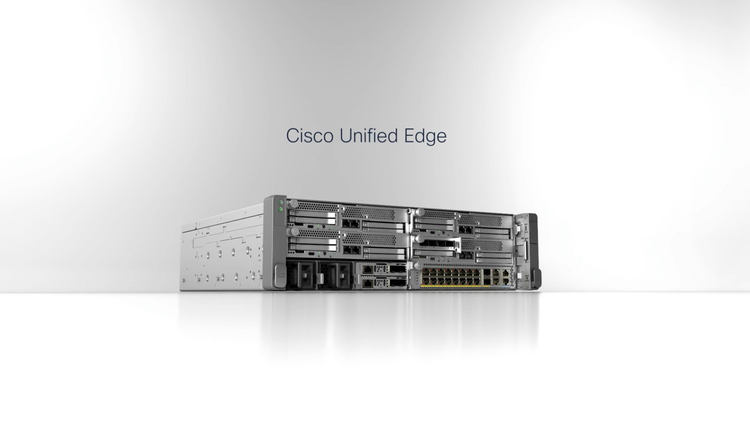
How are new offerings, such as Unified Edge, helping to further the “One Cisco” story?
I think [Unified Edge] demonstrates the power of the breadth of our portfolio at this moment in time and it demonstrates the power of the org change that I made 18 months ago. You’ve got all these different business units that are contributing to this platform that in some of our old work models wouldn’t have happened. It would have been very difficult. I think it’s reflective of the breadth of the portfolio and the power and the org change that we made, and candidly, [Patel’s] leadership.
You hear me talk about fusing security in the network, and our security competitors don’t have networking. Our networking competitors don’t have security. The unified Edge platform is a great example of a product that not many, if any other companies can even build without doing all these crazy partnerships and bringing all stuff together. It’s just much more complicated with others.
Do you believe the One Cisco story is resonating with end customers?
It’s early. Not every customer. Jeetu [Patel] and I see a lot of customers together, and sometimes they have no idea of the progress that we made, and sometimes they’re super up to speed, so it varies. But I think the good news is, when they do learn it, and when they do understand it, they feel very good about where we are and where we’re headed.
How can partners help further the message of Cisco’s platform approach?
I think it starts with us. We’ve got to do a better job educating our partners down to the rep level. Even with our sales organization, because of the pace of innovation that the teams have introduced and the number of announcements we made at Cisco Live and here [at Partner Summit], being able to digest all that, even if you just work for Cisco and all you really care about is the Cisco portfolio, is hard. And now I have to get our partners and the partners’ field teams who, as much as I hate to admit it, don’t just represent Cisco, they have to learn our stuff at a time where they’re also trying to learn other things. It’s just complicated, and I think it starts with us doing a better job. We have to figure out what that model is. It’s become very clear that we have to think differently about how we educate and get this message through our sales teams and to our customers and to our partners more effectively, because it’s moving so fast and we’re launching so much new tech, it’s just hard to keep up.
What is the message that you want partners to take from the show this year?
I want them to believe and understand how big this AI opportunity is, probably the biggest in my lifetime and probably the biggest that will be in my career. Secondly, I hope they believe that we are innovating and we have the solutions and the integrated portfolio to help customers, from hyperscalers, to neoclouds, to sovereign clouds, to enterprises, to telcos, take advantage of this opportunity, and third, that we’re going to have the right program that’s going to help them be profitable and successful as we go through this opportunity together.