Cisco Channel Chief Tim Coogan On Cisco 360, His 20-Plus-Year Tenure ‘Advantage’ And Why Now Is The Time To ‘Fundamentally Change’ How IT Is Delivered
“I will say this with a little bit of a wry smile. It is helpful that both my boss and my boss’ boss come from very, very proud channel DNA. It does make advocating for our partners well received. It’s just part of our culture these last 40-plus years,” Cisco’s new channel chief, Tim Coogan, tells CRN in an exclusive interview.

Tim Coogan, most recently senior vice president of the company’s U.S. commercial business, assumed the role of channel chief in August. Since then, the executive with more than 25 years of experience at Cisco said he’s been leveraging his extensive experience to craft his own go-to-market strategy “shoulder to shoulder” with partners.
The Cisco veteran began his work in the channel two months ago working alongside former channel chief Rodney Clark, who has stayed on as an advisor in the short-term, and the rest of Cisco’s executive leadership team, many of whom also have channel backgrounds, to ensure a smooth transition for partners.
Last year ahead of Cisco Partner Summit 2024, the tech giant revealed sweeping changes to its distinct and industry-leading channel partner program in the form of a new program called Cisco 360 that’s slated to fully roll out in February 2026. While the massive overhaul to the iconic program hasn’t been popular with all of the tech giant’s partners, Coogan pointed to Cisco’s longtime commitment to partners. That legacy of commitment, he said, is exemplified by Cisco 360, which aims to modernize and reward partner investments and capabilities.
Coogan, Cisco’s senior vice president of global partner sales, sat down with CRN in an exclusive interview ahead of Cisco Partner Summit 2025 in November to talk about what he’s been working on for the last two months, the importance of demonstrating the value of Cisco’s platform approach to partners, and what the channel should know about Cisco 360 under his leadership.
Here are excerpts from the conversation.
What have been your first set of priorities in the channel chief seat?
I think the first set of priorities becomes very focused on listening. And I know “listening tour” can be a little bit of an overused cliche when you start a new role, but I believe so deeply that feedback is truly a gift and if I can get it in these early stages of this new role, and combine it with my experience, I think it would be incredibly valuable as we ask partners to embrace a new go-to-market strategy, as we ask them to embrace innovation. I think listening is a key in crafting our support of our partners based on what they’ve told us they need and what works for them.
How are you leveraging your two-plus decades of experience with Cisco in your new role as channel chief?
I look at my experience at Cisco as an advantage. Now, there are clearly things that I will learn in a new role through a new set of exposures, but what I anchor on is that in the 26 years that I’ve been with Cisco, and the 10 years prior to that in sales roles, they have all been involved in an environment where the OEM and the partner work together for common value delivery, common outcome delivery. And I have seen firsthand — it’s not Cisco-led or partner-led, it is shoulder to shoulder, combining innovation and capability to the benefit of our common customer. And I have seen the things that work well. I’ve seen the things that work well over time, and I’ve seen the things that need to change. I think that’s an advantage and a resource that I’m bringing to the partner community.
I understand that there’s trepidation, and it’s easy to say the right things, but I have lived with [partners] in this environment. I think that part of [Cisco and our partners’] superpowers are that we understand each other’s business [and] helping within our common goal of delivering value, delivering outcomes. I think that my background, while not traditional in some ways, will be incredibly beneficial relationship we have, and our deep commitment to our partners.

What do partners need to know about Cisco 360 under your leadership?
The messaging that I have been giving, without exception, is that this program isn’t a change as much as it is a modernization of an incredibly long and deep commitment to the partner community. We look at this as the modernization of that program that both simplifies but also magnifies the capabilities that we have here.
I’ll give you a bit more detail on that. The path to real value comes with the level of innovation and expertise, and we will reward the investment in that expertise in a way that is very meaningful for our partners. We, of course, recognize that any change presents challenges. There’s certainly new things to learn and new pieces of the program to understand, but fundamentally, the message that we’re sending is that a partner’s ability to seek benefit is directly related to their investment in that capability and their ability to deliver it to the common good of our customers. And I think that is an amazingly powerful thing. This is not an opportunity to do less with someone. It is an opportunity to reward the investment by doing more. I think that’s really something that’s fundamentally different about the way we have always approached our partner ecosystem.
For partners that are apprehensive about the change to Cisco 360, what is your message?
At the end of the day, the grade for the Cisco 360 partner program will be: Was it additive to, or did it diminish from the trust that we have with our partners? And if it’s anything less than additive, it will not be what we intended it to be. Here’s what I would say. The program has been so thoughtfully built to reward effort with a very clear mission in mind that I think if a partner who doesn’t understand [Cisco 360] and spends the time — and we are here to spend that time with them — we can help them see the path. This is a path to mutual benefit. And when I say mutual, I mean Cisco, I mean the partner, and I mean our customers, because we know that without the two pieces of that— Cisco and our partner — ultimately, our ability to deliver value to the customer is diminished. So, if the partner is unsure, all they have to do is ask and we will have the right resources that say: Your effort will be rewarded in this program in a really meaningful way. Our intent here is to provide more, not even the same as before, but it has to come with a mutual commitment based on [that] combination of capability and investment.
How are you working with Cisco’s various teams to ensure a smooth transition as you take the channel reins?
I think in very much the same fashion as there’s always been that symbiotic relationship within the company. We have a great level of resources when we combine our portfolio teams, our architecture teams and our partner team. I’m working with them very much the same way, but I think from a little bit of a different perspective on what the end vision looks like. I have always been and will always remain partner-focused and value-driven. There is no single deal to me that outweighs the larger opportunity in front of us when we try to get back to providing innovation and capability. So, I think I work with the same folks, but maybe with a slightly different lens, and that’s around the long-term vision. We have built this incredible portfolio and this incredible partner ecosystem, and it does a disservice if we don’t combine those two capabilities with a future vision in mind.
I think the biggest thing that I’ve learned is that partners were looking for an opportunity to comprehend Cisco’s portfolio in a very different way. In the previous program, while not deficient — certainly it was really, really good. It lasted for 23 years for a reason — didn’t necessarily always provide that foundation to allow them to explore the portfolio as one solution versus a combination of discrete solutions. And so I think the partner feedback has really said: “Hey, I am now seeing the vision of One Cisco play out, not just in the technology, but also inclusive of the support that we receiving and the way we are incented and rewarded” for embracing that portfolio in a meaningful way that they can see the connection between product and outcome.
What do you want partners to know about your future vision for Cisco’s channel?
What I want them to know, and I believe that they do, that this is a long-term opportunity to fundamentally change the way technology is leveraged in the marketplace. The way it is consumed, the way it is deployed and developed, but ultimately, what it delivers. If we can talk about the concept of AI, AI in and of itself is not necessary [bigger] than any other technology innovation, but used properly, it can be a fundamental pivot point, taking advantage of technology in a way that improves operational efficiency, improves business outcome [and] quite frankly, has an opportunity to improve the quality of humanity. I know that’s a broad and dramatic statement, but I believe that when we do those things in combination, it can be every bit that impactful.
In your opinion, what are the big technology areas of interest that partners should be looking at right now?
We give that exact topic a great deal of thought, and I think what I would say there is, it’s around security. Any technology is open to misuse if not properly governed within compliance. And I think AI, for all of its power, presents opportunities for misuse and we see that in any technology innovation, there are good actors and bad actors. And I want our partners to understand that we have invested not just in the pure AI play, which we’re very proud of, but the ability to architect and secure that infrastructure in a way that is durable and meaningful over time. And I think security becomes the linchpin in that.
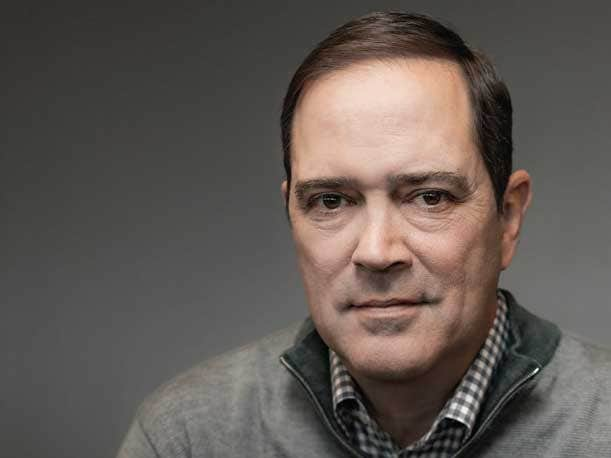
Cisco’s ELT is filled with former channel leaders, including CEO Chuck Robbins (pictured). How are you working alongside leadership to advocate for partners?
What I will tell you is that there is not a person that I’ve met in my 26 years here that doesn’t understand the role that the partner plays for us. We often talk about it internally, the most important currency that exists in our relationship with our partners is trust. Certainly, there’s a financial component to it, we’re not naive to that part of the relationship, but it’s based on trust and a mutual commitment to value. If I talk to an account manager in Europe or an executive in San Jose, it’s exactly the same thought process. I will say this with a little bit of a wry smile. It is helpful that both my boss and my boss’s boss come from very, very proud channel DNA. It does make advocating for our partners well received. It’s just part of our culture these last 40 plus years.
What should partners be on the lookout for at Cisco Partner Summit next month?
Partner Summit remains an innovation showcase. We never want to lose sight of the fact that we are a technology company partnered with technology companies to deliver value. While the Cisco 360 partner program will clearly be a big part of the conversation in San Diego, this is an innovation conference. This is an innovation exchange. I’ll hesitate to [say] anything in advance of announcements, but there’s some very exciting announcements that we’re very proud to showcase. One of the things I tell a partner is: We don’t save all of our biggest announcements for customers. We also have been very, very mindful when we have our partners in a room together to be able to share with them some exciting innovations. So, this is, again, an innovation-based event, and we will then dig into: How does this innovation play into the partner program? I think it’s really going to be interesting that these two big topics are coming together in November.