The 10 Biggest Cisco News Stories Of 2025 (So Far)
The tech giant is investing heavily in AI and quantum networking, while making sweeping changes to its 30-year-old partner program so far this year.
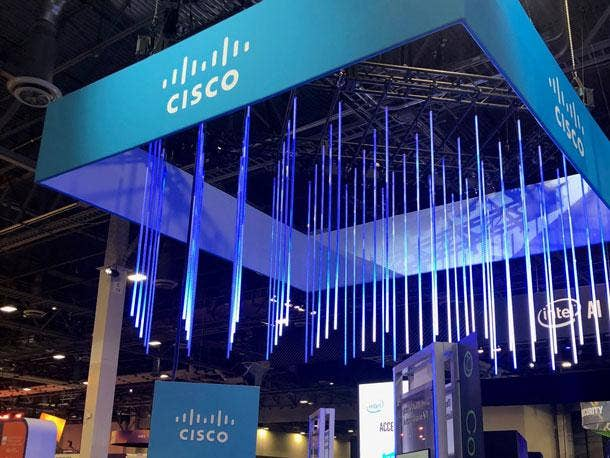
Cisco Systems, one of the biggest tech companies on the market today, has spent the first half of this year revealing new products, investing heavily in AI, and seeing a couple of high-level executive departures.
To say the company is placing its bets on AI is an understatement. Cisco CEO Chuck Robbins said that the tech giant was on track to surpass $1 billion worth of AI infrastructure orders in 2025 after seeing a surge in deals requiring networking upgrades for incoming AI applications. Cisco is working with a number of companies in the AI space, including Nvidia, to capitalize on the AI opportunity. It’s also making a number of investments in AI startups through its massive, $1 billion global AI investment fund.
The product portfolio isn’t exempt from the AI action either. Cisco this year has been infusing AI across its entire portfolio, and even introducing a couple of brand-new tools, including AI Defense and AI Canvas — the former of which can help safeguard enterprises against the misuse of AI tools, and the latter allows for different IT teams, such as NetOps and SecOps, to work together more seamlessly.
Alongside the updated portfolio came a couple of major leadership changes so far this year. Former Splunk CEO and Cisco president of go-to-market, Gary Steele, left the company about a year after the close of the $28 billion Splunk acquisition to join drone and defense technology upstart Shield AI. However, in his place would be a very channel-friendly face. The tech giant in April announced that Oliver Tuszik, Cisco’s beloved former global channel chief and EMEA president, would step into the spot left by Steele on the executive leadership team as executive vice president of global sales and chief sales officer.
But perhaps most noteworthy for partners are the details that have emerged this summer around Cisco 360, a partner program that the company is slow rolling out to its channel ecosystem starting this month, with the formal launch set for February 2026. The information around timing, partner incentives and compensation, which were shared with CRN exclusively, have been of particular interest to anxious partners.
Cisco has a jam-packed first half of 2025 with more announcements, partner program news and updates slated for the second half. Here are the 10 biggest Cisco stories of 2025 so far.
10. AI Defense Introduced
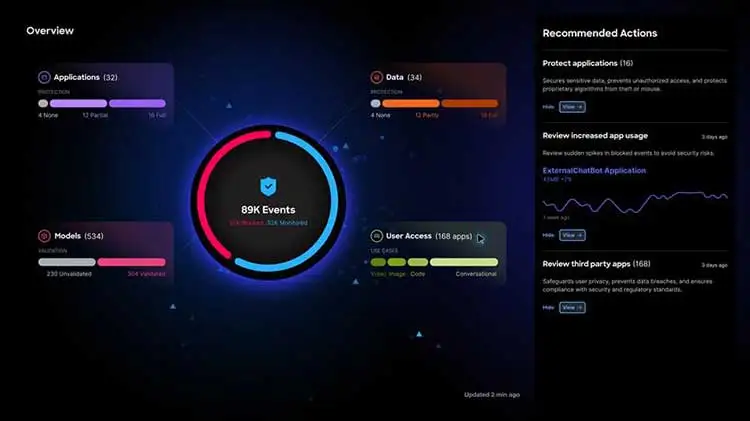
Cisco kicked off the year by introducing AI Defense, a tool that safeguards enterprises against the misuse of AI tools, data leakage and increasing cyberthreats.
Security point products are not equipped to handle the misuse of AI tools during the development, deployment and ongoing use of AI apps. Security is one of the biggest barriers to AI adoption and application development, which is why Cisco created AI Defense, the company told CRN in January.
Similar to SaaS security solutions that protect the entire cloud environment, AI Defense gives enterprises a common layer of safety and security that protects every user and every application.
The tool was designed using technology from Robust Intelligence, a privately held AI security solutions company that Cisco acquired in 2024. AI Defense has been integrated into Cisco's Secure Access security service edge (SSE) Offering and Hypershield. Users and partners will be able to access AI Defense from the unified Cisco Security Cloud platform.

9. Aggressive AI Investments
Cisco is making good on its promise last year to place its bets on AI to the tune of $1 billion. One way the tech giant is doing that is by investing heavily in AI startups that are new on the scene.
Cisco in April revealed an investment into one-year old startup Gruve.ai, a Redwood City, Calif.-based startup that the tech giant called an emerging “visionary” in helping enterprises harness outcome-based AI solutions. In February, Cisco revealed it had teamed with one of its investment companies, two-year old French AI startup Mistral AI, for the creation of an AI agent that the two companies said will cut down on product renewal times for Cisco’s own renewal team.
Cisco also invested in upstarts Cohere and Scale AI last year as part of its AI investment fund launch in June 2024.

8. AI Canvas Revealed
Announced on the mainstage of Cisco Live 2025 in June, the tech giant unveiled AI Canvas, a generative AI user interface for customer dashboards that lets NetOps, SecOps, and DevOps teams collaborate, optimize operations, while reducing IT strain, according to the company.
Cisco is building out its “AgenticOps” strategy, the company's approach to running modern IT operations that turns real-time telemetry, automation, and domain expertise into intelligent actions. The main tool in its toolbelt for that purpose is AI Canvas.
AI Canvas uses Cisco's Deep Network model, one of the most advanced networking LLMs, according to Cisco. The domain-specific LLM has been fine-tuned and trained on more than four decades of Cisco expertise, from CCIE-level content to Cisco U. courseware, and the data is always being vetted for accuracy and will continuously learn based on telemetry that Cisco will constantly provide, the company said.
AI Canvas is part of Cisco’s unified management platform that now brings together management of Meraki and Catalyst devices in one platform that supports any cloud, on-prem, or hybrid deployment that a business chooses.
7. Cisco Enters Quantum Networking Game
Cisco hopped into the quantum networking arena in May after launching a quantum chip and opening a quantum lab in Santa Monica, California.
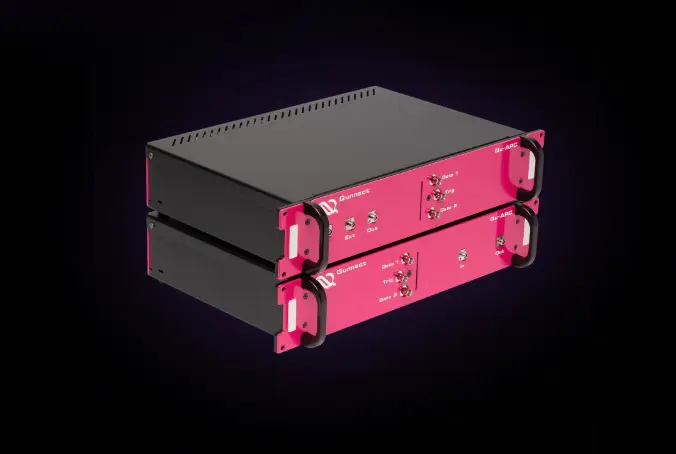
In kicking off its strategy building the infrastructure for the quantum internet, Cisco in June made history when it became the first enterprise Fortune 500 company to make a public investment in quantum networking infrastructure. Brooklyn, N.Y.-based Qunnect, a builder of quantum networking infrastructure, in June announced the closing of an oversubscribed Series A extended financing round of $10 million that also included participation from Cisco Investments.
The investment underscored a shared vision for advancing secure communications and revolutionizing the infrastructure that will underpin the quantum internet, Cisco said in a statement last month.

6. Global Partner Marketing Leader Luxy Thuraisingam Departs
Luxy Thuraisingam, Cisco’s head of global partner marketing from 2021 to 2025, left the company in April. Thuraisingam jumped to Bell, Canada’s largest communications company, joining the telecom giant as vice president of wireless marketing, consumer and SMB.
Thuraisingam has more than two decades of marketing experience, which includes supporting channel partners and emerging IT consumption models, such as cloud and everything as-a-service. Prior to her role leading global partner marketing for San Jose, Calif.-based Cisco for four years, she joined the company in 2019 to lead Canadian marketing.
Bryan Jones, senior vice president of field and customer marketing, stepped in as interim global partner marketing lead, a spokesperson for Cisco told CRN at the time.

5. Cisco Secure AI Factory with Nvidia Introduced
In March, Cisco and Nvidia jointly revealed an “AI factory” architecture with security at the heart of the offering. Cisco Secure AI Factory with Nvidia will help enterprises build and secure data centers to develop and run AI workloads, “dramatically” simplifying the process for these businesses, the two companies said at the time.
The architecture would “transform” AI factories meticulously designed to power AI workloads, using co-optimized architecture from Cisco and Nvidia, Cisco’s Chief Product Officer Jeetu Patel said about the news. The companies rolled out two deployment options, including the vertically integrated deployment option and the modular deployment option. The vertically integrated deployment option is based on Cisco Nexus Hyperfabric AI and includes Cisco 6000 Series Switches, accelerated compute with Cisco UCS C885A M8, based on the Nvidia HGX platform with Nvidia H200 GPUs, Nvidia BlueField-3 DPUs and SuperNICs, the Nvidia AI Enterprise software platform, VAST Data Storage, and Cisco Optics. The modular deployment option, on the other hand, includes customizable components, such as Cisco UCS C885A M8 and C845A M8 servers, based on the Nvidia HGX and MGX platforms with Nvidia H200 GPUs, and managed by Cisco Intersight, Nvidia BlueField-3 DPUs and SuperNICs, Cisco Nexus 9000 Series switches managed by the Cisco Nexus Dashboard, future Cisco switches with Nvidia Spectrum-X, managed by Nexus Dashboard, the Nvidia AI Enterprise software platform, storage from Nvidia-Certified partners Pure Storage, Hitachi Vantara, NetApp, and VAST Data, Open Source containerization and automation solutions from Red Hat, and Cisco Optics.
The Spring announcement was an extension of Cisco and Nvidia’s February partnership news that involved the joint development of Ethernet-based networking offerings for AI data centers.

4. Oliver Tuszik Named Chief Sales Officer
Cisco’s executive leadership team is now stacked with former channel leaders. The tech giant in April announced that Oliver Tuszik, Cisco’s beloved former global channel chief and EMEA president, would join the top ranks of Cisco as executive vice president of global sales and chief sales officer.
Tuszik took over for Gary Steele, Cisco’s president of go-to-market, who left the company the same month.
Tuszik had been Cisco’s Europe, Middle East, and Africa (EMEA) region president since August 2023. The channel veteran spent the previous five years as senior vice president of global partner sales and routes to market for Cisco. Before that, Tuszik served as vice president and general manager of Cisco Germany for five years. Tuszik joined Cisco in 2013 after nearly 10 years at Computacenter Germany, with five of those years as CEO. U.K.-based Computacenter is one of Cisco’s largest channel partners. He headed Computacenter’s networking business before becoming CEO.

3. Cisco President Gary Steele Departs
Cisco President Gary Steele, Splunk's former CEO, resigned as of April 25 after less than a year in the role.
Following the close of the $28 billion Splunk acquisition in March 2024, Steele joined the ranks as Cisco's president of go-to-market in May 2024. Prior to his time as Splunk's leader for two years, Steele also founded and served as CEO of Proofpoint, taking the company to IPO and eventually achieving an enterprise value of $12 billion.
Steele in May joined drone and defense technology startup Shield AI as its CEO, taking over for Shield AI’s Co-Founder and CEO Ryan Tseng, who transitioned into the president role to focus on driving senior level engagement with the U.S. and foreign policy and defense leaders, as well as with aerospace and defense companies, according to the San Diego, Calif.-based upstart.
2. Cisco 360 Details Revealed
Cisco in March released new details and timing of some of the changes coming to its iconic, 30-year-old partner program that the tech giant at the end of 2024 revealed would be completely revamped.
In the spring, Cisco revealed that it would adjust the Cisco Services Partner Program payouts and retire the Monthly Value Rebate for Cisco Success Tracks on July 27. The company also said that it would introduce the Cisco Partner Incentive (CPI) in February 2026, which will replace multiple siloed partner programs and incentives such as VIP, Perform Plus, and the Cisco Services Partner Program, or CSPP.
Later on July 1, the tech giant released some highly-anticipated details into how partners will be evaluated and compensated in Cisco 360 exclusively to CRN. Cisco also introduced the Cisco Partner Incentive Estimator, a tool that will help partners determine their profitability within the structure of the new partner program.
One of the missions of Cisco 360 is simplifying the company’s existing partner program structure down from 22 specializations and 15 business units to now focusing on six portfolios: networking; security; cloud and AI infrastructure; Splunk, collaboration; and services. Cisco in June released updated Value Index positions across all six portfolios. The Value Index, first revealed in October, will redefine and measure partners across four areas: foundational, capabilities, performance and engagement.
Cisco partners, for their part, have expressed concern about some of the program's changes and how they will be compensated. Namely, many Cisco partners are leery of the illustrious Cisco Gold partner designation being eliminated in the new program. In its place will be two new designations: Cisco Partner and Cisco Preferred Partner.
Cisco Channel Chief Rodney Clark told CRN that because the sweeping changes to the partner program will directly impact business operations and profitability for partners, Cisco will be rolling out the changes in two phases, with the first phase beginning on July 27.
1. Cisco to Surpass $1B in AI Infrastructure Deals in 2025
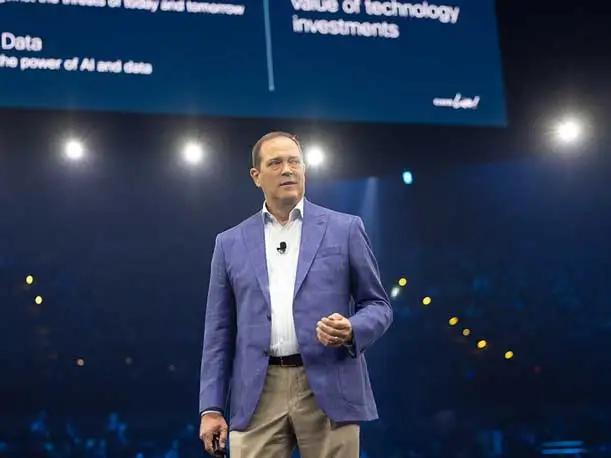
Robbins (pictured) revealed during the company's second fiscal quarter of 2025 that the tech giant was on track to surpass $1 billion worth of AI infrastructure orders in 2025 after seeing a surge in deals requiring networking upgrades for incoming AI applications.
Cisco reported AI infrastructure orders of more than $350 million during its second quarter, which ended January 25, bringing the total for the first half of Cisco's fiscal 2025 to approximately $700 million. While initially, AI traction was primarily driven by hyperscale cloud buildouts, the enterprise has this year become interested in bolstering their infrastructure for the AI era because AI workloads require ultra-low latency and high throughput networks, Robbins said during Cisco Live 2025 in June.
According to research from Cisco’s 2025 AI briefing that was published in June, 97 percent of IT leaders see modernized networks as critical to deploying AI, IoT, and cloud. Ninety-one percent of these leaders say they are increasing their network investments as a result.