The 10 Hottest AI Networking Tools Of 2025
An increased focus on networking and the infrastructure to support AI means a bevy of new and upgraded AI networking tools and platforms for enterprises this year.

It’s not hyperbole to say that AI is reshaping the networking industry, and no vendor, regardless of size, is immune.
AI networking is about simplifying network operations for IT teams and channel partners, while increasing efficiency, security and reducing costs. In fact, 40 percent of enterprises will deploy dedicated GenAI network fabrics in their data centers, specifically designed to be cost- and performance-optimized for the unique demands of AI workloads by 2027, according to market research firm IDC. That’s because enterprises have an increased focus these days on network infrastructure needed to support AI and AI use cases.
As such, networking market leaders and specialists are heeding the call and building out and adding new features to their AI-powered platforms for network and security management, with custom dashboards that allow teams to work together in ways they haven’t before, including NetOps, SecOps, and DevOps teams.
Here are ten of the hottest AI networking tools and platforms that solution providers should know about right now.
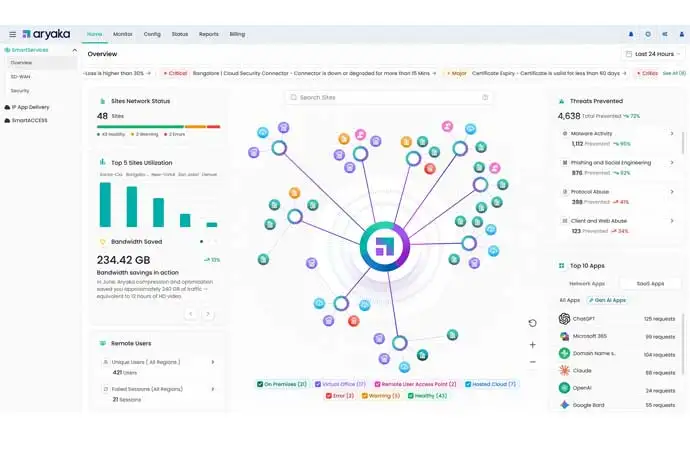
Aryaka Unified SASE as a Service 2.0
Aryaka this year unveiled major updates to its Unified SASE as a Service platform, which was first introduced in 2024. Aryaka's Unified SASE as a Service version 2.0 offers customers and partners a highly attractive one-platform approach to networking and security, with an immediate, near-term upsell opportunity for partners, the company told CRN. Unified SASE as a Service 2.0 as of November includes Aryaka Universal Zero Trust Network Access (ZTNA), Aryaka AI Secure, and Next-Gen DLP.
In February, the company added its AI Observe, which joined AI Perform that was already on the platform to arm enterprises with increased visibility into issue or security incidents and help reduce alert fatigue, Aryaka told CRN.
Unified SASE as a Service 2.0 is available today via a consumption-based buying model.
Cisco AI Canvas
The tech giant took to Cisco Live 2025 in June to uncover AI Canvas, a generative AI user interface for customer dashboards that lets NetOps, SecOps and DevOps teams collaborate and optimize operations while reducing IT strain, according to the company.
Cisco's main tool in its “AgenticOps” toolbelt is AI Canvas, which uses Cisco’s Deep Network model, one of the most advanced networking LLMs that has been fine-tuned and trained on more than four decades of Cisco expertise, from CCIE-level content to Cisco U. courseware. The data is constantly being vetted for accuracy and will continuously learn based on telemetry that Cisco will constantly provide, the company said.
AI Canvas is currently part of Cisco’s unified management platform that now brings together management of Meraki and Catalyst devices in one platform that supports any cloud, on-premises or hybrid deployment that a business chooses. In October, Cisco announced that AI Canvas will be brought into Webex Control Hub, Cisco’s central interface for collaboration management. The company also said in November when it announced plans to buy NeuralFabric that the company’s technology will work with AI Canvas.

Dialpad’s Agentic AI Platform
While not considered a networking provider per say, Dialpad in October launched an agentic AI platform that can help businesses and channel partners act as developers to build autonomous voice and chat agents that go beyond simply retrieving answers.
The cloud communications provider’s agentic AI platform will let businesses create and deploy agents in under 30 minutes using no-code templates for retail, recruiting and automotive verticals that are baked directly into the company’s communications or collaboration platform. The agents can handle authentication, routing, scheduling, and order management with seamless human escalation when the AI reaches its limit, according to Dialpad.
The technology is based on DialpadGPT, a large language model (LLM) that the vendor developed in 2023 that at the time was built on more than five years and 5 billion minutes of proprietary conversational data. DialpadGPT’s generative AI-powered LLM is less expensive, faster and safer than many competing products because it runs on Dialpad’s own data, according to the San Francisco-based company.
Extreme Platform One
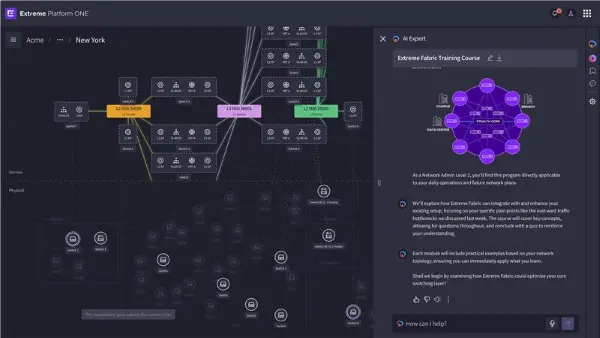
First revealed in December 2024, Extreme Networks in July made generally available Extreme Platform ONE, the networking specialist’s unified management platform that’s instilled with AI.
Extreme Platform ONE boils down network and security management by bringing the tools into one platform for enterprises, including products from third-party networking and security vendors, such as Microsoft. While the typical networking or security professional logs into four to seven different applications, Extreme Platform ONE has AI baked in to radically simplify the network management experience by “composing” a workspace unique to the user, with every application they need in one place, the company told CRN.
The Morrisville, N.C.-based company said that as a result, up to 90 percent of manual work can be reduced and resolution times cut by up to 98 percent.
F5 Application Delivery And Security Platform
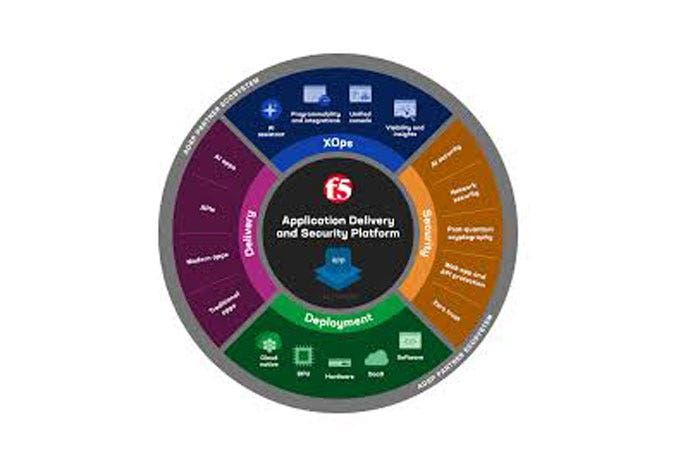
F5 in February launched its application delivery and security platform (ADSP) to “meet the moment” of application security and performance.
The ADSP converges F5’s three separate point products — BIG-IP, distributed cloud services, and NGINX technology — into a single place for complete delivery and security for every application, according to the company. The platform addresses high-performance load balancing, multi-cloud networking, full web app and API security, and AI gateway capabilities.
F5 has pledged to continually evolve its flagship ADSP. To that end, the company announced the addition of a new AI assistant and AI security features in July. F5 in December announced a handful of new features and upgrades including new API discovery capabilities, improved threat detection, and optimized network connectivity, according to the Seattle-based company.
HPE Aruba Networking Central
HPE Aruba Networking Central, the company’s flagship, AI-powered management platform, got quite the turbo boost in 2025. In April, the platform was injected with zero trust security elements. HPE at the same time added network access control directly into the platform as the company bolsters security around connectivity and hybrid cloud operations for enterprises. Earlier this month, HPE moved the newly acquired Juniper Mist LEM and Marvis AI virtual assistant capability into HPE Aruba Networking Central, which will be available to users in Q1 2026. The company is also moving AI-based client profiling capabilities and AI-based organizational insight technology into the highly regarded Mist AI platform.
A big benefit to customers, HPE Aruba Networking Central can now support four distinct deployment options, including virtual private cloud and on-premises, to help enterprises and government entities satisfy regulatory constraints and adherence to stringent security standards such as GDPR, FINRA, and SOX, the company told CRN in April.
Lumen NaaS Platform
First unveiled in 2023, Lumen Technologies' Network-as-a-Service (NaaS) platform gives customers flexibility in how they buy, use and manage their networking services. The company told CRN in August that the platform had surpassed 1,000 customers due to the rapid growth of new enterprise AI infrastructure demands.
Additionally, Lumen in May introduced Lumen Connectivity Fabric, a set of network services that can be remotely managed via the cloud. Services on the digital platform include connectivity, infrastructure, security, and communications services, as well as media and entertainment. Taking the next step in that strategy, Lumen in July introduced the Lumen Connected Ecosystem, which customers can use to purchase, provision and manage their network services as easily as they do their cloud solutions, such as NaaS, according to the company.
Meter Command
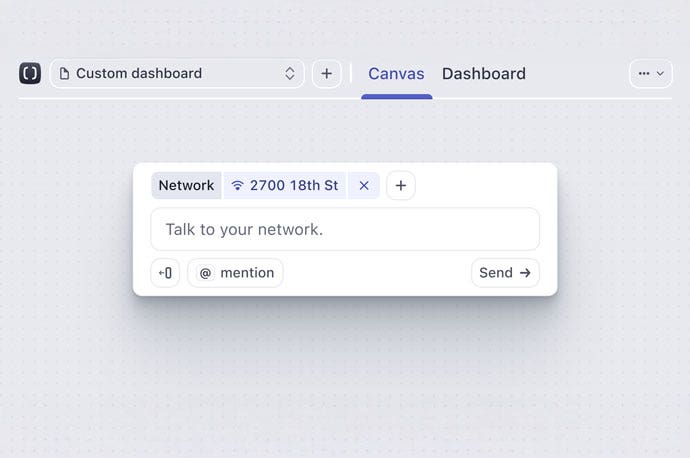
Meter Command is the NaaS specialist's generative AI interface for network management that lets enterprises use natural language control to manage their network stack, Meter said.
First introduced in 2024, Meter Command lets users collect information, take action, and generate and interact with dashboards that fit into their workflows. The offering is trained on carefully curated real-world networking data and synthetic network data for complex edge cases, according to the San Francisco-based company.
Meter Command is now directly integrated into Meter Support and Operations, which the company said means that the offering can now automate issue resolution and support beginning when a customer or partner opens a ticket. Meter told CRN in October that about 85 percent of tickets now include model-generated insights or actions, with the remaining 15 percent reserved by Meter for control.

Nile Nav
NaaS specialist Nile, which is backed by former Cisco CEO John Chambers, kicked off the year with the introduction of a new application for iOS and Android called Nile Nav that lets qualified partners and end customers design, deploy and manage its Campus Network-as-a-Service offering, Nile Access Service.
The app allows users to design campus networks with more precision and more quickly, taking the deployment time from weeks or months for traditional network architectures to days with improved accuracy, the startup told CRN. The app can also help automate the entirety of the network life cycle and address issues that stem from design and deployment that impact about 60 percent of network issues, the company said.
Alongside the mobile app, Nile also announced a new training and qualification program, Nile Academy, for its partners and customers using Nile Nav.
Riverbed AI Observability Platform
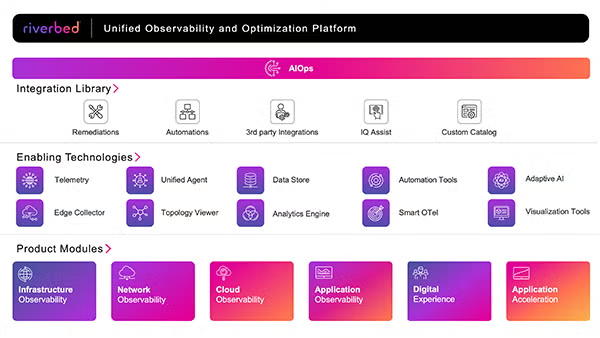
Riverbed in 2024 launched an open, AI-powered observability platform aimed at filling in the blind spots that exist in complex IT environments that include public cloud and remote work environments, as well as zero Trust and SD-WAN architectures.
The platform, available now through channel partners, works by collecting full-fidelity data across a customer’s entire IT stack, including data from networks, IT infrastructure, applications, user experiences, endpoints, and the cloud. The flagship observability platform in April was expanded to include generative, predictive and agentic AI features, as well as a module for measuring unified communications performance and an expanded packet capture feature that includes visibility for packet connections outside an organization’s network.