Cisco Reveals New Silicon One Offering, Enhanced Nexus One At Cisco Live EMEA
“We’re still at the early stages of AI buildouts. … Cisco’s here to be able to help [enterprises] really get value out of these AI technologies,’ Nick Kucharewski, Cisco Silicon One’s senior vice president and general manager, tells CRN.
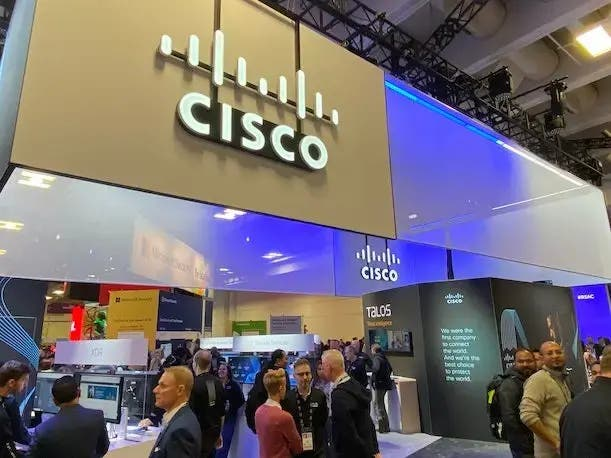
Cisco Systems is making AI infrastructure buildouts accessible to more than just hyperscalers and the largest of the large service providers with the introduction of the new Silicon One G300, an advanced systems portfolio, new optics and an updated Nexus One operating model.
The networking giant took to Cisco Live EMEA 2026 in Amsterdam Tuesday to unveil its latest networking innovations to help enterprises specifically get the most from their network infrastructure, extend AI networking to every site, and power and scale their AI use cases, Nick Kucharewski, senior vice president and general manager of Cisco Silicon One, told CRN ahead of the event.
“We’re building networks with hyperscalers [and] we’re starting to build with some of the neoclouds now. But really where we see the next wave of AI deployment starting to happen is within the enterprise customer base,” Kucharewski said. “We’re still at the early stages of AI buildouts. We think that inference and agentic workloads are the next wave of technologies that are going to hit our customers. It’s going to expand and broaden the customer base, and Cisco’s here to be able to help that customer base really get value out of these AI technologies.”
[Related: Cisco 360 Program Launch ‘Excites’ Partners Ready To Tackle AI Opportunities]
The new Cisco Silicon One G300 102.4-Tbps programmable switching silicon has been designed to power gigawatt-scale AI clusters for training, inference and real-time agentic workloads while maximizing GPU utilization with a 28 percent improvement in job completion time.
Cisco Silicon One, first introduced in 2019, is playing critical roles in major networks around the world, according to Cisco.
Powered by the G300 are the new next-generation Cisco N9000 and Cisco 8000 fixed and modular Ethernet systems, which offer 102.4-Tbps switching speeds in systems designed for hyperscalers, neoclouds, sovereign clouds, service providers and enterprises looking to scale out their AI infrastructure. The new offerings are available as a 100 percent liquid-cooled design that, along with new optics, will let end users improve energy efficiency by close to 70 percent, according to Cisco.
The networking giant is also introducing new 1.6T OSFP (Octal Small Form-factor Pluggable Optics) that will offer customers high performance and reliability, 800G Linear Pluggable Optics (LPO), and an expanded portfolio of Silicon One P200-powered systems that build on the introduction of 51.2T systems for hyperscale deployments. The new P200-powered N9000 systems and expanded OS support on 8223 systems offer data center interconnect, universal spine, and core and peer routing capabilities to neoclouds, service providers and enterprises, Cisco said.
Lastly on the networking front, Cisco has enhanced Nexus One, its data center networking offering that brings together Cisco’s NX-OS VXLAN EVPN and Cisco ACI fabrics based on open standards and gives users a consistent experience across the two fabrics by way of the Cisco Nexus Dashboard. The updates to Nexus One will make it easier for enterprises to operate their AI networks, whether they are on-premises or in the cloud. It’s this complexity that stands in the way of enterprises scaling their AI data centers, Cisco said.
The new products will be available and shipping this calendar year, according to San Jose, Calif.-based Cisco.
The Partner Opportunity
Understanding AI use cases that enterprises want to deploy and being able to deliver those in a way that these end customers can consume it will be critical for Cisco’s channel partners helping their clients with AI networking, Kucharewski said.
“The adoption [by] those enterprise customers of AI is going to require that the channel ecosystem be strong,” he said. “When I work with hyperscalers, some of them might just buy that silicon from me and then they go build everything else themselves. Most of the enterprise customers that I talk to are looking for, ‘What’s the value of these AI workloads that I’m deploying? How do I get more efficiency out of what I’m doing today?’ So, I think for the channel partners, it’s about understanding the use cases that are interesting and relevant to the customer base that they’re trying to address and coming to them with solutions, not coming to them with the bucket full of parts.”