Cisco Unveils ‘Foundational’ Universal Quantum Switch To Scale The Quantum Internet
‘There’s going to be very few people that understand how to operate, build and operate these things … technology is moving so fast now that most of our clients can’t keep up with that. They’re having to rely on partners more and more,’ one executive at a Cisco partner says of the emerging quantum opportunity.
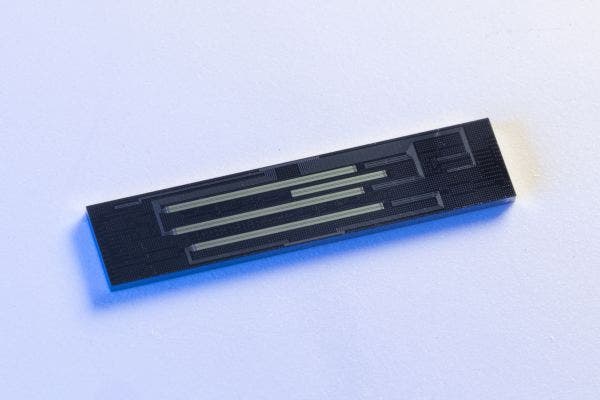
Cisco Systems has introduced its first universal quantum switch and what the tech giant is calling a “foundational” piece in building a scalable quantum internet.
“Our focus at Cisco is to build that quantum network … we are building that quantum networking stack all the way from the ground up. This is fundamental innovation. [This is] something that has not been done before,” Vijoy Pandey, senior vice president and general manager of Outshift, Cisco’s emerging technology and incubation group, told reporters and analysts ahead of the Thursday launch.
Pandey highlighted the significant challenges in quantum computing, such as the need for thousands to millions of qubits to solve complex societal problems, such as financial modeling and drug discovery. Current quantum computers operate with about 100 to 1,000 qubits, but advancements are expected to reach tens of thousands in the next few years.
“There’s a big gap between the number of qubits you need and the number of qubits we have to solve for some of those really hard society-impacting problems. One option to bridge this gap is to build bigger and bigger quantum computers, and that we will continue to do. The other option, and this is borrowing from the paradigms that we have learned from cloud computing, is you can connect a whole bunch of these quantum computers together through a quantum network and make all of these entities operate as a singular, large, distributed quantum computer,” Pandey said.
[Related: Cisco Reinstates Compute Deal Registration; Partners Cheer Reversal]
Cisco’s strategy involves building a quantum network to connect multiple quantum computers, aiming to accelerate the development of large-scale quantum computing.
“Our north star vision is to be able to connect all of these quantum computing nodes through this quantum network to enable distributed quantum computing and to enable acceleration of that roadmap to get to hundreds of thousands of qubits, and millions of qubits faster than what it would take through vertically scaling these compute nodes singularly,” he said.
Pandey said that the classic point‑to‑point approach of today’s internet won’t scale for quantum networking, comparing it to “trying to connect every human being on the planet with tin cans on a wire.”
“It becomes completely unmanageable. You cannot get to scale billions of users and tens of billions of machines by connecting all of these entities and points, through point connections, through direct connections,” he said.
That’s where the “big foundational piece,” or Cisco’s new universal quantum switch comes in, he added.
The new universal quantum switch addresses what the tech giant says is among the main barriers to building a quantum network — information loss and the need for a large number of qubits. The switch can route quantum information between systems while preserving it at room temperature on existing telecom fiber using a Cisco-patented conversion engine that translates between all encoding and entanglement modalities at input and output, according to San Jose, Calif.-based Cisco.
In proof-of-concept experiments, the switch preserved quantum information with less than 4 percent degradation in encoding and entanglement fidelity, Cisco said.
“It is truly a first of its kind piece of tech that allows us to move from direct, point-to-point connections, the tin cans and a wire, to building out the quantum internet at scale,” Pandey said.
While quantum networking is still firmly in the research phase with limited near‑term commercial opportunity for the channel, Maryland Heights, Mo.-based longtime Cisco partner World Wide Technology (WWT) is already engaging with vendors including Cisco, Nvidia, and a handful of quantum startups to understand where the technology is heading, according to Neil Anderson, vice president and CTO of cloud, infrastructure and AI solutions for WWT.
For now, the most immediate customer demand is around post‑quantum encryption, while quantum networking itself remains more of an education and long‑term investment play for partners, he said.
“It’s going to happen, which is why we are investing in it,” he said. “There’s going to be very few people that understand how to operate, build and operate these things … technology is moving so fast now that most of our clients can’t keep up with that. They’re having to rely on partners more and more.”
Though quantum networking is still nascent, Cisco’s Universal Quantum Switch announcement represents a meaningful leap toward what’s next, Alex Pujols, Cisco's vice president of Global Partner Engineering, told CRN in an email.
"Our partners are already fielding questions around post-quantum cryptography, and the next frontier is actually building quantum networks from the ground up. Cisco is leading that charge, and the partners joining us today are the ones helping us define what's possible tomorrow. This latest research prototype opens the door to an entirely new category of high-value consulting, managed services, and multi-vendor integration opportunities for partners. Just as we built the backbone of the internet in close collaboration with our partner ecosystem nearly 40 years ago, we intend to do the same with quantum networking.”
Cisco has already developed a quantum entanglement source chip and a software stack, with plans to integrate these into a comprehensive quantum networking stack, Pandey said.
To that end, Cisco Quantum Labs in September revealed quantum networking software that includes three research prototypes to advance Cisco’s quantum strategy. The company at the time said that it is taking the same “full-stack” approach to its quantum networking strategy as it has with its longstanding and industry-leading networking portfolio.