HPE CEO Antonio Neri: Five Boldest Statements From HPE Discover 2026
‘With our combined HPE networking organization our goal is to deliver the best user and (network) operator experience possible,’ says HPE CEO Antonio Neri.
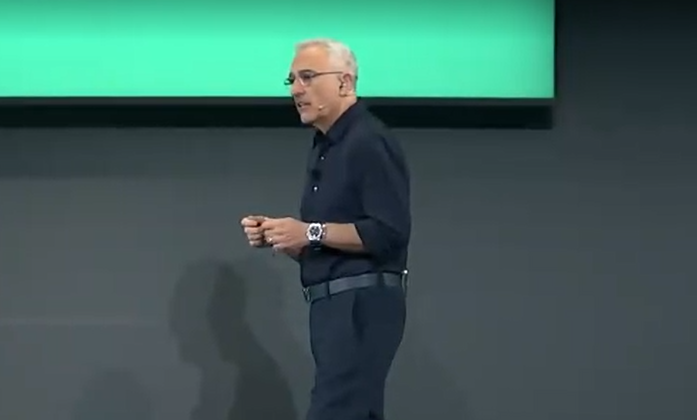
HPE CEO Antonio Neri told thousands of HPE partners and customers in his HPE Discover keynote address that architecting for AI starts with the self-driving network.
“With our combined HPE networking organization our goal is to deliver the best user and (network) operator experience possible,” said Neri. “We will do this through our next generation of secure, self-driving networks across every domain. They fix problems securely before they impact the (user) experience. We make new robots faster and easier and fundamentally transform how you manage your network.”
Neri’s keynote address before several thousand customers and partners came as HPE unleashed a self-driving network blitz that included breakthrough new self-driving network breakthroughs in both the data center network and campus and branch.
Among the announcements for data center networking were AI- based networking “root cause analysis” aimed at rapidly diagnosing and proactively fixing potential data center network issues; and predictive analytics” across data center infrastructure including power, temperature, optics, and system health to identify potential issues before they become outages.
HPE also made good on its pledge to bring the popular Juniper Mist AI self-driving network engine capabilities to HPE Aruba Central in a milestone that comes just 11 months after the company completed its $13.4 billion acquisition of Juniper Networks. In addition, HPE has brought Aruba CX switching capabilities into the popular Juniper Mist platform with Marvis AI support for proactive troubleshooting and remediation of CX switches.
“Whether you are on HPE Aruba Central or HPE Mist you get the full benefit of our accelerated innovation on both,” said Neri. “Nobody is left behind on the road to self-driving.”
Neri told partners and customers to first and foremost “architect deliberately” for the AI era. “The choices you make today will define your success tomorrow,” he said. “Second start with the network. Make your network the core foundation of your AI and cloud solutions and finally choose HPE as your partner to bring the full stack to help you build your AI future with confidence.”
Here are five of Neri’s boldest statements from his keynote address and his press conference at HPE Discover.
A ‘Fantastic’ Networking Portfolio- “Equal Or Better Than Cisco’
In networking I think we now have a fantastic portfolio, and that portfolio is equal or better than Cisco in many ways because we believe our architectures are modern, cloud-native, and AI-driven. AI clearly shines all the way through it whether it's campus or branch or even the routers. Go look at some of the demos with the (HPE) PTX (high-performance router) router which can self-optimize itself. That generally tends to be one that people want to have their hands on the command lines (of the router).
Some of the demos are a little bit scary in many ways. To give you an example, the PTX12000 (an ultra-dense modular Juniper router) is maybe three-quarters of a rack. In just one rack you could put the entire population of New York and London streaming concurrently a movie. Think about the performance of that rack. It is insane! That’s only 800K (800,000 packets per second). We are now ready for 1.6 terabits (of data per second) which is going to come with the next generation of our silicon which is Express 5 to Express 6. Then on prem into the network we have our MX routers where we already have 1.6 terabits with Trio silicon.
Taking Share In Campus And Branch Networking
In campus and branch it is about taking share, taking share with our unique proposition which is our AIOps and the unique experience where people now have Mist in Aruba central. You saw today we can offer all the deployment models that customers need. If it is cloud based it is (Juniper) Mist. If it is on prem virtual private cloud it is Aruba Central. Both are now cross-pollinated and the infrastructure is dual boot meaning it can be instantiated by Aruba or Mist. You saw that we brought the (Juniper) Marvis engine to Aruba Central and we took the Aruba CX (switches) into Juniper Mist. That is a massive benefit. And remember the Aruba CX portfolio is our own silicon.
A Unique Storage Architecture Growing Fast And The Virtualization Opportunity
In storage, I think what you see is a unique architecture (with HPE Alletra) that is growing fast in the market for a number of quarters- triple-digits.
The fact that we are able to architect something that is totally disaggregated so compute and storage within the storage appliance can scale independently and really be cloud native and AI driven and address all the protocols – block, file and object- is just unique.
Complexity is growing, virtualization costs are growing. We created an amazing alternative to VMware both with Morpheus Enterprise and VM Essentials. What we just did with Morpheus 9 is we integrated networking into it. So now software defined networking is part of the micro segmentation isolation of the network with full lifecycle automation. That’s in addition to the fact that VM Essentials provides an enterprise grade hypervisor. That is necessary to deliver applications because without virtualization you can’t do anything.
Many customers have finished their journey to the cloud but everything we do is to provide a unified (GreenLake hybrid cloud) operating model experience. That is also where we have built a tremendous amount of intelligence with both copilots and agentic processes.
It is amazing how far we have come (with GreenLake) in less than six years. We now have 50,000 customers on the platform, seven million devices under management and the business continues to be very sticky from an experience perspective. All of the software is fully subscription-based through the cloud, which is GreenLake.
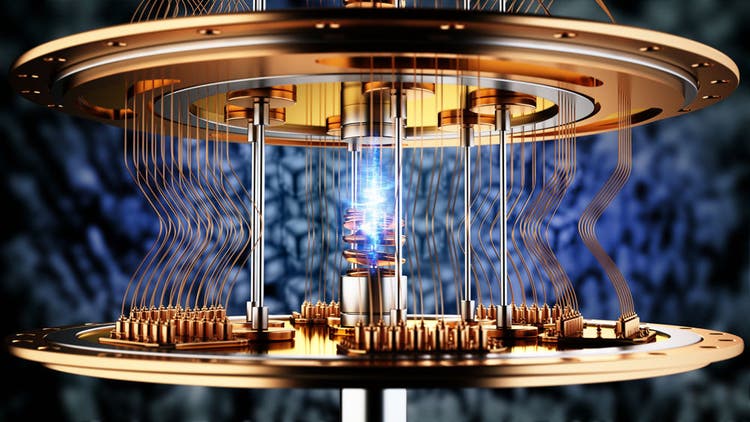
The Convergence Of AI And Quantum Computing
Over time what you are going to see is the convergence of AI and quantum (computing) at some point.
That is why the question about why (HPE) Cray (supercomputing) is important because we don’t have to do compute at scale through traditional computing because quantum will not replace traditional computing. It will be another sort of accelerator in my mind like GPUs are today. It will do things uniquely well in certain areas but the ability to connect this environment across traditional computing, AI, computing and quantum computing comes down to one thing: the network.
The network is going to be the core tenet of that and then the software to be able to develop quantum applications needs to be developed in traditional computing. That’s why this quantum alliance is so important (HPE announced at HPE Discover expanded relationships with eight companies to pave the way for practical and scalable hybrid classical-quantum applications in the future).
We are creating the frameworks and the standards for that so we can acclerate the development of these quantum applications to make quantum a reality, but not a replacement for everything we know, just as the cloud was not a replacement for mission critical computing and mainframes that still live today. HPE is uniquely positioned at that intersection.
Anticipating And Designing For AI Constraints
Architecting for AI requires looking ahead, anticipating and designing for the constraints that will shape the future. There is one challenge that we all need to overcome. Not just for our industry but for our society and our planet. That is power.
At its core an AI Factory is doing one thing: turning electrons into tokens. The US is on track to have a 19-gigawatt power gap by 2028. That’s roughly enough electricity to power 60 million homes. Data centers are expected to account for nearly half of US electricity demand through 2030. One customer, Siemens Energy, is taking up this challenge head-on, helping build the energy infrastructure the AI era requires. They are doing it by applying AI to their own business with HPE helping to deliver the AI foundation across networking, storage and compute.
Initiatives like this underscore a bigger point. As AI scales the future will not be defined by compute alone. It will be defined by how efficiently we can power it, cool it and connect it. That is why research becomes so critical.
For six decades, HPE Labs has helped shape the future of enterprise computing. Your next generation infrastructure will be operated with much greater intelligence, efficiency and transparency. Today our researchers are applying AI to improve AI systems themselves, making them more scalable and sustainable. This is where HPE has a unique advantage. We engineer the complete architecture from compute to servers, networking, storage, software and security. We apply that system expertise across the full stack.