HPE Networking VP Jeff Aaron: We Are The Only Vendor That Can ‘Proactively Detect’ And ‘Fix’ Network Problems Without ‘Humans’
“It comes down to the foundational elements of the self-driving network, and that’s what we’re going to keep pointing back to, whether it’s Cisco or anyone else that wants to kind of follow in our footsteps,” said Aaron in an interview with CRN.
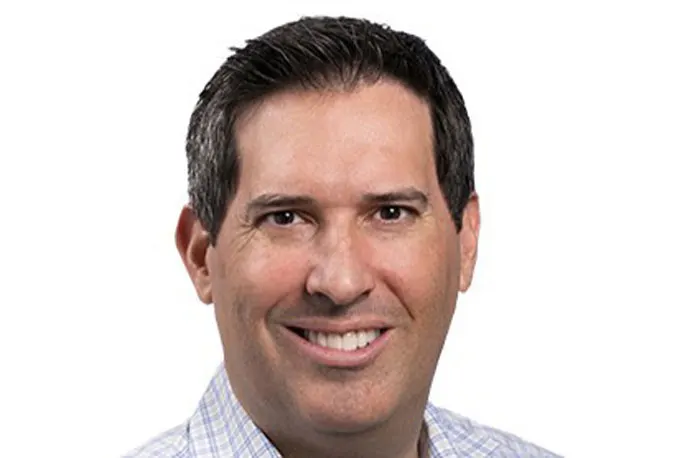
HPE Vice President of Products and Solutions Marketing for Networking Jeff Aaron said HPE is the only vendor that actually has the ability to “proactively detect” network problems and fix them without human intervention.
“It comes down to the foundational elements of the self-driving network, and that’s what we’re going to keep pointing back to, whether it’s Cisco or anyone else that wants to kind of follow in our footsteps,” said Aaron in an interview with CRN.
“Everything everyone is still talking about is being able to detect a problem and then flip it over to a human, and then have them fix it,” said Aaron. “They’re talking about coming out with things in a year or next year, whereas we’ve been shipping self-driving capabilities for years now. We have proven customers, proven partners getting value out of it today.”
Key to HPE’s self-driving network success is the 10-plus years of “real-world” experience with the Mist AI self-driving network platform, said Aaron. “All of the things that everyone is just starting to talk about has been part of our journey for 10-plus years and it just is accelerating with agentic,” he said.
HPE already has a common AI engine in Marvis across “wired, wireless, data center, routing and security,” said Aaron. “We already have it. So when our partners go in and sell a solution, it is a common solution. It is a common managed platform. It is common troubleshooting.”
“The vision that other folks are painting—we have,” he said. “It exists. What we’ve started to do with the HPE Discover announcements is continue to expand it not just within networking but to the rest of the HPE portfolio.”
HPE is gaining networking share, and in “many respects the competition has never been weaker,” said Aaron.
“It is all coming together,” he said. “We are clicking on all cylinders. The compute team is clicking on all cylinders. The hybrid cloud team is clicking on all cylinders. There is a vast AI market that is out there driving a lot of this. It is just a very exciting time to be at HPE right now. The product portfolio has never been stronger. In many respects, the competition has never been weaker. We have great partners that are taking us forward. It is extraordinarily exciting right now.”
Here is more of CRN’s conversation with Aaron.
What’s the big difference in how HPE is doing networks for AI and AI for networks and agentic era AI networking compared with Cisco?
It comes down to the foundational elements of the self-driving network and that’s what we’re going to keep pointing back to, whether it’s Cisco or anyone else that wants to kind of follow in our footsteps.
It keeps coming back to the same thing, which is you have to build the right foundation if you want to deliver agentic NetOps [network operations] and self-driving.
So there’s three things that we’re constantly pointing to as the kind of three pillars that differentiate us: The first is our agentic mesh framework. We are the only vendor out there that actually has the ability to proactively detect the problem and fix it without humans being involved.
Everything everyone is still talking about is being able to detect a problem and then flip it over to a human and then have them fix it. They’re talking about coming out with things in a year or next year, whereas we’ve been shipping self-driving capabilities for years now. We have proven customers, proven partners getting value out of it today.
So it’s proven with the efficacy that folks expect and want to use. So No. 1 it is the fact that we are autonomous, the fact that we have been pulling data for 10-plus years of real-world experiences, the fact that we combine that with synthetic testing and user experience.
All of the things that everyone is just starting to talk about has been part of our journey for 10-plus years and it just is accelerating with agentic.
No. 2 is the infrastructure. It’s the microservices cloud. We have the most proven microservices cloud in the industry. This goes back to [Juniper] Mist. It has been in the market for 10 years. It has been used by companies every day for years.
We already have a common AI engine across wired, wireless, data center, routing and security. We already have it. So when our partners go in and sell a solution, it is a common solution. It is a common managed platform. It is common troubleshooting. We have all of that.
The vision that other folks are painting—we have. It exists. What we’ve started to do with the HPE Discover announcements is continue to expand it not just within networking but to the rest of the HPE portfolio.
A big difference is we have GreenLake. GreenLake has been out for many years. We have a platform for bringing computing, networking and storage together. What we keep doing is building that platform—not announcing it. We keep adding new features.
No. 3 is security. The fact is none of this can happen if you don’t have the security built in. We have this unique advantage with Junos [network OS], where it runs on our routers, our firewalls and our switches. So there’s commonality so they all can contribute in an easier way.
A lot of our announcements [at HPE Discover] like the SASE Orchestrator is the perfect stepping stone to AI-driven SecOps [security operations]. Once you bring security and networking together like we have, then you can bring AI NetOps on top of it and really take things forward.
I feel like, No. 1, we have the AI networking framework, and No. 2 is we are out announcing things that are just years from what they are going to announce. They are announcing things that we have had for six or seven years like service-level agreements, synthetic testing.
What is the difference between how HPE views security and how you are integrating into the agentic era versus Cisco?
One of the benefits to our partners of Aruba and Juniper coming together is the breadth of the portfolio. If you think about it, we have NAC [network access control] and [Aruba] Central. We have SSC [Session Smart Conductor] from the acquisition we did a while ago. Then we bring in the firewall capabilities from [Juniper] SRX [firewalls]. By the way, if you look at CyberRatings’ most recent report we have the highest efficacy in the industry for firewalls.
When you bring all that together we have a very, very powerful security portfolio. Our vision is security has to be done in conjunction with networking. It’s the whole concept of integral security. So networking and security have to participate and share in both detect and protect, and ultimately it needs to come under the self-driving network umbrella.
Admittedly, some of the EdgeConnect stuff is farther behind being on Mist or Central than some of the other solutions out there. But we have a commitment that we are getting it there. We will bring it there.
So our partners looking to bring a lot of the AIOps pixie dust that we have and combining it with AI already being used for SecOps within EdgeConnect like [AI Assistant] SASE Copilot can be assured we are going to do that. I think our vision is fairly clear. We have all the elements together. Now we’re going to continue to bring them together with things like the [SASE] Orchestrator and then continue to build on that with even more capabilities bringing Mist and Central on top of that.
We are doing it. We are executing on it. We are firmly committed that security is hugely essential to what we are doing. At the same time, you cannot build a security strategy without a networking foundation and we have both.
Talk about the new unified AI-native SASE Orchestrator and what it means to partners.
SASE is the ultimate proof point of networking and security convergence—the very name is a combination of SD-WAN and edge security. So it just made natural sense to combine them within a single Orchestrator platform. We just wanted to make that super easy so whether you are deploying security policies or networking policies, you can do it together. So they can kind of see each other and feed off each other.
If you are a partner that is actually managing both sides of the house, you only have one dashboard you have to use. You don’t have to go learn different tools. I think that’s extremely important.
As part of that, we are building it into EdgeConnect Orchestrator so you automatically get AIOps we already had. So we had the SASE Copilot capabilities. That is already there and it is built in.
Where we want to go is build onto that with some of the Marvis [AI engine] capabilities that came from the Juniper Mist acquisition. That was not part of this [HPE Discover] announcement, but that is part of our vision. We have said very openly that Marvis is our AI engine across the whole self-driving network, so it is obvious that we are going to continue to integrate what we already have on the EdgeConnect side and the SASE side with our Marvis capabilities.
How important is integration of the HPE Juniper networking portfolio into HPE AI Factory-validated design?
For clarity there is an HPE AI Factory with Nvidia. What we announced is [integration] with the HPE data center portfolio. The former is HPE compute in conjunction with Nvidia GPUs with Nvidia Spectrum networking. So the traditional HPE AI Factory is not using the Juniper switches and the Juniper self-driving capabilities.
The new version that we launched [at HPE Discover] is using the Juniper switching with the Juniper fabric management and optimization with the self-driving network with Marvis and the Nvidia compute. I just want to be clear: That’s an HPE-validated solution. That’s not an Nvidia reference architecture. For us it is important because it brings a lot of value to customers. It also gives customers choice.
If a customer wants a full-stack solution from Nvidia soup to nuts—great. We support that and you can even sell it in conjunction with some of our routing solutions because it complements Nvidia Spectrum. No problem there.
If customers want a different solution and they want separate switching from their compute vendor, if they don’t even want to use Nvidia for compute, we just want to be able to offer options. Honestly, it comes down to what the partner and the customer want, and we need to be able to give them validated solutions that we stand behind, where we say, ‘From HPE’s standpoint there is no issue doing this. We have done it before. We stand behind you doing that.’ That is what this new announcement is about.
How big a deal is it putting HPE into the Aruba CX switches?
Obviously to make the self-driving work it can’t just be software. It has got to be hardware. Ultimately, our customers just want to buy a piece of hardware and know it’s going to work on whatever platform they want. There’s investment protection. So whichever platform they use they want to have as many options as possible to fit under that.
So we started with the access points. We announced a dual-boot access point last December, which is now GA [general availability]. You’ll see more access point variants coming soon.
The first switching we did is the CX. So the CXes were managed via [Aruba] Central. Now they’re also managed via Mist. That basically means a CX customer can choose the managed platform they want, or it means now a Mist customer can choose either an EX or CX platform.
It was a very strong move in terms of what we want to do. It is one of many moves that we are going to continue to do to continue to bring hardware under both portfolios.
When you look at moving Mist into Aruba Central, how important is that?
It’s big. We had started to do this last December. We had already started to move things like the Marvis large experience model into Central, and we started to move things from Central to Mist. So we’ve already started the cross-pollination there.
What we’re showing here is we’re doing more. We’re just continuing our commitment to that. We want to make it very clear that no customer is being left behind. If you’re an Aruba Central customer, we’re going to continue to bring the great things from Marvis over and if you are a Mist customer we are going to bring core things from Central over.
The whole point here is they are both on our microservices architecture, so we literally can pick up a feature and move it to the other. Just like LinkedIn today runs on iPhone and Android, we’re basically saying, ‘You’re getting a self-driving network, whether you’re running it on Central or on Mist. Ultimately, the experience should be the same. You shouldn’t worry about which platform you’re on.’ So this is just another big step forward to reassure folks that Central and Mist are along for the journey.
What does it mean for partners that you are bringing this Mist capability to campus and branch with Aruba Central?
Campus and branch have always been the farthest on the journey to self-driving. This just makes it even easier for more customers to take advantage of that with flexibility and investment protection.
The other thing that’s interesting about this announcement—which we constantly have to reinforce—is self-driving is not just campus and branch. Data center is a great example. Data center is pretty far along in the self-driving journey. Data center has had Marvis actions in the data center. There have been Marvis minis, which are user experiences in the data center. Now we’ve added even more predictive analytics around things like optics, and we’ve added even more root-cause analysis using agentic modeling. That’s just an example here of how Marvis has its tentacles in the entire portfolio. It’s a consistent AI engine and a consistent AI assistant in the campus and branch and data center. On the Discover main stage you’ll see it is in routing. Again, we are going to start bringing it into security as well. That is the vision, and we’re executing on it.
What’s the biggest data center networking breakthrough from your perspective?
For the industry the fact that we continue to expand with new inference switches, the fact that we are in AI Factory, all of that is super exciting. We are the first liquid-cooling switch, we are the highest-density router. It is super, super interesting. If you are a partner selling AI data centers, that is huge.
The other benefit that solution providers get when we do advancements in AI data center is it also benefits the rest of our portfolio. So, for example, when we added a new liquid- cooling switch for AI data centers that means that also exists now in our QFX [line of switches]. So a partner selling into any data center benefits from that. Even partners not specifically selling an AI data center solution, they get value from HPE innovating in that space.
What are you hearing from customers with regard to AI networking solutions?
One is obviously performance matters. We know that. You have got to have low latency. You have got to have high throughput. You’re starting to see a shift. It’s not just AI for training. It’s now more to inference. So once the models are trained, how do you get access to it with localized data centers at the edge? So you need the routers and switches to be able to accommodate that, which is why we’ve been innovating, coming out with the MX301[edge router] and the QFX5140 [networking switch].
What we’ve seen a lot from customers is [network] operations matter back to the self-driving network. It needs to be easier and quicker to deploy. It needs to be self-healing. If something breaks during an AI training session, that is a lot of money if that training session doesn’t work. It does need to be self-healing and self- optimizing. It is more important in those AI environments for folks to have it.

How important is the Ethernet networking support that HPE is providing in networking?
Standards are huge. I’ve been in networking for 35 years and the open standards always win. Ethernet always wins. It’s because the cost metrics are better, the interoperability is better, the pace of innovation is better, there’s no vendor lock-in.
Time and time again the open-based protocols are going to win. I think you’re even seeing that in AI data centers. Ethernet has replaced Infiniband. Infiniband was a great short-term solution, but ultimately when open standard technology catches up in terms of performance, which it has, it wins. That’s why we’re very committed to open standards. We’re committed in the data center, for example, to using Ethernet. We are the first vendor to come out with an Ethernet-scale switch for the AMD Helios platform. That was huge.
All of our scale-outs are all using Ethernet. We believe in that. That is how we built the company. Going back to Juniper, it is all built on routing for the internet, which is all based on IP and Ethernet.
SONiC [open source] is another example. The QFX5140 is built on SONiC. We need to be able to support different standards that our customers want to deploy. We are very committed to that.
Among the most important announcements at Discover is new data center self-driving network capabilities with root- cause analysis and predictive analytics. How important are those for partners?
This goes back to the comment I made before, where data center is nipping at the heels compared with wired/wireless for us in terms of full self-driving. That is again because we are able to use that common framework and the common AI engine.
What we announced here at Discover, for example with the predictive capability, was a capability we had in other areas and now we’ve applied to the data center with optics. That is huge. Everyone wants to be able to predict problems.
The agentic reasoning using TAC [Technical Assistance Center] support cases, we were doing that with wired/wireless for years. That’s a big differentiator for efficacy. The fact that it is in now in the data center means that we can be that much more trusted to our end users and partners.
I think it is huge because it shows we are delivering on the vision. It is not just about a future vision. It is about executing now with real features that are out there now that our partners and customers can use today. That is in the data center. That is in campus and branch. That is everywhere.
What kind of customer wins have you had converting Cisco shops to self-driving HPE network shops, and what are the biggest benefits for customers?
If you look at all the customers in aggregate, the benefit they get is operational efficiencies which ultimately mean cost savings, less time troubleshooting, less time fixing a deployment that was fat-fingered. You get better end-user satisfaction. The network just works. It just does what it is supposed to do.
Ultimately, you are able to better align to the business need. The network isn’t plumbing anymore. It’s a strategic part of what you are trying to achieve. So that’s why when customers see it, they can’t unsee it. They actually see these are trusted actions that are easy to turn on and are in effect. We actually show you exactly how we made the decision and what we fixed. You can verify that is what you would have done anyway. It is all transparent. It is highly accurate. That is what customers like about us. It is proven. It is true and it’s robust. That’s why we are gaining market share.
Talk about gaining market share and how customers are responding nearly a year into the HPE acquisition of Aruba.
In certain areas like wireless and wired, we are taking share. You saw the recent earnings report: We continue to grow, especially in AI data centers.
How does it feel to be moving forward this fast about a year into the acquisition of Juniper?
The pace of execution is fantastic. [HPE Networking Executive Vice President, President and General Manager] Rami [Rahim] is immensely proud of the pace of innovation. It hasn’t been slowed down by the acquisition. It has increased, which we have proven with the announcements.
It is innovation not just within the business unit. It is innovation across business units. Our data center switching has been integrated with OpsRamp. It has been integrated with Morpheus. Now it is integrated with Compute Ops Management and GreenLake. That shows we are all coming together and there is a commitment to that.
The other thing [HPE President and CEO] Antonio [Neri] has said is networking is becoming a cornerstone for HPE. It is a foundational element to what we’re doing. Did you see the Mercedes F1 commercial about the self-driving network? That is awesome.
Our business unit is making a difference to all of HPE, and we are a key element to the whole agentic enterprise that spans all the business units.
Look at what the stock has done. It is all coming together. We are clicking on all cylinders. The compute team is clicking on all cylinders. The hybrid cloud team is clicking on all cylinders. There is a vast AI market that is out there driving a lot of this. It is just a very exciting time to be at HPE right now. The product portfolio has never been stronger. In many respects, the competition has never been weaker. We have great partners that are taking us forward. It is extraordinarily exciting right now.
You said competition is weaker. Can you expound on that?
We are way further ahead in self-driving than anyone else out there. That comes from the fact that we have been doing it for 10- plus years. The fact that other folks are just getting into the game with agentic, which is like a year old, is indicative of the fact that they are chasing instead of leading in this environment. That is what I mean when I say they have never been weaker in doing that.
In many respects, a lot of the other competition has to deal with bringing different solutions together, which has taken them over a decade. You saw what we did in six months.
We have the one platform—the self-driving network—and one vision with two implementations out there but we have been able to show we can move across both very easily. We are just moving at a pace that other folks aren’t able to keep up with.
Is there anything you are doing to bring the self-driving network to storage?
Nothing has been announced there so I don’t really want to go into anything we might do in the future looking at storage. One thing I’ll point out is obviously GreenLake is the platform that manages compute, storage and networking. Some of the announcements and integration we have done with GreenLake brings us into the storage domain as well.
We are looking at GreenLake as an overarching umbrella. We are doing our part to integrate with them.