HPE’s Jeremiah Jenson On Networking, SASE Channel Investments And ‘Great’ Sales Alignment In The Field
‘We have doubled the sales force, and we have doubled the channel sales force,' said Jenson. ‘We have a very clear vision as to where we are going with our networking portfolio. We are doubling down with partners, and we are driving really hard against our goals there.’
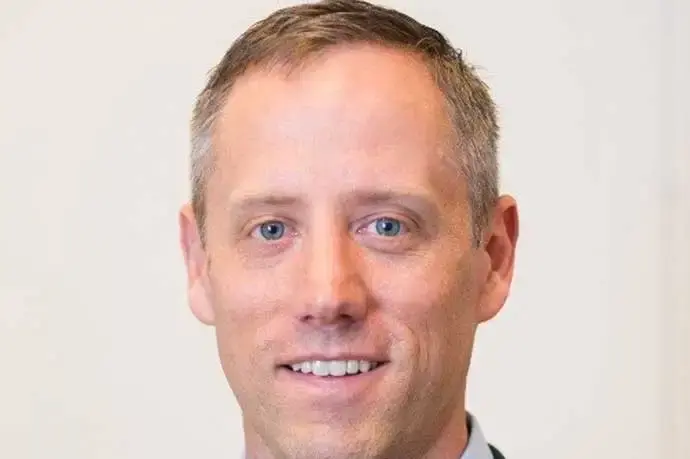
HPE Vice President of North America Channel Jeremiah Jenson said the AI networking powerhouse has not only doubled the number of networking sales reps in the field but also added SASE security sales specialists to its sales team.
Jenson said that HPE has made these moves since closing its $13.4 billion acquisition of Juniper Networks last July.
“We have doubled the sales force, and we have doubled the channel sales force,” said Jenson. “I think that’s an important thing. We have a very clear vision as to where we are going with our networking portfolio. We are doubling down with partners, and we are driving really hard against our goals there.”
In fact, Jenson said, HPE is bringing the larger sales force into the field to work with partners that are bringing the full Aruba and Juniper portfolio to market.
“We are bringing that capability together with our larger sales force to go talk to more customers and to go solve larger business problems and to go take share in the market,” he said.
HPE has also made new investments in sales teams and channel sales specialists focused on its SASE security competency, which falls under HPE Networking, said Jenson.
“So from a channel perspective, I have a specific number of specialists that are focused on the SASE portfolio,” said Jenson. “They report to [HPE Vice President of Channels Aruba Networks] Jim Harold and are working with those focused partners that have that capability. There is a SASE sales organization with specialized resources to line up with partners to drive customer outcomes.”
HPE made the decision to add the additional SASE sales reps in the wake of the networking sales kickoff in January.
“Coming out of our sales kickoff, we recognized a unique opportunity in this [SASE] space in particular,” said Jenson. “That is a key place where we see the convergence in terms of bringing the portfolio together. Customers want AI-enabled security across their [IT] estate, and we have the right solutions that do that. So we are investing in resources there.”
As for the sales alignment in the field with partners, Jenson said, “I see really great sales alignment in the field. [HPE Senior Vice President of North America Sales, HPE Networking] Jeff Dolce is one of the most committed sales leaders across the company in terms of how he interacts with partners, how our sales force is going to market with partners and which partners.”
Jenson said HPE has “some very big goals” for the networking business and is sharply focused on working with partners to get there. “So that comes down to who are the partners with the capabilities, the partners with the certifications and the partners that have invested in a networking go-to-market,” he said.
What kind of progress has HPE made with the networking business in the channel?
There is a lot to say here. First and foremost, we have doubled the sales force and we have doubled the channel sales force. I think that’s an important thing. We have a very clear vision as to where we are going with our networking portfolio. We are doubling down with partners, and we are driving really hard against our goals there.
This isn’t theoretical integration of our plans or our ideas. We are already executing against that innovation agenda as well as the integration agenda.
Specific to North America, we are ahead of our plans for integrating the sales force and the channel sales force.
So you have doubled both the network-specific reps and the direct sales force?
Think about that in terms of feet on the street.
We don’t release the number of employees, but we are doubling the force.
We are bringing all those people together into a single unified team. We call it HPE Networking now because they are selling the full portfolio. There is no split between selling these products and those products. Every salesperson is responsible for the full portfolio. That’s why I say that this is not theoretical integration. This is actual integration, and that is done. So sales plans, compensation letters, and those sorts of things are done. We are executing and taking that to the market through our partners.

How much momentum do you think you have coming out of the gate here?
Early in January we invested in a sales kickoff. You want to talk about momentum. We had the sales kickoff in January with the entire networking sale force in Las Vegas. It was a global event with Jeff Dolce on stage. We had the sales teams there working and exchanging sales plays, understanding who are our priority partners. The channel team was there in full force. Everybody was there.
Coming out of the gate early in this calendar year we have everyone [on the HPE Networking team] driving toward a common goal. I think that is the big difference.
We are integrated with the same sales team selling the full portfolio right now. We are not waiting a year. We are not keeping it on its side. We already have a list of sales plays we are running and a plan for how we are bringing the integration of Juniper to partners.
So for example, we have medallion to medallion programs that we have executed on. We have Fast Start programs we are executing on today.
We already have programs in place and in motion with partners today as to how we are bringing the Juniper data center networking into the full hybrid IT [sales] motion that we already run with partners. We already have our biggest partners adopting Juniper, integrating it into their go-to-market.
Again, this is not about theoretical integration. We are executing on the integration and have a path and plan that we are on.
What kind of reaction are you seeing from partners on the cross-pollination networking strategy with Aruba and Mist?
If you start from the customer and work backward, customers are not being forced to migrate. ... I think that is the piece that is really resonating with partners. Sometimes a decision is made on a road map that puts partners in a difficult position. As we work with the portfolio, our customers aren’t being forced to migrate. The strategy is to unify the experience.
So a former Mist customer will remain a Mist customer. A former Aruba Connect partner will remain an Aruba Connect partner. However, we are bringing the really great parts of both of those portfolios together. So, for example, Mist Large Experience Model [LEM] is now available in [Aruba] Central today.
Aruba Central agentic mesh capabilities are being extended into Mist as we speak. That road map we published at Discover Europe is real. That is happening at a pace we have never seen. That drives more flexibility for customers. It gives partners more options and more capability to sell to their customers to solve their business challenges. That is really important. We have given partners that flexibility and option. They are not forced into a difficult conversation with their customer. It is a very positive conversation with the customer.

How much sales alignment are you seeing in the networking business with partners and the HPE sales force in the field?
I see really great sales alignment in the field. Jeff Dolce is one of the most committed sales leaders across the company in terms of how he interacts with partners, how our sales force is going to market with partners and which partners.
So I mentioned we have doubled our sales force on both sides. We also have partners who had great ability on both sides. So we are bringing that capability together with our larger sales force to go talk to more customers and to go solve larger business problems and to go take share in the market.
We have some very big goals for this networking business, and we are very focused on how we can get there faster through partners. So that comes down to who are the partners with the capabilities, the partners with the certifications and the partners that have invested in a networking go-to-market.
The integration is real. Partners have to integrate on their side. We are helping them with that, and we are accelerating right through that with a common partner, common sales force, larger portfolio [go-to-market].
What is the key with regard to the partner program when it comes to this networking sales effort?
I think the thing that is interesting especially from a program or incentive standpoint is we have been very consistent and predictable, but we have also been very profitable [for our partners]. That profitability has extended to what we have done through Triple Platinum Plus. The HPE Partner Ready Vantage program is landing really well.
HPE Partner Ready Vantage was launched on Nov. 1 and with that we recognized the partner’s capability across each of the pillars of our portfolio, which are networking, hybrid cloud with storage and GreenLake, and then there is AI, which includes compute. A partner can be a Platinum partner in any one of those areas. They can really specialize and double down there and we can recognize them for their capabilities, what they have invested in and their specialization.
So you asked how are we driving sales alignment from partners? That is really a critical piece because within each of those centers is a competency. This is an area that is really resonating with partners and those partners that go and get the competency whether that is a security competency, which is white hot right now, or the virtualization competency, which takes advantage of skills they might have for ISVs or virtualization, [which] allows us to be very clear on what partner has the right skills to solve the customer’s business problem. That specialization comes by itself with a rebate. So there is a rebate specific to the competency, which enables again that predictability, consistency and profitability.
I think that is an area for us to really highlight. We talk a lot about Triple Platinum Plus, but within each individual center there is a competency that gives partners compensation just for getting that competency. That is validated by us and validated by the industry. Partners can really make some good money there.
So how much is the rebate for the competency sales?
That rebate is 10 percent for specific product lines.
For example, it recognizes partners for being competent with our software stack in hybrid cloud. That includes Morpheus and VM Essentials. Partners see compensation out of the gate for having skills in that area.
What area are you seeing as fastest growing in terms of competencies?
An area of tremendous focus for us right now is what I would call the hybrid cloud software stack, which includes Morpheus, OpsRamp and VM Essentials.
Look at the capability, the unique value proposition and the unique IP that we have in that space and how we are supporting partners with that competency and how we are supporting them to develop their capabilities around that stack. We are seeing greater growth with partners that have adopted that hybrid cloud software stack because it is a differentiated message.
We’re not talking bits and bytes. It is truly differentiated in terms of how they are managing their IT estate. Customers want a common unified platform to manage that estate and Morpheus enables that, VM [Essentials] enables a level of operation and automation that nobody else offers. When you bring that together with the rest of the HPE stack, specifically hybrid cloud but also the rest of our stack, you have a very powerful value proposition—and you are not talking about speeds and feeds and getting in a knife fight in a phone booth over dollars and cents. You are talking about truly transforming customers along that journey. That is where we are really seeing success. We certainly see accelerated growth with those partners focused on that competency and we would expect that to continue for the future.
Customers want automation. They want ease of use and common management.
What is the security competency and how are you driving that into the channel?
The security competency incorporates some of our SASE offerings and some of our networking offerings, bringing that together.
I would also tell you we have made investments in channel specialists as well as sales specialists around our security portfolio, specifically around SASE.
So from a channel perspective, I have a specific number of specialists that are focused on the SASE portfolio. They report to Jim Harold and are working with those focused partners that have that capability. There is a SASE sales organization with specialized resources to line up with partners to drive customer outcomes.

When did you get those SASE security reps?
Coming out of our sales kickoff we recognized a unique opportunity in this [SASE] space in particular. That is a key place where we see the convergence in terms of bringing the portfolio together. Customers want AI-enabled security across their [IT] estate, and we have the right solutions that do that. So we are investing in resources there.
So it is SASE and the networking business together?
Those groups report into the networking organization by design to bring that together.
How important is the speed at which you are driving that security competency and focus?
The key difference that needs to be outlined is it is different than saying we are going to be [doing this]. We’re saying we are doing this. This is in place today.
If you want to talk about the speed of how things are coming together, that was a decision we made, and it was done. We didn’t wait a year to reorganize the sales force. We didn’t wait six months to deal with a bunch of stuff. We understood the opportunity. We understood how we could work with partners to get there, and we made that change immediately.
The pace at which we are moving and making decisions and the pace at which we are supporting our partners for these opportunities is very real.
You were at AWS, which moves very fast. What is the pace at which HPE is moving with regard to driving the networking business forward?
I would say the decisions that we are making and the pace at which we are innovating would rival that of anybody in the market. While there are a lot of stories about how Amazon and AWS make decisions and things along those lines, the alignment from the [HPE] leadership team down to the sales reps and the understanding of the opportunity rivals anybody in the industry.
Like I said, we saw an opportunity and made a decision. We set goals and those people we put into the field are real and are in the field today.
We set goals around the Juniper integration, and we are executing against those. From a North America standpoint, we are certainly ahead of those goals and I believe we are across the globe.
We made some really big statements about HPE and Triple Platinum Plus, and we are ahead of those goals. We told partners it would be more for more and we did that.
As we said, there is a 50 percent greater margin in the space for hybrid cloud than there was last year. That is done. It is not what we are going to do. We have done this.
What is interesting is HPE is out in front of a lot of these decisions. It is interesting because we are out in front of them and a lot of people are asking a lot of questions. They are asking a lot of questions because they see the predictability, the consistency and the communication and then the associated profitability and others are taking notice and following along.
I don’t want to follow along. We are out in front. I am really happy with what the team did with Triple Platinum Plus and HPE Partner Ready Vantage. I’m thrilled with what we are doing in how we are driving sales alignment.
[HPE Senior Vice President Worldwide Hybrid Cloud Sales] Gilles [Thiebaut] and I just spent a week in New York City with partners and distributors. We had a partner roundtable. We had partner one-on-ones and we had deep executive discussions around how we can accelerate from where we are now through the rest of the year.
We see an opportunity that we are activating now. But we see a larger opportunity than we have already captured. There is so much more for us to do. That excitement and those plans are in motion. It is nice to see.
What are you seeing in terms of adoption of Triple Platinum Plus?
What I am excited to see is the mutual partnership. We have big goals for ourselves, and partners immediately came along with us and said, ‘We see that opportunity with you. We want to double down.’ So I am seeing partners make their own investments into transforming their sales forces. They are realigning resources to capture that opportunity. That has been really positive. We have set the table and now we want to work together on that opportunity.
It has been really awesome to see how partners have said, ‘I see the opportunity with Alletra. I see the opportunity with Morpheus and OpsRamp. I see the opportunity to go get an HPE competency and help my customer while making really good money doing it.’ That has been phenomenal to see.
Partners saw that we put our money where our mouth is. We see a major opportunity with partners. They see that and they are doubling down with us. They see it and are acting on it now. You don’t get the caliber of executives that we had this past week without them seeing the same opportunity.
How do you feel going into the year with the progress you are making in areas like networking and Triple Platinum Plus?
The reason I am here is because of our commitment to partners and our consistency, predictability and profitability. I rejoined the company eight months ago and there was a lot of commitments about our promise to partners and where we were going. Every single one of those has been real. That just really speaks to where we are and where we are going. It is one thing to have an opportunity. It is another thing to confidently say we are executing against that opportunity. It’s nice to be able to say that.