Inside Cisco's AI Pivot: 5 Moves Reshaping The Networking Giant
Cisco is reshaping its future through AI-focused acquisitions, workforce restructuring, and the Cisco 360 partner program to lead in the AI era.
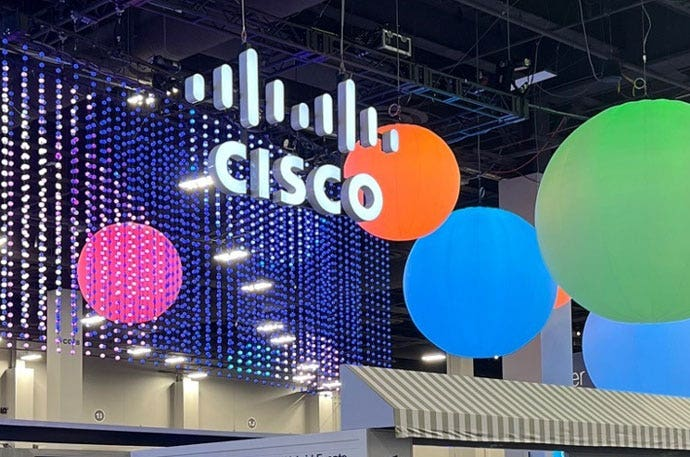
Through a combination of restructuring, acquisition, and partner program changes, Cisco has been working heads-down this year to position itself to lead in the AI and security sectors.
Cisco's moves in 2026 were not isolated events or even simple product launches. The tech giant is making a coordinated transformation around AI and security by leveraging its bread and butter: The infrastructure that's needed to support both. Taken together, these actions reveal how Cisco is reinventing itself in the AI era but positioning itself as the IT provider enterprises need to support their own technology transitions ahead and the demands of emerging technologies.
Here are the moves Cisco has made this year on its path toward AI and emerging technology leadership.

Three Acquisitions
One tried and true way of pivoting a portfolio or pursuing new areas is by acquisition. To that end, Cisco has made two back-to-back acquisitions, with a third planned this year, aimed at strengthening the company’s agentic AI and security capabilities.
First up in April was AI observability specialist Galileo Technologies Inc. The company brought its AI agent observability and protection capabilities to the Splunk Observability platform to give Cisco visibility into how AI agents behave, perform, and introduce risk across development, testing, and production, according to Cisco.
The following month, Cisco acquired identity protection startup Astrix Security as a way to bolster its offerings for securing AI agents.
And in June, Cisco unveiled plans to acquire WideField Security to further build out the company’s agentic AI and security capabilities. Specifically, Cisco said it plans to integrate WideField Security into Splunk to boost Cisco’s agentic AI SOC capabilities.

A Workforce Restructure
Another way, albeit a less popular strategy, that a company can pivot quickly is through restructuring.
To that end, Cisco in May took to its fiscal Q3 2026 earnings conference call to announce thousands of layoffs as part of what the company referred to as a restructuring move to shift more resources and investment toward advanced AI, security, and quantum networking technology.
“To ensure we are capturing the significant opportunities in silicon, optics, security, and AI, we announced a restructuring plan today to reallocate resources and allow us to invest in these key growth areas. These actions are building from a position of strength and focusing on the technologies that will accelerate our growth to deliver unmatched innovation to customers and partners and define our future," said Cisco chairman and CEO Chuck Robins during the conference call in May.
Following the initial announcement in May, Cisco in June laid out plans to lay off 471 employees in California, a large concentration of which were involved in software engineering.
Partner Program Evolution
The long-awaited and heavily anticipated Cisco 360 Partner Program, a next‑generation partner framework built in collaboration with Cisco’s global channel ecosystem, was launched at the beginning of the year. Cisco 360, according to the tech giant and partners alike, was designed for the AI era.
The program helped Cisco carry out its promise of enhanced simplicity, incentives, and easier ways for customers to find the right expertise across security, networking, collaboration, services, Splunk, cloud, and AI infrastructure. Cisco 360 launched with updated partner designations, an enhanced Partner Locator tool, and a focus on AI‑ready data centers, future‑proofed workplaces, and digital resilience to help partners deliver impressive and predictable customer outcomes, according to the San Jose, Calif.-based company.
The overhauled partner program was initially met with skepticism from partners when it was announced in 2024, a full 15 months ahead of the planned launch. However, Cisco worked alongside partners to "co-design" a program with a focus on profitability and predictability. Upon its launch in January, Cisco 360 was largely met with enthusiasm from partners eager to upskill and expand their expertise in the age of AI and managed services.
Cisco Cloud Control
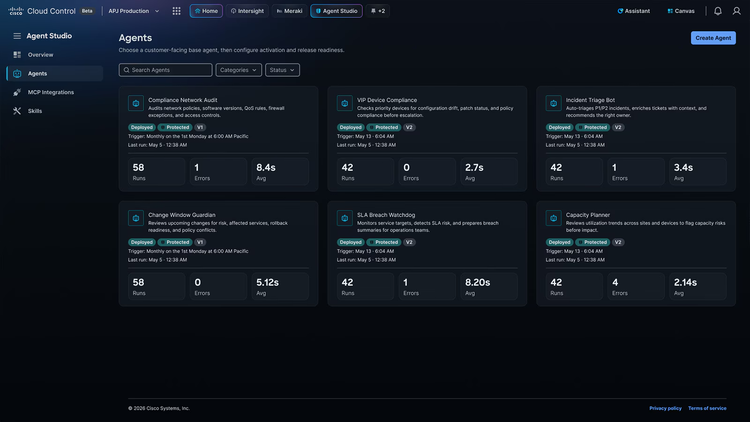
On the product front, Cisco launched what is perhaps its biggest product of the year in June: Cisco Cloud Control. The offering, initially announced in 2025, was released in a bid to position the company as one of the top security providers of the AI era and was met with excitement from partners at Cisco Live 2026 in June.
Cisco Cloud Control is a unified platform for agentic AI that spans the company’s networking, security, collaboration and observability portfolios. Cisco Cloud Control, built on the Cisco Data Fabric and powered by the Splunk Platform as its unified data layer, provides cross-domain telemetry across customer environments, spanning Cisco products, platforms, services, and agents.
“Cisco Cloud Control is a platform where all of this comes to life. We’re focusing on enabling cross-domain telemetry with the power of the purpose-built models that we have built with over 40 years of Cisco data and knowledge and together creating trusted agents to serve as digital co-workers," DJ Sampath, senior vice president and general manager of Cisco’s AI Software and Platform Group, told reporters in June.

Capitalizing On Market Volatility
While the memory shortage, extended product lead times and pricing continue as issues for the broader tech industry -- something that Cisco is not immune to -- the tech giant is messaging that enterprises are in the middle of one of the fastest moving technology transitions and Cisco stands ready to help.
Opportunities abound for AI infrastructure as many businesses of all sizes look to refresh "everything" including campus networking, switching, routing and wireless to meet their AI goals, CEO Robbins (pictured) said during the company's fiscal year-end and Q4 2026 earnings call in August. AI, according to Cisco and partners, is putting pressure on businesses to make the necessary upgrades.
“If you look at the opportunity for scale-across, it’s massive,” Robbins said. “We believe that we’re very well-positioned to take advantage of that as we go forward.”
In fact, more than half of Cisco customers purchased both campus and data center networking products during its most recent fiscal quarter. Overall data center networking orders grew more than 35 percent year over year in Q4 2026. Campus networking product orders grew 20 percent year over year, according to Cisco.