Microsoft Ends $73M Black Partner Growth Initiative As Planned
Solution providers that participated in the initiative—which provided business capital and helped Black-owned companies navigate the complexities of the Microsoft partner program—said its loss will be felt.
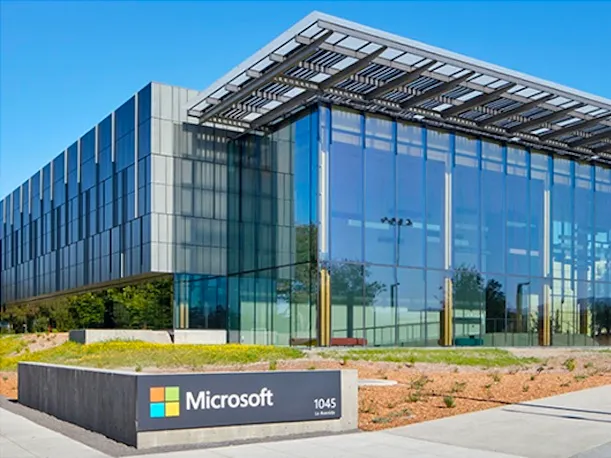
Microsoft’s Black Partner Growth Initiative (BPGI) has ended as planned after five years, eliminating a resource some Black-owned and Black-led solution providers relied on for funding and for help in navigating the tech giant’s complex partner program.
Microsoft started its BPGI in 2020 as part of a larger racial equity initiative with the aim of adding more Black-owned and Black-led partners—including solution providers—to its ecosystem. The initiative included a pledge of $73 million to help those partners create sustainable businesses through loans, extended payment terms on Microsoft invoices, access to marketing services and other resources.
That larger initiative had a preplanned end date of 2025. Microsoft officially ended the BPGI on July 1 with the start of its current fiscal year.
Marcus Wilson, CEO of Brookhaven, Ga.-based IntelligIS, a solution provider that was part of the BPGI, told CRN in an interview that the end of the program “is a major, major, major loss” for newer and smaller Microsoft partners that need help navigating Microsoft’s partner program benefits and figuring out where to find resources that apply to their business.
[RELATED: Microsoft Beats $4 Trillion Valuation: What The AI Giant’s Latest Results Mean For The Channel]
Although Wilson didn’t take a loan from the BPGI, the access the program gave him to Microsoft employees and fellow partners led to IntelligIS building a bigger practice around Microsoft Azure cloud consumption and qualifying for new partner incentives that improved his bottom line.
“BPGI gave access to me when, prior to [it], I was just another unmanaged digital partner that only talked to Microsoft when we needed support,” Wilson said. “I knew nothing about the program. I knew nothing about how to engage with a Microsoft seller.”
DEI Initiatives Under Scrutiny In The U.S.
Microsoft disclosed the termination of the initiative in an online post and declined to comment further on the program’s end.
“We are proud of our collective accomplishments as well as the business growth of our members,” Microsoft’s post said. “Having reached the end of these objectives, we have learned valuable lessons that will inform our broader business strategy.”
The program’s end comes amid scrutiny in the U.S. of programs focused on diversity, equity and inclusion, with President Donald Trump threatening to withhold federal funds from government agencies, private universities and others with DEI initiatives.
Microsoft has so far remained largely out of the spotlight this year when it comes to technology companies re-examining DEI programs. The vendor still has a chief diversity officer who made a post on Microsoft-owned LinkedIn in December about the importance of diversity.
A question-and-answer section on the BPGI’s website asked if the program’s end is “related to developments around diversity and inclusion at the U.S. Administration Level.” Microsoft responded to the question by saying it “will continue to comply with all legal requirements and review our compliance approach as regulations develop across the globe, as we always have done.”
“We are committed to our culture, our values, and our mission,” according to the Microsoft post. “We know our ability to empower every person and every organization on the planet depends on our ability to make sure everyone has the opportunity to contribute and grow.”
Former Leader: ‘It Was About Creating More Pie’
Karen Fassio, principal at Abundant Marketing Collective and a 24-plus-year Microsoft veteran who led strategy for the BPGI prior to leaving the company at the end of 2022, told CRN in an interview that the program’s end marks the loss of a dedicated resource to help Black partners access benefits and learn more about Microsoft incentives they could qualify for, which is “so materially impactful to disadvantaged partners.”
The BPGI also helped drive business for Microsoft, helping Black partners start new businesses around Azure and grow consumption revenue of the flagship cloud product, as an example, she said.
“It wasn't about taking away someone else’s pie ... it was about creating more pie,” said Fassio, who previously served as director of worldwide go-to-market and digital channel sales at Microsoft.
The BPGI outperformed its initial goals, Fassio said. The initiative was supposed to engage about 1,000 partners. Microsoft’s post about the program’s end revealed that the BPGI engaged more than 1,450 partners in technical enablement, GTM readiness, cohorts, accelerators and community programming. It also resulted in BPGI partners publishing more than 500 transactable offers and more than quadrupled collective revenue, according to Microsoft’s post.
On July 1, Microsoft closed any still-existing BPGI cohorts and said it will no longer form any new ones. The vendor discontinued its payment solutions program and Microsoft Partner Solutions Fund, a partner fund that was used by all Microsoft AI Cloud Partner Program (MAICPP) members but was an especially “highly valued benefit” for members of the initiative, according to Microsoft.
The Microsoft post on the BPGI’s end said that members can continue to receive resources available to members of the MAICPP. BPGI members won’t receive dedicated, personalized guidance and support outside what’s offered as part of MAICPP.
Microsoft said in the post that it continues to support a mission “to ensure AI innovation and business growth opportunities are accessible to all partners, especially SMBs and those serving under-represented communities, aligned with Microsoft’s mission.”
Microsoft encouraged BPGI members to stay connected and continue meeting outside the program.
Program Created During National Reckoning
When Microsoft Chairman CEO Satya Nadella publicly announced the umbrella five-year racial equity initiative online in June 2020—about a month after the killing of George Floyd by a white police officer led to a national reckoning around police relations with Black Americans—Nadella explicitly called out an effort to increase the number of Black- and African-American-owned partners in the U.S. by 20 percent over the next three years.
Fassio said the BPGI surpassed that number by her estimate, going from around 300 Black-owned partners in the Microsoft ecosystem in 2020 to more than 1,400.
In February 2021, Microsoft said in an online post that it had been piloting a Black and African American partner growth initiative. The vendor launched a Black Partner Growth Initiative Accelerator Program in January 2022 with its first three-month-long cohort of more than 50 partners.
The program met its goal of deploying almost $70 million in funding, according to the Microsoft post about the end of the BPGI.
It’s unclear why the company did not deploy the full $73 million initially pledged. Microsoft declined to comment.
BPGI funding initially included a $20 million payment solutions program with interest-free, flexible extended-payment terms on Microsoft invoices and a $50 million partner fund that provided loans to support eligible companies through the startup phase, with the loans to be repaid over time as the businesses grew, according to Microsoft. It also promised $3 million in technology upskilling, financial management and other such training programs.
BPGI Members: Program Spurred Growth
A BPGI partner member based in the Western U.S. who spoke with CRN anonymously because of the political climate around DEI programs called the initiative “immensely helpful” for enabling him to add employees and grow internationally.
“We’re a very different business today than we would have been without the support and the funding,” the partner executive said. “I am grateful for what Microsoft did for us. I’m grateful for the fact that they listened to what our community was trying to do.”
The executive’s company accepted a loan from the BPGI for approximately $200,000 and benefited from access to Microsoft employees and time with other Black-owned solution providers, the executive said. That extra capital helped him hire an account executive to improve sales, a CTO to help the business take on larger projects and a delivery team to help grow operations in South America, he said.
Access to capital is one of the main obstacles to starting and growing a business for Black entrepreneurs, the partner said.
Microsoft did not say in its online post what happens to any outstanding loan money. The partner executive told CRN he believes he still has to pay Microsoft back.
The ripple effect of those funds is still felt today, the partner said. His business now has the technical skills to help Microsoft customers quickly adopt the vendor’s data analytics products. He’s now working to scale the business across the U.S. and Canada.
The solution provider told CRN that Black-focused programs like Microsoft’s BPGI are one way to counterbalance a historical lack of resources in the U.S. for Black Americans.
According to the Federal Reserve’s Small Business Credit Survey conducted in late 2024, 35 percent of Black-owned businesses were fully approved for loans, lines of credit of merchant cash advances (MCAs) in the prior 12 months compared with 56 percent of white-owned businesses fully approved.
Thirty-nine percent of Hispanic-owned businesses were approved, and 38 percent of Asian-owned businesses were fully approved, according to the survey.
The survey also stated that 39 percent of Black-owned businesses were denied a loan, line of credit or MCA compared with 18 percent of white-owned businesses. Twenty-nine percent of Hispanic-owned businesses were denied, and 24 percent of Asian-owned businesses were denied, according to the survey.
“The community still needs support,” the partner executive said. “We would love to have the support because it’s to the benefit of everyone. ... Uplifting the businesses uplifts the entire community. It’s not just a particular part of the community. As the business does better, the community [does] better. And as a country, we do better ... because those are the people that are creating jobs, creating opportunities that [are] driving people—that may not have seen a possibility in our industry—into the industry.”