CrowdStrike CEO George Kurtz: ‘Huge Service Opportunity’ Ahead For Partners
Kurtz addressed top solution and service providers Monday at the vendor’s 2025 Partner Summit in Las Vegas, pointing to Next-Gen SIEM, identity security and the Falcon Flex subscription model as major growth areas.
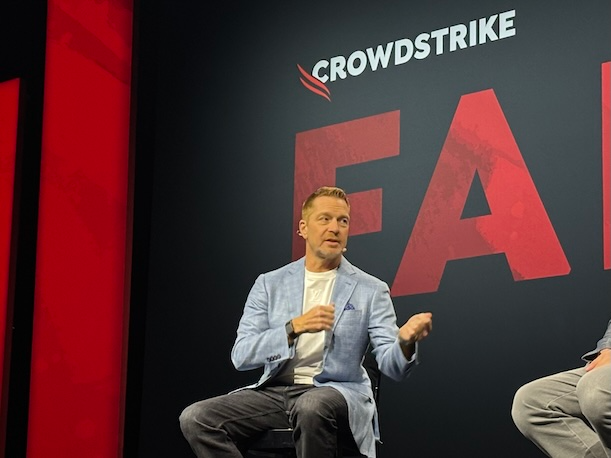
CrowdStrike is looking to accelerate opportunities for partners to deliver services across its Falcon security platform, with a special focus on fast-growing products including Next-Gen SIEM and identity security, CrowdStrike Co-founder and CEO George Kurtz said Monday.
Kurtz addressed top solution and service providers at the vendor’s 2025 Partner Summit, held in connection with the company’s Fal.Con 2025 conference in Las Vegas.
[Related: CrowdStrike CEO George Kurtz On SIEM ‘Inflection Point,’ Wiz-Google Deal]
During a discussion on stage with CrowdStrike Chief Business Officer Daniel Bernard, Kurtz said that Next-Gen SIEM is proving to be a massive enabler of transformation for partners and customers with the potential to improve security outcomes and reduce cost.
“It does represent a huge opportunity from a market perspective for our partners, and a huge service opportunity,” Kurtz said Monday during CrowdStrike's 2025 Partner Summit. “One [opportunity] is selling new technology. The second piece, then, is really working with customers to help transform what they had [and] reimagining what it could be with Next-Gen SIEM from CrowdStrike.”
Identity security is another key focus in terms of opportunities ahead for CrowdStrike and its partners, particularly as adoption ramps up for AI agents, according to Kurtz.
And while identity security has gained more focus industry-wide recently, CrowdStrike has been a player in the space since its 2020 acquisition of Preempt Security, he noted.
“We really helped define the ITDR [identity threat detection and response] market. And we've been at the forefront of saying, you have to be able to secure these identities in order to stop the breach,” Kurtz said. “I think maybe the rest of the industry might have woke up to that.”
This is critical because when it comes to AI agents, most of the identities associated with agentic are non-human and often will need to have access to data, compute and workflows, he said.
“We're in a perfect spot to be able to identify and prevent abuse around those identities — and do that, in my mind, with a much more modern architecture on a single platform. Not one, two or three or four platforms,” Kurtz said.
There’s no question that the service opportunities with CrowdStrike are massive and continuing to expand, according to John Hurley, CRO at Denver-based cybersecurity powerhouse Optiv, No. 28 on CRN’s Solution Provider 500 for 2025.
That’s particularly the case as CrowdStrike continues to rely more heavily on partners to deliver services on its platform, including in areas such as Next-Gen SIEM, Hurley said in an interview with CRN.
For Optiv, that means providing everything from advisory services to deployment and ongoing management, he said.
“One of the things that we'll continue to promote as part of our relationship with CrowdStrike is the fact that we will do advise and deploy” in addition to offering managed services, Hurley said.
“It's really about advising on tech consolidation, which we’re seeing is continuing to be a high priority for many CISOs today,” he said.
CrowdStrike’s Falcon Flex subscription model is providing a huge boost to the adoption of Next-Gen SIEM and other newer capabilities as well, and partners are at the center of driving Flex deals, Kurtz said during the Partner Summit.
The Flex subscription model makes it possible for customers to decide over time which technologies to deploy on the Falcon platform after committing to a contract, rather than having to decide upfront, according to the company. That provides an incentive to customers to deploy more of the 30 modules on CrowdStrike’s Falcon platform, the company has said.
With Flex, “the win for us and our partners” is that many customers will end up deploying technologies more quickly than they anticipated originally, leading to an opportunity for further adoption, Kurtz said.
“So it's a game changer for us,” he said. “And at some point [Flex] really is going to be the only licensing model that we have.”