Fortinet Firewall Refresh Results Have Been ‘Disappointing:’ Analysts
The security vendor was hit with numerous stock downgrades from Wall Street analysts Thursday following company disclosures about the pace of firewall upgrades from customers.
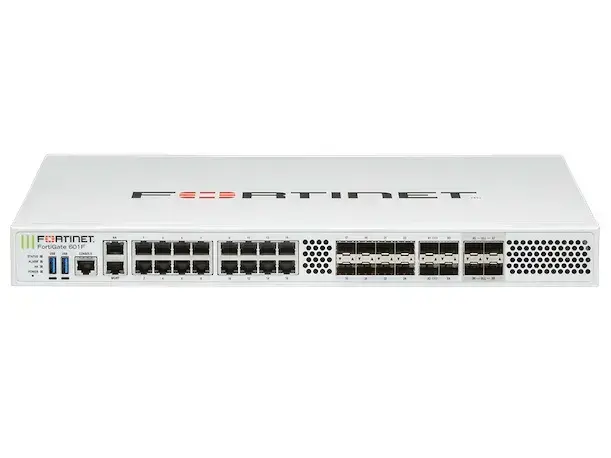
Fortinet saw numerous stock downgrades from Wall Street analysts Thursday following company disclosures about the results so far from a major firewall upgrade cycle with customers.
While reporting the security vendor’s second-quarter results Wednesday, Fortinet executives revealed that a much-touted firewall refresh opportunity may already be halfway completed—with less to show for it than previously expected.
[Related: Fortinet Joins SASE ‘Leaders’ Palo Alto Networks, Netskope, Cato: Gartner Magic Quadrant]
“We estimate that we are approximately 40 [percent] to 50 percent of the way through the 2026 upgrade cycle at the end of the second quarter, based on the remaining active units and service contracts,” Fortinet CFO Christiane Ohlgart said during the vendor’s quarterly call with analysts Wednesday. “We expect continued upgrade activity for the remaining devices over the next six quarters.”
During the call, a number of analysts questioned why Fortinet has not been seeing stronger FortiGate firewall revenue growth, particularly from customers whose firewall devices are reaching end-of-support dates.
Fortinet’s stock price sank in after-hours trading following the report Wednesday and fell further during regular trading Thursday morning. Shares in Fortinet were down 26.5 percent to $70.93 as of this writing.
The wave of analyst downgrades for Fortinet included Morgan Stanley’s Keith Weiss, who told investors Thursday that the disclosure from Fortinet about the firewall refresh results so far falls short of expectations. The “revelation on earnings that firewall refresh was already 40-50% complete was disappointing,” Weiss wrote in a note to investors, according to a report from Seeking Alpha.
Another downgrade came from Shaul Eyal, a managing director and senior analyst at TD Cowen, who told investors that the disclosure from Fortinet has significantly changed the assessment of the company’s financial picture.
“We believe there is a higher level of uncertainty regarding the timing and potential size of benefits from the device refresh,” Eyal wrote in the note to investors Thursday.
The report also raises questions about the momentum for Fortinet’s firewall business apart from the refresh, which did drive product revenue growth of 13 percent for the quarter year over year, he wrote.
“Looking under the hood though, we conclude that the YoY growth rate for Product excluding this refresh tailwind was negative 2% for 1H25,” Eyal wrote.
Ultimately, “we downgrade to Hold given the increased level of uncertainty regarding sustainable growth rates for core appliances once the refresh cycle is complete in 4-6Qs,” he wrote in the note, which was viewed by CRN.
Other downgrades came from firms including Piper Sandler, Rosenblatt and Keybanc, according to MarketWatch.
CRN has reached out to Fortinet for comment.
A number of other analysts maintained their ratings on Fortinet, meanwhile, including Truist Securities, Barclays, Mizuho and Wedbush, according to MarketWatch.
Stifel’s Adam Borg told investors in a note that there’s no doubt “there were positive aspects” to the report from the vendor, “especially around billings/product revenue strength and positive macro commentary," according to Seeking Alpha.
During the call with analysts Wednesday, Ohlgart said that while predicting replacement schedules for lower-end firewalls can be more challenging than for enterprise devices, Fortinet is “comfortable” with its current guidance.
“The expectations by the street might have been a little bit higher—but [as] we’ve said, we are outperforming the market,” she said.
Later during the call, in response to an analyst’s question, Fortinet co-founder and CEO Ken Xie said that “I would not say we’ve been negative [on product revenue]” when the firewall upgrade cycle is excluded.
In reality, the firewall refresh is “such a small percentage of the overall business” for the company and not the biggest opportunity right now, Xie said, noting that Fortinet is seeing substantial growth in its newer businesses including SASE (secure access service edge) and security operations technology.
Xie also suggested that Fortinet has “probably a little bit over-discussed this refresh upgrade.”
Ultimately, emphasizing the refresh cycle is “much less important than [focusing on] helping customers to upgrade to the new security infrastructure,” he said.
For the second quarter ended June 30, Fortinet disclosed that revenue climbed 14 percent from the same period a year earlier to reach $1.63 billion.
Annual recurring revenue for SASE grew at a faster pace—rising 22 percent year over year—as did security operations ARR, which generated 35 percent growth, the company reported.
In July, Gartner elevated Fortinet into the “leaders” category for the research firm’s 2025 SASE Magic Quadrant, with the vendor joining Palo Alto Networks, Netskope and Cato Networks in achieving the sought-after top ranking.