How CrowdStrike Mastered The Comeback: Analysis
The cybersecurity giant did a lot more than just harden its processes after the 2024 outage— and has emerged much stronger as a result.
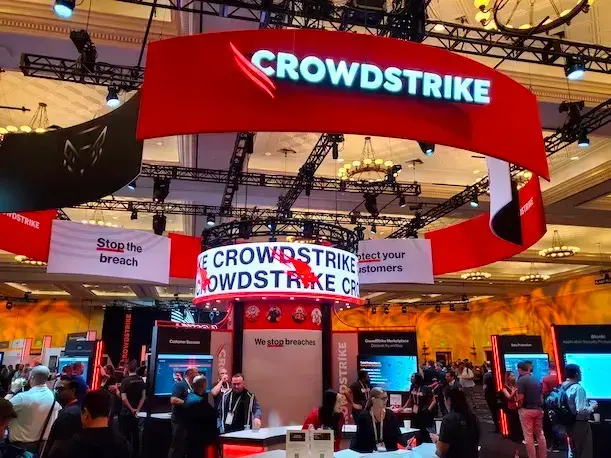
In October 2024, CrowdStrike CEO George Kurtz told us that he believed the company could come back stronger than before the widely felt outage a few months earlier.
That may have sounded like a CEO trying to put the best possible spin on a tough situation—which had involved unprecedented global disruptions from an IT outage, including for air travel and health care.
But Kurtz’s statement was much more than that.
It certainly helped that the response from CrowdStrike was immediate and thorough.
[READ MORE: 'Flexing' Its Muscle: CrowdStrike CEO Kurtz Says It's The First 'Hyperscaler Of Security']
Partners and customers alike were able to move beyond the incident relatively quickly, GuidePoint Security’s Jason Braun said during CrowdStrike’s recent Partner Summit.
Many customers directly stated to him that they wanted to stick with CrowdStrike because the vendor had “saved” them from potentially devastating attacks numerous times, according to Braun, senior vice president of sales at GuidePoint.
“The trust that [CrowdStrike has] instilled in the community—not only in this wonderful ecosystem, but with the end users—why wouldn’t I get behind it?” Braun said at the time.
In other words, along with the hardening of its processes to prevent a recurrence of the issue, CrowdStrike also had a stellar track record that made recovery from the incident a lot easier.
That deep level of trust with customers and partners simply couldn’t be shattered by a single incident, even one with the magnitude of the 2024 outage.
[READ MORE: CrowdStrike CEO George Kurtz On AWS, Falcon Flex And ‘Incredibly Important’ Partner Moves]
In terms of CrowdStrike’s comeback, the numbers tell a similar story.
The vendor has consistently beaten Wall Street expectations on its quarterly results ever since the outage.
And while the company’s stock price took a major hit in the aftermath of the outage, it has recovered all of that ground and then some.
Shares in the company were trading around $532 Thursday morning, a stunning 55 percent higher than on the day before the outage a year and a half ago. That gives CrowdStrike a market capitalization of $133.57 billion, just ahead of Palo Alto Networks at $133.38 billion, according to Yahoo Finance.
What that means is that CrowdStrike not only made up for the steep share-price losses after the outage but has even passed one of its closest rivals on valuation, thanks to strong growth and massive opportunities ahead.
There’s also one example of some especially savvy decision-making by CrowdStrike in the wake of the outage that’s worth highlighting here.
CrowdStrike provided free product compensation to customers following the incident, but that’s not the interesting part.
What’s noteworthy is how the company managed to make the most of even that process, as a way to strengthen its business and opportunities for partners.
While providing product compensation to customers, the natural move was to do this through the vendor’s Falcon Flex subscription model for easier procurement, Kurtz told me recently.
The Flex program, according to CrowdStrike and partners, provides a number of advantages to customers meant to incentivize consolidation on CrowdStrike’s Falcon platform.
What ended up happening, however, is that the move to connect the Flex model with compensation for the incident meant that a whole lot more customers were introduced to a program that has been a growth driver for CrowdStrike and the channel.
As a result, “we accelerated the adoption of Falcon Flex because of the incident,” Kurtz told me. “In one fell swoop, we got a lot of customers [onto Flex] very quickly.”
Finding that particular silver lining is just one of the many things CrowdStrike got right in responding to the outage.
Certainly, the 2024 outage was unprecedented—but the truth is that CrowdStrike’s masterful comeback could be described exactly the same way.