IBM’s Suja Viswesan On The Future Of QRadar SIEM And The Post-Quantum Security ‘Journey’
The IBM security software leader tells CRN that with the coming transition to post-quantum cryptography, it will ultimately be a much bigger ordeal than Y2K.
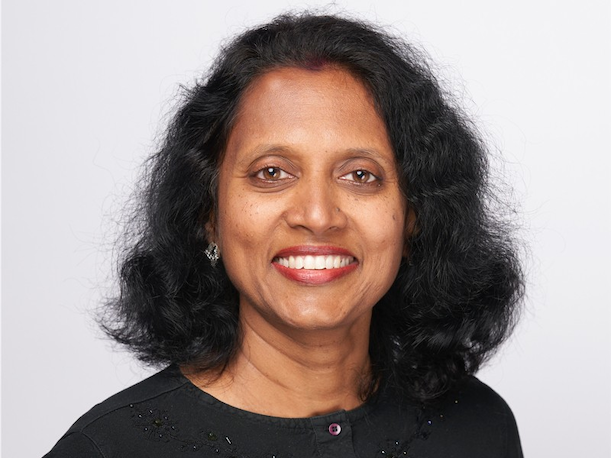
Comparisons abound between the looming shift in encryption required for quantum computing and the circa-1990s preparations for Y2K, but that analogy is only partly right, according to IBM security software leader Suja Viswesan.
The massive need to update software and systems to new encryption standards ahead of the arrival of advanced quantum computers—in time for a yet-unknown date known as “Q-Day”—will indeed be critical, Viswesan said in an interview with CRN.
[Related: IBM Think 2025: HashiCorp Co-Founder, CTO Touts Benefits Of Acquisition]
But unlike with Y2K—which the world was able to move on from almost immediately—Q-Day will just be the beginning, she said.
“With Y2K, once you crossed it, you were done,” said Viswesan, vice president for security and runtimes products at Armonk, N.Y.-based IBM. “This time, that is not the case. You’ll need to keep your encryption posture always up to date.”
Ultimately, “the quantum computers are going to keep on advancing. That’s why this is a longer journey,” she said. “[Organizations] will need to be agile enough to keep up with the pace of the quantum technologies.”
Speaking with CRN, Viswesan also discussed IBM’s focus on data and AI security through its Guardium suite of products as well as the status of its QRadar SIEM (security information and event management) offering. IBM sold its QRadar SaaS business to Palo Alto Networks in September 2024 for $500 million and has been working with the cybersecurity giant to migrate QRadar SaaS customers to the vendor’s cloud-based Cortex XSIAM platform.
At the same time, IBM remains committed to offering and maintaining the on-premises version of QRadar, which has “continued to be widely used by our customers,” Viswesan said.
“For those who are not planning to go to the cloud, and want to stay on-prem, IBM is committed to being with them through their journey,” she said.
At the same time, IBM will continue to “closely partner” with Palo Alto Networks to help transition interested QRadar customers to the cloud, Viswesan added.
Viswesan was promoted to her current role in January, following two years as vice president for security software development at IBM. Prior to that, she was a senior vice president at WarnerMedia and, earlier, served as director of engineering at LinkedIn.
What follows is more of CRN’s interview with Viswesan.
What have been your major priorities in this role so far?
The first year was all about, let’s relook at our strategy. It’s not just about security or even software. IBM’s focus has been hybrid cloud and AI. As part of aligning with that strategy—where we should be investing, where we should be growing—that automatically fell into data security and identity and access management [IAM]. That led to last year the partnership with Palo Alto [Networks]. For IBM as a whole, it made sense for us to do the partnership with Palo Alto on the SIEM side of the world while we double down on our incumbency on the data security side and IAM. We acquired HashiCorp and that fits very seamlessly with our automation portfolio and identity and access management. That lets us double down on data, AI and automation. If you look at the Guardium suite of products, which is on the data security side, we are re-energizing it and then focusing on AI, focusing on encryption. And the same thing on the identity and access side. On the encryption side of the world, with the [arrival] of quantum, everybody is thinking about, ‘What am I doing for my encryption posture? Am I ready for it?’ Financial and telco are ahead of everybody else, because of regulation, to be ready for the post-quantum world. [IBM has a] suite of products under the Guardium umbrella that helps them to be ready for this post-quantum cryptography world.
What would you want partners and customers to know about the future for QRadar after the deal with Palo Alto Networks?
For the future of the QRadar SaaS business, we are partnering with Palo Alto [Networks]. The on-prem business is still with IBM. We have a lot of clients who are using it. And for those who are not planning to go to the cloud, and want to stay on-prem, IBM is committed to being with them through their journey. There is no problem there. If they are on the path that they want to get to a cloud journey, that is where we closely partner with Palo Alto to help them move to the cloud. But for those who want to stay on-prem, IBM will continue to support them, continue to maintain currency. It’s a security product, so we have to make sure that we are up to date on that. We will work with them and make sure that we support them as long as they are with us. [On-prem QRadar] has continued to be widely used by our customers.
What are the most important things to know about your recent expansion around Guardium data and AI security?
One of the things we keep hearing from clients on the AI security side is [that] whether we like it or not, people are using AI. That’s why a lot of companies are focusing on making sure the basic hygiene is there. The governance and security are coming together much more closely. Security must be built in from the beginning—it can’t be an afterthought. That is where the watsonx.governance and Guardium AI security, coming together, you’re able to address every step of the way from the data to the model to the usage. And we are able to see the lineage. Wherever there is a gap, that gives opportunities for bad actors, or even inadvertently [employees] are leaking information. That is why we are bringing together the governance part and the security part.
What are you seeing from partners and customers when it comes to how focused they are on preparing for a post-quantum future?
We have been working with them on looking at taking inventory—where their assets are, where their vulnerabilities are, where their high-value targets are—so they can address that first and go from there. That is where [IBM Quantum Safe] Explorer comes into the picture. And then, they can go and prioritize, and that’s where the Quantum-Safe Advisor comes into the picture. And the last one is remediation, where you can look at what it is that you can do to prevent [threats] today on the high-value targets.
Since IBM is such a major player in quantum computing overall, do you feel like that has allowed you to be a bit ahead in enabling the post-quantum transition?
Absolutely. That gives us the gives us an advantage, for us to be on the cutting edge on what needs to be done. We are one of the few companies in the world with a research wing, consulting and software. That gives us the power to help our customers. This year, we are seeing that customers [realize] they need to start to prepare for it. It has become a board-level conversation, and the teams have started investing.
In some ways, it feels like Y2K. But in other ways it is not—in the sense that, with Y2K, once you crossed it, you were done. This time, that is not the case. You’ll need to keep your encryption posture always up to date. The quantum computers are going to keep on advancing. That’s why this is a longer journey. It’s not a one-time thing. You will see more talk about crypto agility, or cryptography management, because you will need to be agile enough to keep up with the pace of the quantum technologies.