The 10 Hottest AI Security Tools Of 2025
Top products for protecting the usage of GenAI applications, AI agents and LLMs—from both industry giants and fast-growing startups—made our end-of-year list.

AI Security Tools To Know
The surging demand for AI and agentic capabilities that has dominated business discussions all year has had massive implications in the cybersecurity sector. Security vendors of all sizes have moved rapidly to expand their offerings for protecting the usage of GenAI applications, AI agents and LLMs—a category of security that didn’t exist just a few years ago, but has quickly become a top priority for many organizations.
Previously, “the conversation around GenAI was about, how do I contain it?” said Simone Gammeri, chief partnerships officer at Palo Alto Networks, in an interview with CRN. “This year, the conversation [has been] about how to securely enable it.”
[Related: The 10 Hottest Cybersecurity Startups Of 2025]
At the same time, many top cybersecurity vendors found it expedient to bring aboard next-generation capabilities for AI security through startup acquisitions this year. Major players that did so in 2025 included Cato Networks, CrowdStrike, Palo Alto Networks and SentinelOne.
Without a doubt, the speed of AI has transformed the “build vs. buy” calculus for many security vendors, according to Karl Soderlund, global channel chief at Cato Networks. In September, Cato announced its first-ever M&A deal with its acquisition of Aim Security, in a move that has expanded the SASE (secure access service edge) leader into AI protection. “When it comes to AI, that has evolved so quickly that by the time [a vendor] builds something, you may have missed that market opportunity,” Soderlund told CRN.
For CRN’s Year in Review coverage, we’ve selected 10 AI security tools that have been on our radar in 2025 thanks to their combination of technical advancements and opportunities for channel partners.
What follows (in alphabetical order) are 10 of the hottest AI security tools of 2025.
Cato SASE Cloud
A top provider in the crucial SASE (secure access service edge) market, Cato Networks is now expanding its SASE Cloud platform to provide protection for AI adoption with the acquisition of Aim Security in September.
Founded in 2022, Aim Security brings capabilities for securing the usage of both public and private AI applications, including AI agents. Aim also delivers AI security posture management (AI-SPM), which provides improved visibility into AI models and applications with the goal of discovering vulnerabilities and misconfigurations.
For Cato Networks, “it’s really a complementary expansion of what we do today with SASE,” said Karl Soderlund, Cato’s global channel chief. “It’s still a SASE solution, but now we’re able to solve those AI problems too at the front-end that are moving lightning quick.”
CrowdStrike AI Detection and Response
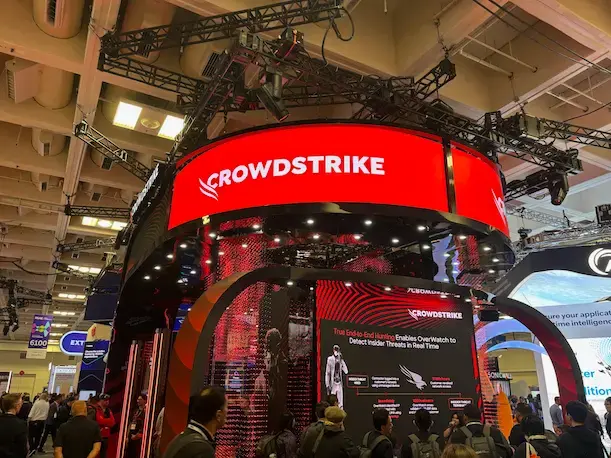
To bolster protection for AI technology, CrowdStrike unveiled a deal to acquire GenAI guardrails startup Pangea in September. The acquisition enables CrowdStrike to offer the “first complete” AI detection and response offering in the industry, according to the company. That means “protecting AI agents from the browser, application, gateway, cloud [and] in the development pipeline, as well as in production,” CrowdStrike Co-founder and CEO George Kurtz said during the vendor’s Fal.Con 2025 conference in September.
Meanwhile, CrowdStrike also introduced major updates to its Falcon Data Protection offering in September, with a focus on enhancing security for AI data. Key capabilities include comprehensive GenAI data protection—across both local applications and cloud environments—as well as identification of hidden LLMs and AI agents running on endpoints through the new Falcon Exposure Management AI Discovery capability.
Cyera AI Guardian
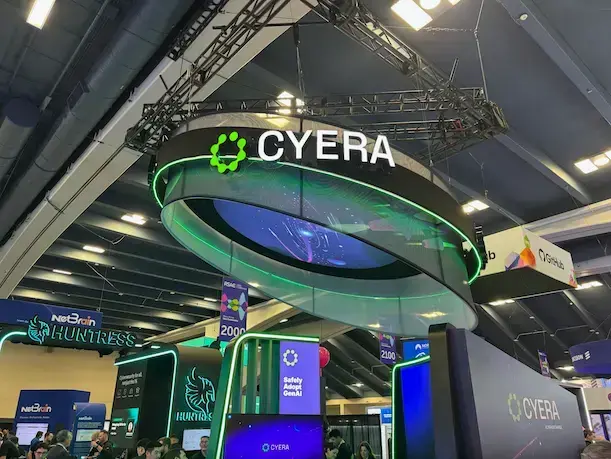
In August, Cyera unveiled a major expansion of its data security capabilities with the launch of its AI Guardian offering. Cyera said that AI Guardian includes two new products that will complement its existing data security offerings focused on DSPM (data security posture management) and DLP (data loss prevention). The newly introduced products are AI-SPM—which offers a complete, granular AI asset inventory—as well as AI Runtime Protection for real-time monitoring and response around risks related to AI data, according to Cyera. Alongside Cyera’s existing tools for data security posture management (DSPM) and data-loss prevention (DLP), AI Guardian is “going to be a natural fit for these three products to coexist in a way where they’re working together and providing a platform, if you will—an AI brain,” Cyera CRO Steve Rog told CRN.
Noma Security Platform
Founded in 2023, Noma Security offers a platform for controlling AI and agentic risk with a major focus on providing continuous discovery for AI assets and agents. The platform provides a full AI inventory through automatically discovering where AI applications and agents are being built, as well as determining which data and systems they can access, according to the startup. Other key capabilities include AI security posture management (AI-SPM) and risk prioritization as well as AI runtime protection, the company said. This year, Noma Security raised $100 million in funding and hired partner-focused executives including Nick Crouch, formerly of Protect AI, who is serving as senior director of international channel and alliances at Noma.

OpenText AI Data Platform
Debuted in November, the OpenText AI Data Platform seeks to offer a comprehensive foundation for AI by unifying data governance and contextual intelligence with cross-application orchestration, according to the company. The architecture of AI Data Platform aims to enable ingestion of both structured and unstructured data, and then unify all sources into knowledge graphs that can be used to drive higher accuracy for AI decisions, OpenText said. Crucially, the platform bakes security directly into the way it handles data used by AI apps and agents, rather than offering AI security as a separate add-on, according to Savinay Berry, executive vice president, chief product officer and CTO at OpenText. For instance, the OpenText AI Data Platform provides security-focused data preprocessing capabilities such as screening for PII (personally identifiable information) within the platform itself, Berry told CRN. “That’s invaluable, because now we can embed that as part of the core product, versus trying to do that after the fact,” he said.

Orca Security AI-SPM
A major provider of AI security posture management (AI-SPM) for enhancing visibility into GenAI usage and systems, Orca Security expanded the capabilities of the offering in June with a focus on protecting AI-related data. Specifically, the expansion has brought new detections for securing the sensitive AI training data stored in cloud-native environments, Orca said. Additional capabilities introduced by Orca included the launch of detections for data poisoning risk, resulting from AI training data that is classified as editable or replaceable, according to the company. “When it comes to AI-SPM, we provide you the visibility of, ‘Which technologies are being leveraged? Where are they being leveraged—which environments? Who’s been leveraging them?’” Orca Security co-founder and CEO Gil Geron told CRN.

Palo Alto Networks: Prisma AIRS 2.0
In October, Palo Alto Networks launched the new version of its AI security platform, Prisma AIRS 2.0, which includes the full integration of capabilities from the acquisition this year of Protect AI. Prisma AIRS can now offer in-line defense against a range of AI security threats—including prompt injection, malicious agents and tool misuse—in real time, according to Palo Alto Networks. This is crucial as customers seek assistance with protecting the use of third-party GenAI applications, as well as help with securing their own AI apps and models, according to Simone Gammeri, chief partnerships officer at Palo Alto Networks. “Prisma AIRS will help us protect the entire lifecycle of these GenAI applications—from the moment they download the model to when they finetune it, deploy it, use it in runtime—all the way to agents that interact with that model or are built around that model,” Gammeri told CRN.

SentinelOne Prompt Security Portfolio
In November, SentinelOne debuted a portfolio of AI security offerings in connection with its recent Prompt Security acquisition, including Prompt Security for Employees. The offering provides enhanced visibility into GenAI usage by workers as well as prevention of data exposure and supports more than 15,000 AI services and tools, SentinelOne said. Other launches include Prompt Security for AI Code Assistants—which protects the usage of GenAI-powered coding tools—as well as security for custom-built AI software with Prompt Security for AI Applications. “Whether it’s agentic studios or employee usage, Prompt gives you that complete umbrella to secure AI, no matter where it lives,” SentinelOne co-founder and CEO Tomer Weingarten told CRN. “Whether it’s on the endpoint in the cloud, it doesn’t really matter.” A fourth product, Prompt Security for Agentic AI, is now in beta and delivers visibility and governance for AI agents that leverage the widely used Model Context Protocol (MCP), according to SentinelOne.

Wiz AI-SPM
In November, Wiz announced enhancements to its AI security posture management (AI-SPM) offering through a major expansion of its coverage, with the platform now covering AI agents as well as usage of the Model Context Protocol (MCP). “This next phase of AI-SPM strengthens Wiz’s end-to-end approach to AI security—spanning visibility, risk management and governance,” the company said in a post. Key capabilities in Wiz AI-SPM include detection of misconfigurations and high-risk data access paths across AI agents, while also uncovering MCP technology usage within the environment, according to the company.
Zscaler Data Protection
In June, Zscaler unveiled an array of new data protection capabilities including improved security for usage of GenAI applications. Newly introduced capabilities have included enhanced prompt visibility, according to Zscaler. The new functionality offers increased visibility and control over Microsoft 365 Copilot and other GenAI apps, Zscaler said. “Customers want one holistic solution with one set of policies applying—no matter what the data channel is, no matter where the data is. And we are there,” Zscaler founder and CEO Jay Chaudhry told CRN. “So that’s why we’re seeing our data security growing at twice the rate of our overall growth rate.”