10 Hot Agentic SOC Tools In 2026
Top platforms bringing AI agents to the Security Operations Center include tools from emerging startups and industry giants.

Agentic SOC Tools To Know
Within the cybersecurity industry, the huge promise of AI and agentic is nowhere more evident than in the Security Operations Center (SOC). Following the mainstream emergence of GenAI, the industry quickly recognized that security operations teams could massively benefit from the analytic and productivity-boosting capabilities of the technology. Now, that promise is starting to be realized with the recent launch of an array of new agentic SOC tools from cybersecurity giants and fast-growing startups.
[Related: 10 Key AI Security Controls For 2026]
At one solution provider that works with many of the leading agentic SOC vendors, BlackLake Security, it’s clear that the ability to automate much of the entry-level threat triaging and investigation is a game-changer, according to BlackLake’s Kurt Wagner. The new agentic SOC tools are starting to prove that an easing of many of the biggest challenges in cyber defense, such as alert fatigue and tool sprawl, is entirely possible, said Wagner, director of sales at Austin, Texas-based BlackLake, No. 311 on CRN’s Solution Provider 500 for 2025. Without a doubt, “having the ability to augment your SOC [with the new tools]—it becomes a force multiplier,” he said.
At the same time, it’s also clear that security analysts are poised to remain in high demand even as the adoption of agentic SOC tools ramps up, security experts have told CRN. While the role of the SOC analyst may increasingly involve orchestration of AI agents, there’s no doubt that there will “always” be a need for a significant number of these cybersecurity professionals, said Naasief Edross, chief security strategist at St. Louis-based World Wide Technology, No. 9 on CRN’s Solution Provider 500. “I do not believe this technology will ever make the human obsolete.”
For CRN’s AI Security Week 2026, we’ve selected 10 agentic SOC tools that have been on our radar thanks to their combination of advanced AI-driven capabilities and expansive opportunities for solution providers. The tools include AI-powered security operations platforms from industry titans such as CrowdStrike, Microsoft, Palo Alto Networks, SentinelOne and Zscaler, as well as from up-and-coming startups such as Dropzone AI and Torq.
What follows (in alphabetical order) are 10 of the hottest agentic SOC tools in 2026.

Arctic Wolf Alpha AI
The cybersecurity skills shortage will to a large degree be solvable in the future as AI and agentic capabilities become more available in the SOC, Arctic Wolf CEO Nick Schneider told CRN. Security operations platform provider Arctic Wolf is looking to propel the segment forward when it comes to applying GenAI and AI agents to the SOC through capabilities including the vendor’s Alpha AI portfolio of technologies. The offering leverages a massive volume and diversity of datasets—based upon data from Arctic Wolf’s 10,000 customers—as well as the industry’s “first and longest running” predictive AI model. The result is significantly reduced false positives and mean-time-to-resolution for threats, according to the company. Ultimately, “that’s where I think the age of AI could really transform and revolutionize the Security Operations Center—which is, arguably, the only proven solution to combating cyber risk,” Schneider said.
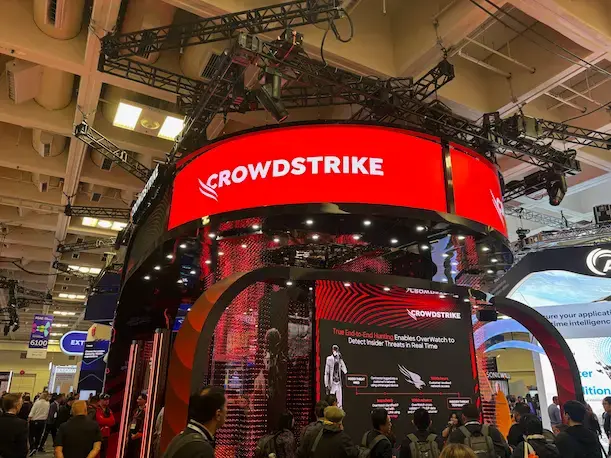
CrowdStrike Falcon Agentic Security Platform
CrowdStrike’s agentic security platform aims to drive a higher degree of autonomy for cybersecurity teams along with new AI agents across its Falcon platform, according to CrowdStrike CTO Elia Zaitsev. The Falcon Agentic Security Platform offers an “AI-ready” data layer that enables the expansion of agentic functionality on CrowdStrike’s platform, ultimately providing faster and more effective responses to threats, according to the company. Key capabilities include an Enterprise Graph that unifies telemetry data from across an organization, enabling that data to be more easily leveraged by both AI and human analysts through a common query language. In a briefing with media outlets, Zaitsev said the company’s Agentic Security Platform is the next major step in making the SOC more autonomous. “Now we’re heading into an even deeper layer of autonomy where we are really after what we call the ‘agentic SOC,’” Zaitsev said. “We want multiple agents working orchestrated in an ensemble fashion, to progressively automate more and more aspects of what a human analyst does today.”
Dropzone AI SOC Analyst
While Dropzone AI is a newer venture-funded player in the agentic SOC segment, the startup has already gained massive momentum with its AI SOC Analyst platform, according to the company. The offering—which provides SOC teams with “armies” of AI agents that can take over routine triaging and investigation of alerts—has seen adoption so far by more than 300 enterprises, the company said in January. Crucially, Dropzone AI has focused heavily on channel partnerships including with MSSPs and VARs, according to the startup. Key capabilities for the AI-native platform include autonomously handling alerts with “human-level” reasoning, providing a substantial offloading of alert volume with high accuracy, Dropzone AI said. The company is backed by a $37 million Series B funding round, which was raised in July 2025 and led by Theory Ventures.
Exabeam Nova
Exabeam has long stood out in the security operations tools sector for AI advancements, including being an early adopter of agentic capabilities for SIEM (security information and event management), according to Exabeam CEO Pete Harteveld. With the launch of Nova, Exabeam is looking to provide agent-powered capabilities that can automate not only routine security operations tasks, but more strategic work as well. The autonomous AI offering can provide a new level of intelligence that allows rapid response to security incidents, leading to a dramatic reduction of 50 percent to investigation times. Other key uses of the technology include automated classification of threats—leveraging behavioral context from real-world scenarios—as well as AI-powered generation of case summaries.
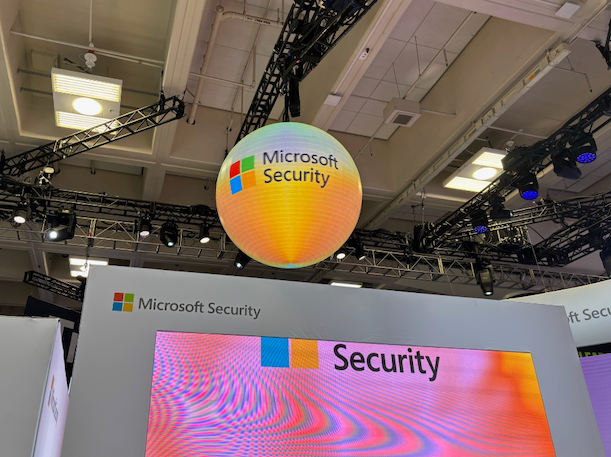
Microsoft Security Copilot SOC Agents
Microsoft’s debut of AI agents for its Security Copilot platform—as well as a streamlined approach to creating new security agents—aim to bring greater automation to overburdened security teams, according to Microsoft executives. Offerings include the Phishing Triage Agent to enable more effective triaging of the massive number of phishing-related alerts that security teams are constantly dealing with, along with an Alert Triage Agents for analyzing content in Purview to prioritize the highest-risk alerts. Meanwhile, Microsoft has added functionality in Security Copilot that provides users with a no-code method for building security agents and has augmented its Sentinel platform with new capabilities focused around enabling agentic-powered security. Ultimately, “for agentic defense, you need an end-to-end, agentic platform, which is the Microsoft security platform with Sentinel and Copilot,” said Vasu Jakkal, corporate vice president for security, compliance, identity, management and privacy at Microsoft, in an interview with CRN.
Palo Alto Networks AgentiX
Palo Alto Networks’ offering for building and governing AI agents, Cortex AgentiX, is aimed at boosting automated investigation and remediation of cybersecurity threats. For partners and customers of the cybersecurity giant, AgentiX represents “the next step in security automation,” Palo Alto Networks CEO Nikesh Arora said during a call with media and analysts. Key advantages for AgentiX include the ability to automate a response to threats that have been previously unknown, the company said. AgentiX can connect into all of the data and context that Palo Alto Networks has within the Cortex platform, providing SOC analysts with the reasoning and planning that they need in cases where there are no predetermined responses in place, said Gonen Fink, executive vice president of products for Cortex and Cloud at Palo Alto Networks. The vendor also introduced a number of prebuilt agents that can assist with threat intelligence, email investigation, endpoint investigation and network security.
SentinelOne Singularity AI SIEM
SentinelOne is enabling the shift to a truly agentic SOC with recent enhancements to its Singularity AI SIEM platform—with the ultimate goal of being able to provide a stunning level of autonomy in security operations, according to SentinelOne co-founder and CEO Tomer Weingarten. Key moves include the integration of technology from recently acquired Observo AI, which can optimize data pipelines for autonomous threat detection and response. The expansion helps with the currently available offerings in security operations, such as AI SIEM (security information and event management), while also helping to set the stage for a bigger shift into an agentic SOC going forward, according to the company. To begin laying the groundwork for the autonomous SOC, “the first step is to start getting data in”—which is an area that SentinelOne is seeking to enable its partners through technologies such as Observo, Weingarten said. “Data pipelines are that first building block for the autonomous SOC.”
Splunk Enterprise Security Essentials Edition
Cisco-owned Splunk is seeking to build on its long track record in the security operations (SecOps) segment with the debut of the Splunk Enterprise Security Essentials Edition, an “agentic AI-powered SecOps” offering that brings together SOC workflows spanning threat detection, investigation and response, the company said in a news release. The offering connects Splunk Enterprise Security 8.2 with SOAR, UEBA and the Splunk AI Assistant to provide accelerated threat response as well as simplification in the SOC, according to the vendor. Other major moves to bolster the Splunk SecOps platform include enabling Splunk customers to ingest security data from Cisco firewall systems at no charge. Without a doubt, “the future of the SOC is agentic,” Cisco President and Chief Product Officer Jeetu Patel said during the recent Splunk .conf25 event.
Torq AI Agents
Torq, which is a venture-backed agentic SOC tools provider, has positioned itself as a trailblazer in providing capabilities that can offer enhanced automation for security analyst activities. This includes dramatically improved alert triage and reduction in alert fatigue, according to the company. In January, Torq said the main driver of its recent growth is the release of Torq AI Agents, an offering that provides autonomous analysis and assessment of security incidents. Torq AI Agents are “enabling security teams to build and deploy sophisticated agents with minimal effort,” the company said in a news release. Also in January, Torq announced it has extended its valuation to $1.2 billion in connection with a new Series D funding round of $140 million, which was led by Merlin Ventures.
Zscaler Security Operations Platform
When it comes to agentic security operations, Zscaler is delivering a highly disruptive offering built upon the acquisitions of security data fabric provider Avalor and managed detection and response trailblazer Red Canary, according to Zscaler founder and CEO Jay Chaudhry. As a well-known player in MDR (managed detection and response), Red Canary has brought tremendous expertise and technology in SecOps that is massively accelerating Zscaler’s moves into the space, Chaudhry said. And notably, Red Canary has also brought advanced agentic AI technology for reasoning and workflows that can be utilized in the SOC, he said. Zscaler is positioning itself to “deliver a truly AI-powered SOC,” capable of improving security outcomes while “reducing cost and complexity and eliminating legacy SIEMs,” Chaudhry said during the company’s quarterly call with analysts in September 2025.