Channel Has ‘Huge’ Role In Securing AI Agent Revolution: Top Execs At RSAC 2026
The rapid, widespread adoption of productivity-boosting agents may be an unprecedented opportunity for solution and service providers to tap into their unique skills and expertise, executives from major vendors and solution providers tell CRN.
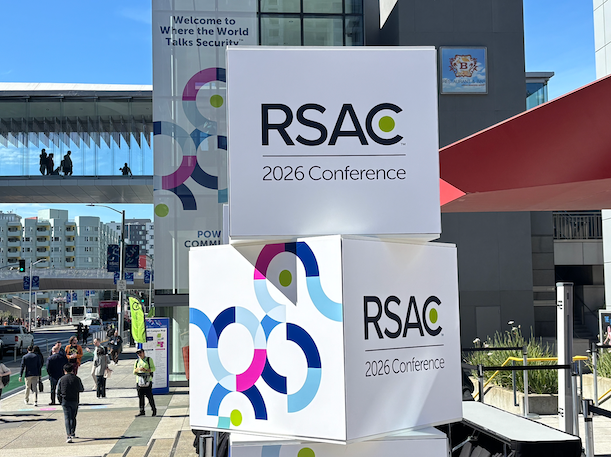
The rapid, widespread adoption of productivity-boosting AI agents is likely an unprecedented opportunity for solution and service providers to create fast-growing new businesses—thanks to the high demand for the unique skills and expertise of the channel, according to top executives from major vendors and solution providers.
The executives spoke with CRN this week during RSAC 2026 in San Francisco, where the emergence of agentic was far and away the dominant theme of product launches and discussions around the show.
[Related: 10 Cool AI And Agentic Tools Unveiled At RSAC 2026]
It’s clear in this environment that for partners that can effectively enable secure adoption of AI agents, the growth potential could be explosive, CrowdStrike Co-Founder and CEO George Kurtz told CRN.
“The [partner] organizations who figure out how to harness agentic AI to provide a solution are going to do really, really well,” Kurtz said.
While the unheard-of speed of adoption of AI technology compared to prior technological shifts poses major cybersecurity challenges, that only raises the level of interest in the security offerings from solution and service providers, executives said.
The bottom line is that partners are going to be “incredibly” important when it comes to the securing and enabling the AI agent revolution, SentinelOne co-founder and CEO Tomer Weingarten told CRN.
“I think that’s probably one of the most overlooked elements right now,” Weingarten said. “If we think about these agents basically as more employees, how do you scale your security operation? You’re not going to be able to hire fast enough.”
Even with increased automation of security powered by AI, “you still need human supervision,” he said. “And I think that scaling is going to come from the partner ecosystem.”
In addition to managed security services, executives from vendors and solution providers pointed to areas such as agentic identity security, monitoring of agent behavior and secure development of AI agents as massive partner opportunities going forward.
There’s no question that when it comes to providing identity security for agentic, partners will have a “huge” role to play, according to Saviynt CEO Sachin Nayyar.
“Every partner should be talking about AI agent identity security with their customers,” Nayyar said—predicting that within the next six to 12 months, as much as half of all companies globally will be looking to acquire solutions and services around non-human identities for agentic.
Partner Perspectives
Solution provider executives told CRN there’s no question that identity is going to be a key foundation for many customers when it comes to agentic.
Right now, “one of our fastest growing components in identity is the non-human side of it, particularly agents,” said Chris Schueler, CEO of Kansas City, Mo.-based Cyderes, No. 98 on CRN’s 2025 Solution Provider 500.
One critical question for many customers is, “how do we actually build the right control framework for agents to act, and how do we monitor their actions as well?” Schueler said. “Because left unchecked, agents can start acting on their own and doing things that could potentially be nefarious before we know it.”
While “we haven’t seen agents being hacked yet, I think it’s only a matter of time,” he said.
Non-human identity security for AI agents is likewise emerging as a major opportunity for MicroAge, No. 115 on CRN’s 2025 Solution Provider 500, according to MicroAge CISO Alex Ryals.
With its focus on midmarket and SMB customers, MicroAge is working to help customers to understand how agents might fit for them, said Ryals, who is also senior vice president of solutions at Phoenix-based MicroAge.
When it comes to AI agents, “they’re still trying to figure out what this means for them—and so we’re offering up different options to see if they’re ready for it or not,” he said.
Ultimately, however, “I think this is a huge opportunity for us,” Ryals said.
Outside The Bubble
Without a doubt, solution and service providers will be pivotal in helping customers outside the enterprise level to understand the value of agents and embrace the technology, according to 1Password CEO David Faugno.
Outside the bubble of the technology and cybersecurity industries, many smaller businesses around the U.S. “don’t understand” AI and frankly resent the technology, Faugno said.
“If you put your head in the sand because you’re scared of it, it’s a self-fulfilling prophecy,” he said. “But when you embrace it, then it becomes something that actually can drive value to help you. And so the partners can really help people see it. But the partners themselves have to lead by example.”
Cutting Through Complexity
Customers will also increasingly be looking to partners to provide the technical enablement they need to overcome hurdles from the complexity of securely deploying AI agents, executives said.
“I see this huge opportunity for our partners to become the trusted security architects for the customer,” said Lee Klarich, chief product and technology officer at Palo Alto Networks. “Because these are complex designs. They are changing rapidly, and that creates need and opportunity.”
Countless customers right now are highly motivated “to have a partner that can help them understand this,” Klarich told CRN. “The opportunity is for partners to actually become those experts and the trusted advisor to the end customer. And that, in itself, is a business opportunity.”
Meanwhile, the adoption of AI and agentic technologies by threat actors to accelerate attacks creates additional demand for partners, particularly around managed security services, according to Huntress Co-founder and CEO Kyle Hanslovan.
At this stage, however, the industry still has not fully recognized just how essential the channel will be when it comes to protecting businesses in the era of AI-augmented cyberattacks, Hanslovan said. And that’s especially true when it comes to mid-size and smaller organizations, he said.
“It’s wild how many people are missing the channel aspect,” Hanslovan said. “It’s this [smaller end] of the market who is actually getting attacked. And they cannot do it alone.”