Check Point’s Firewall Subscription, Maestro Expansion Tackle ‘Important’ AI-Era Demands: Partner Exec
The cybersecurity vendor’s recently unveiled firewall subscription and expanded Maestro offering address massive AI adoption challenges among customers, Atlantic Data Security CTO Mark Ostrowski tells CRN.
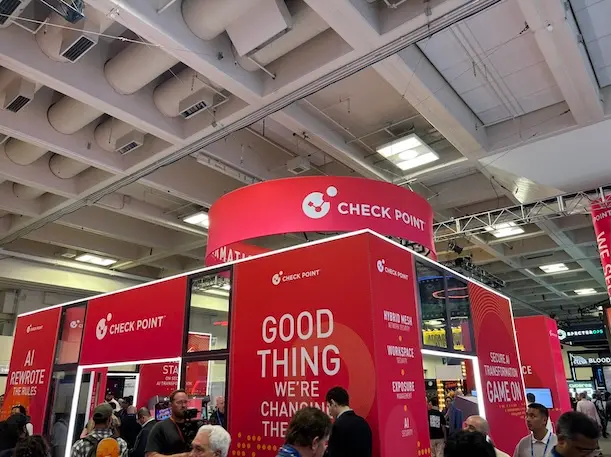
Check Point’s recently unveiled firewall subscription and expanded Maestro offering address massive AI adoption challenges among customers—with a focus on strengthening protection and scaling infrastructure without the need to commit to capacity upfront, the CTO at a top Check Point partner told CRN.
The offerings bring together more flexible spending and the ability to expand network security as AI requirements evolve—both increasingly important considerations for customers facing an unpredictable technology landscape, according to Mark Ostrowski, a cybersecurity veteran and CTO at East Hartford, Conn.-based Atlantic Data Security.
[Related: Check Point Acquires Three Startups For AI Security, MSP Expansion]
“The one thing that this market has certainly shown us is, it’s very unpredictable,” Ostrowski said. “What we thought we needed last year is not what we need this year.”
In late October, Check Point unveiled its Firewall-as-a-Subscription program as well as its Maestro Hyperscale Orchestrator 200.
The subscription program brings together firewall hardware and security capabilities with related services into a recurring payment model, according to Check Point. Meanwhile, the new Maestro offering increases the capacity available to partners and customers for protecting large data centers and AI infrastructure, the company said.
For Ostrowski, whose career has included working with Check Point for more than two decades, the announcements also reflect the vendor’s continuing growth in relevance for customers, as many CISOs are looking to their major security providers for help with securing AI adoption.
Without a doubt, Check Point’s recent investments are providing customers with more options for addressing emerging requirements alongside established network security needs, he said.
“They live in the network security world—but they’re also living in the AI security world, which I think is super important,” Ostrowski said.
In terms of the launch of Check Point’s firewall subscription, the move is positioned to meet the increasing interest from customers in shifting large capital purchases toward operating expenses—while still retaining flexibility to expand, Ostrowski said.
Check Point’s program offers monthly or annual billing under a three-year agreement, according to the vendor—while customers have options to increase throughput during the contract and shift to replacement hardware after 36 months.
When it comes to AI infrastructure, meanwhile, the new Maestro orchestrator enables customers to expand security capacity by adding gateways, with Check Point reporting up to 4.5 TB per second of threat prevention throughput per system, compared with 1.1 TB per second previously.
That approach can help organizations that are building specialized AI data centers to increase protection as their requirements grow, Ostrowski said. The key here is that “you can build as you need to build,” he said.
At the same time, there’s no question that the continuing proliferation of AI security vendors is encouraging customers to consider whether their trusted providers can address emerging needs before adding more products, according to Ostrowski.
In general, “I don’t think that customers are adopting the [new security] technologies that are available as fast as they’re coming available,” he said.
Adding AI capabilities to an existing firewall thus provides customers with another way to gain visibility—particularly as their priorities expand from simply discovering employee AI usage, to also applying guardrails and identity controls across their AI infrastructure, he said.
Ultimately, the right approach in this environment—for partners and customers alike—is to “think about what you have [currently], and make good decisions from there,” Ostrowski said. “I think as a reseller we should have an opinion on where we think customers should look first—and it’s not always the shiny object.”